Federal immigration enforcement near schools disrupts attendance, traumatizes students and damages t
While federal immigrant agents need to produce a judicial warrant to enter a classroom, they can freely operate in public spaces at and around schools.

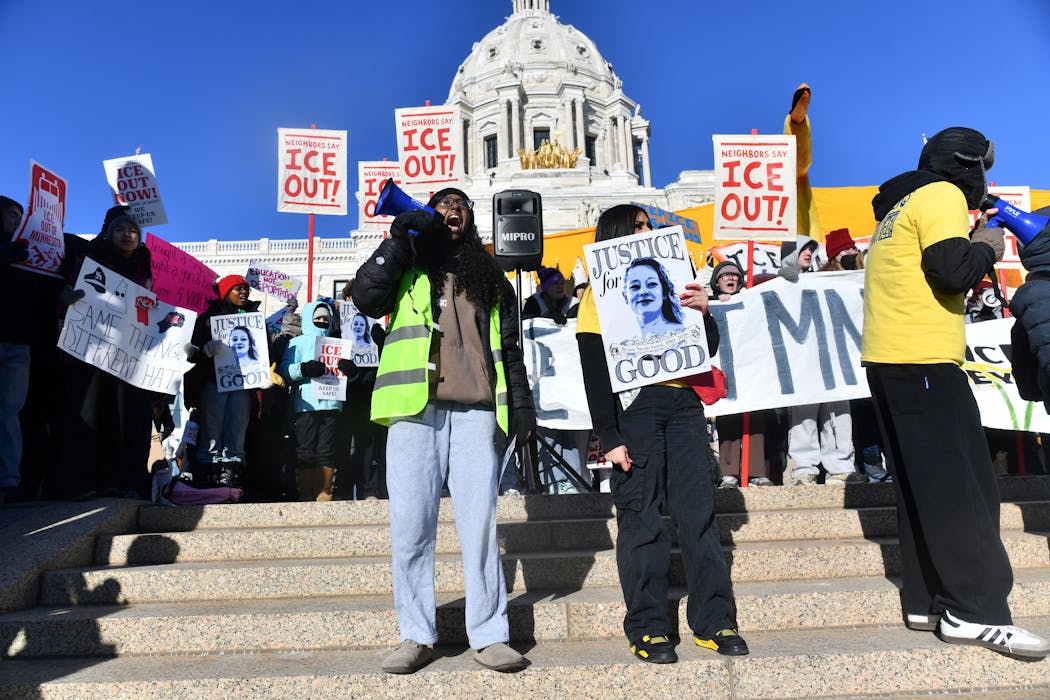
The Trump administration’s recent surge of more than 3,000 federal agents to Minneapolis and St. Paul, Minnesota, is creating ripple effects for students, teachers and parents that go well beyond ongoing protests against Immigration and Customs Enforcement and Customs and Border Protection. These protests escalated after an ICE agent shot and killed Renee Nicole Good on Jan. 7, 2026.
Some Twin Cities parents are arranging security patrols to look out for ICE agents, while others are keeping their kids home altogether. Several large Minneapolis-St. Paul school districts announced on Jan. 15 that they would offer remote learning so students could stay home.
Amy Lieberman, The Conversation U.S. education editor, spoke with Carolyn-Sattin-Bajaj, a scholar of education and immigrant youth, to better understand what regulations restrict ICE’s presence at schools – and how schools can support students and parents concerned about the recent surge of immigrant arrests and deportations in Minnesota.

What prevents ICE from walking into a school building?
The Obama administration issued a memo in 2011 that said federal officials should not conduct immigration enforcement work near sensitive locations, meaning schools and houses of worship. The Biden administration also had this policy in place.
President Donald Trump revoked this memo in January 2025. So now, schools are no longer off-limits to federal immigration agencies, including ICE.
That doesn’t mean ICE or Border Patrol agents can march into a school building to arrest someone. While these officers can freely enter public areas of a school, like a parking lot or lobby, school officials are not legally obligated to admit ICE agents into private spaces like classrooms. ICE officers can enter a classroom if they show a valid federal judicial warrant, signed by a judge – or if there are extreme circumstances that allow them to legally circumvent having a warrant.
School officials are also not required to release information about which kids are enrolled at their school or not, and schools do not collect information about students’ immigration status, so that data cannot be shared.
Some school districts have been developing or revising protocols on how to respond if ICE comes to their schools. A lot of these protocols include recommendations on naming a district superintendent or another local official as the point person for ICE.
How unprecedented is it for ICE to arrest people outside or inside a school?
ICE’s presence at – or near – schools has significantly increased under the second Trump administration.
We have seen violence on school grounds, with ICE attacking students and protesters at Roosevelt High School on Jan. 7 in Minneapolis. In Crystal, Minn., a student’s parent was arrested by ICE personnel on Jan. 14 while waiting for their child at a bus stop.
Even just the threat of ICE agents approaching and arresting people en route to school, or at a school itself, is changing people’s behavior. Some parents in Minnesota and other places no longer take their children to and from school, and have to find other ways to get their kids there. This also affects how many people come to community events and activities held at school.
At one California middle school, the annual moving-up ceremony for students typically held outside had to be delayed in June 2025 after there was a credible rumor that ICE was planning to show up. The district had procedures in place. Because the event was held in an open public space, administrators were stationed at every entrance in case ICE agents turned up – though they didn’t. However, some graduates did not have any relatives there to watch them watch across the stage during the ceremony.
What other considerations are at the forefront of school administrators’ minds in regard to ICE?
The question that is top of mind for many district administrators, school leaders, teachers and other school personnel is “What happens if ICE shows up at our school?”
I think it is important that districts and schools have a clear plan in place that is widely communicated to all adults working in schools, and to students and parents. This should be paired with straightforward and recurrent training for educators on what they might expect if ICE comes to their schools and how to put their schools’ plans in place.
Yet, considering what to do if ICE comes to a school is just the tip of the iceberg. There are approximately 1.5 million children under 18 who are undocumented immigrants and about 4.4 million U.S.-born children who are citizens but have at least one undocumented parent. Many of these students are experiencing significant hardship, including interruptions to their schooling, and other forms of instability that affect their ability to learn and overall well-being.

What does your research show on the effects immigration enforcement can have on these students?
My research in seven large California school districts, conducted in 2021, showed that immigration arrests were linked to declines in students’ academic achievement, attendance and other measures of a school’s climate and safety for these students. The biggest declines were among Latino students, especially those who were English language learners.
In another 2023 study of an immigration workplace raid in Texas, a colleague and I found increased student absenteeism, declines in reading and math test scores, and sharp rises in the number of high school students leaving the district. Most often, it was the Latino and multilingual students enrolled in schools in the four counties closest to the raid who were not attending school immediately after the event, or experienced declining test scores.
These consequences persisted. Some of these students were less likely than others to later enroll in four-year colleges. Significantly, not just students who are most likely to have relatives targeted for deportation experienced these effects.
My own research and that of other scholars also show that many teachers are not well prepared for the current realities. But they are eager to know more about their immigrant students’ rights, the resources available to them and how they can serve as allies and advocates.
I believe that to best support students during these troubling times, teachers need better training and guidance on how to navigate challenging conversations about immigration enforcement threats, and how to deal with students’ (and their own) anxiety, uncertainty and trauma.
Carolyn Sattin-Bajaj receives funding from the University of California, Santa Barbara and the Spencer Foundation
Read These Next

Chiricahua is the nation’s newest national park – what does that mean?
What comes next for Chiricahua, now that is has been officially redesignated as America’s 64th national…
Offering cash for votes is quite common – but here’s why it doesn’t work
Money or other material benefits are often not enough to override a voter’s preferences and partisanship.
Human rights could improve – or worsen – based on how nations use the UN treaty against cybercrime
If the treaty enters into force, responsible nations will have to carefully monitor how other countries…