There’s an intensifying kind of threat to academic freedom – watchful students serving as informants
Restricting academic freedom is often thought of in terms of universities telling professors what they can and cannot do or teach. But that isn’t the only scenario.

Texas A&M University told philosophy professor Martin Peterson in early January 2026 that he could not teach some of Greek philosopher Plato’s writings that touch on “race and gender ideology.”
The university’s local chapter of the American Association of University Professors, an organization of professors and academics in the U.S., quickly denounced this requirement.
Peterson, in response to his university’s direction, replaced the Plato readings with material on free speech and academic freedom.
Silencing a professor from teaching a certain subject fits within what experts have long recognized as encroaching on academic freedom.
In another high-profile incident at Texas A&M in September 2025, a student filmed an exchange with an English literature professor, Melissa McCoul, who was talking about gender identity.
The student said that McCoul was violating President Donald Trump’s January 2025 executive order that recognized “women are biologically female, and men are biologically male.” As a result, the student told her professor, as seen in her video, “I’ve already been in touch with the president of A&M, and I have a meeting with him in person to show all of my documentation tomorrow.” Her video went viral.
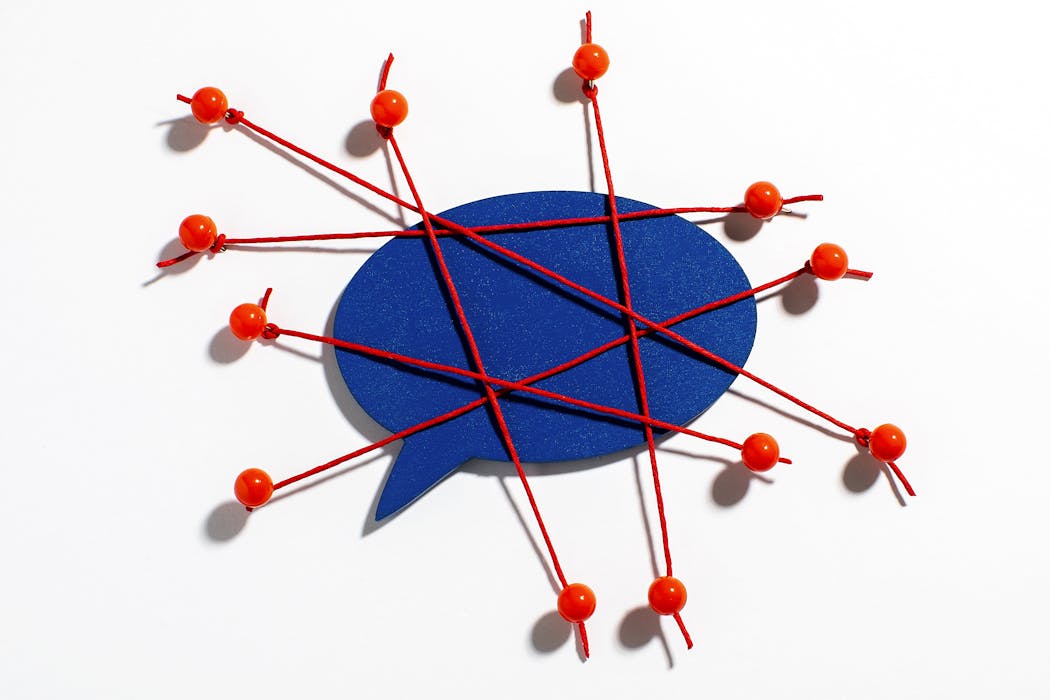
This represents a growing threat to academic freedom: Students who act as informants and police their classes and professors for signs of political incorrectness.
A 2023 study found that 75% of college students feel free to report their professors if they say something objectionable. Self-identified liberal students were more likely than conservative students to report their professors to the administration.
As someone who teaches politically charged subjects, I am very much aware of the need to teach in inclusive ways and respect the diversity of student views. I have also written about how academic freedom is changing, given new external threats and political realities. I recognize that students will play an important role in determining the future of academic freedom.

Academic freedom is not the same as free speech
Academic freedom is a complex concept that is often confused with freedom of speech.
The American Association of University Professors offers one definition: Academic freedom is focused on ensuring that professors can say, teach, discuss and write about any issue within their field, without “interference from administrators, boards of trustees, political figures, donors, or other entities.”
As law professor Stanley Fish has argued, freedom of speech – meaning the right to express oneself without restraint – has no place in college classrooms.
As Fish notes, college classrooms are about the pursuit of truth.
In Fish’s view, this is true in both public and private colleges and universities, even though the Supreme Court has held that free speech applies in any public higher education institution.
I believe that Christopher Eisgruber, president of Princeton University, made a mistake when he said in November 2025, “Colleges get free speech right through millions of conversations … that take place in dorm rooms or dining hall tables or at public events or classrooms in colleges and universities across the U.S. every year.”
Dorms, dining halls, public events, yes. Classrooms, no.
As the American Association of University Professors’ preamble says, higher education institutions depend “upon the free search for truth and its free exposition.” It goes on to say, “Academic freedom is essential to these purposes and applies to both teaching and research.”
While that statement is not legally binding, it establishes a set of standards that are widely endorsed throughout higher education.
The September 2025 incident at Texas A&M is so worrisome because it suggests that faculty are being required to adhere to a political ideology, rather than allowed to pursue the truth as they see it.
Self-censorship on the rise
Despite most colleges and universities embracing academic freedom, a rising number of college professors are today censoring themselves in their classrooms.
Approximately 58% of faculty interviewed in a national survey in 2024 reported “regularly self-censoring in … conversations with students outside of class and in classroom conversations.”
In addition, a 2024 study done at Harvard University found that “Many Harvard faculty members and instructors … reported reluctance to discuss controversial subjects inside and outside the classroom.”
Such pervasive fear has a clear chilling effect in controlling what professors teach and say.
Meanwhile, a 2024 report from the American Enterprise, a conservative think tank, explains that faculty self-censorship “increases when faculty engage with students who could record and circulate words, in or out of context, to the world in a matter of seconds.”
Students’ rights to record classroom discussions
The legal landscape concerning the rights of students to record what happens in a college classroom is complex.
In some states, like Alabama and Maine, people can record someone without their consent, if they are directly part of the conversation being documented. In other states, like California and Massachusetts, all people part of the conversation need to consent to being recorded.
Many universities have their own rules regarding recording. Some limit it in classes, except as necessary to accommodate students with particular disabilities.
Harvard, for example, prohibits any member of a course from posting identifiable classroom statements on social media without people’s written consent.
Protecting academic freedom
The September Texas A&M controversy resulted in the university firing McCoul. Texas A&M President Mark A. Welsh III also stepped down from his position in September.
In November, a faculty committee then determined that the university did not have good reason to fire McCoul – though she has not been reinstated to her position.
I believe that colleges, universities and groups like the American Association for University Professors need to think about academic freedom differently than they did in 1940, when the association first adopted its academic freedom statement.
This will require colleges and universities to take steps to protect faculty from direct attempts by the government, or outside groups, to punish them for saying something that the government or others deem controversial.
But protecting faculty is also about establishing new norms to govern the classroom.
Adopting the think tank Chatham House’s rules, which say that people during meetings cannot attribute anything said to a specific speaker without their consent, is a possible path.
I have gone one step further. I now begin my classes by discussing my own classroom compact that covers academic freedom, academic integrity and the values that will inform and guide the work we will do.
Students are also required to pledge that they will not post anything about my class, or anything said in it, on social media with or without attribution. And I remind them that Massachusetts legally requires the consent of all people part of a conversation when it comes to recording.
Helping students understand the meaning and value of academic freedom and enlisting them to help protect it is not an easy task. However, the future of that value may depend on it.
Austin Sarat does not work for, consult, own shares in or receive funding from any company or organization that would benefit from this article, and has disclosed no relevant affiliations beyond their academic appointment.
Read These Next
Indian Gen Z ‘cockroach’ protesters aim to upend assumptions about democracy – and populism – in Mod
The protests challenge the government’s view of who “the people” are, what democracy means, and…
Human rights could improve – or worsen – based on how nations use the UN treaty against cybercrime
If the treaty enters into force, responsible nations will have to carefully monitor how other countries…

Horror’s monsters find new meaning with queer and trans audiences – how ‘Teenage Sex and Death at Ca
Horror as a genre has traditionally been rife with transphobia and homophobia. But LGBTQ+ fans love…