
Midterms are bad for incumbents – and even worse when energy prices are high
The US economy is built on energy prices. When people’s bills are high, they tend to vote against incumbents and their parties.

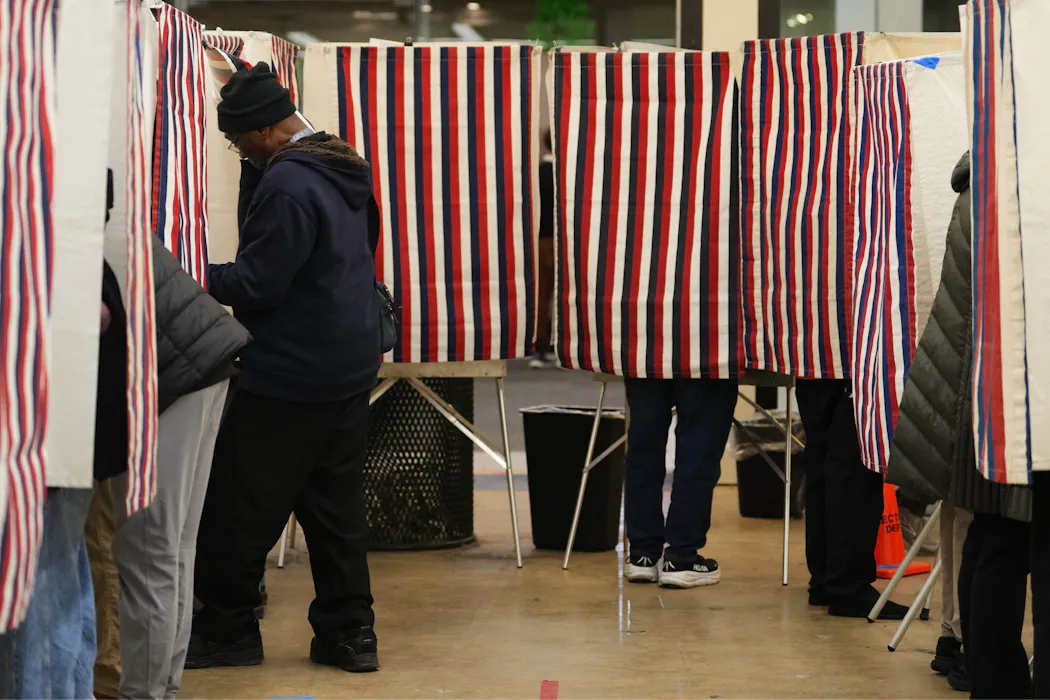
As Democrats and Republicans look at the overwhelming results of the 2026 midterm election, it’s worth remembering what has become a political axiom in America: “It’s the economy, stupid.” Democratic strategist James Carville famously said that to presidential candidate Bill Clinton in 1992, but he might have said “it’s energy prices” instead. The cost of energy underlies much of the economy, making energy and politics inseparable, especially when gasoline prices rise.
Midterm elections have historically been difficult for incumbent presidents and often shift the balance of power in Washington, D.C.
Many factors affecting gasoline prices are beyond a president’s or Congress’s control. Prices for crude oil and petroleum products such as gasoline are set on global markets as the results of economic forces of supply and demand. Even the companies that produce oil don’t have as much influence as people might think, because of how that oil gets to refineries: Over 60% of the world’s crude oil is transported by ocean tankers, with 20% of global supplies traveling through the Strait of Hormuz, which has been closed, or nearly so, for much of 2026 as the conflict with Iran drags on.
When energy prices rise, other prices, such as food, follow. Sudden spikes in gasoline prices can contribute to higher inflation, both regionally and nationally.
Voters pay attention to those changes, and incumbents are less likely to win reelection. For the 2026 midterm election, gasoline prices were the highest of any previous election. That put Republicans in the precarious position of defending their record.
Four American presidents – Gerald Ford, Jimmy Carter, Ronald Reagan and Joe Biden – confronted the consequences of severe inflation and high fuel prices during midterm elections.
Oil embargo, Nixon and Ford
Richard Nixon was the first modern president to truly face an energy crisis that became political. In retaliation for U.S. support for Israel during the October 1973 Yom Kippur War, Arab members of the Organization of the Petroleum Exporting Countries cut oil production and imposed an oil embargo on the United States. OPEC oil production fell by 5% a month, and crude oil prices rocketed 184% from prewar levels of $4.31 to $10.31 per barrel in March 1974. Nixon’s federal price controls on petroleum didn’t prevent U.S. gasoline prices from increasing 32%.
When Nixon resigned over the Watergate scandal in August 1974, Gerald Ford took office. Inflation was 12.3%, and gas prices were still high.
Right before that year’s midterm election, Ford launched the “Whip Inflation Now,” or WIN, campaign. But Republicans lost 48 House seats and five Senate seats.
“WIN” didn’t work, and by the 1976 presidential election, gas prices were over 60 cents a gallon – adjusted for inflation to late 2026, that’s $3.49. Ford lost his reelection bid to Jimmy Carter.
Carter’s struggles
In Carter’s first two years in office, starting in 1977, the monthly average price of unleaded gasoline in the U.S. stayed high and even climbed slightly. Inflation hit 9% in 1978.
In the 1978 midterm election, Democrats lost 15 House and three Senate seats. Inflation continued to climb, and by the 1980 presidential election, gas prices were twice what they had been in 1976. Plagued by those figures and the Iranian hostage crisis, Carter lost the 1980 election to Ronald Reagan.
Reagan enters the picture
Reagan implemented “Reaganomics” by cutting taxes and regulations, reducing government spending, tightening monetary policy and removing the remaining price controls on petroleum. By the mid-1980s, increased oil production from U.S. and non-OPEC nations led to an oil glut, lowering the average price of crude oil and U.S. gasoline price from previous highs.
In the 1982 midterms, Republicans lost 26 seats in the House and gained one in the Senate.
Reagan won reelection to the presidency in a landslide in 1984, but the challenges for incumbents remained in the 1986 midterms. Though crude oil prices were $15 a barrel and gas had dropped to 82 cents a gallon, Republicans lost five seats in the House and eight in the Senate.
Trump’s first round
In the lead-up to the midterms during Donald Trump’s first term as president, crude prices had risen about 24% from when he took office in January 2017 to October 2018. And gas prices were up 22%. In the 2018 midterms, Republicans lost 41 House seats but gained two in the Senate.

Biden years
Over the course of 2020, COVID-19 restrictions slowed the U.S. economy. U.S. crude oil production fell as gasoline demand plummeted by 40%. Prices rose because of pandemic-related supply chain backups.
And from Election Day in November 2020 to Russia’s invasion of Ukraine in February 2022, the average price of unleaded gasoline in the U.S. rose by 66%, from $2.11 to $3.52 per gallon.
Also, as pandemic restrictions lifted and the economy began recovering, demand for gasoline rebounded, straining supplies.
Upon taking office in 2021, Biden took steps to curb rising energy costs, including releasing oil from the Strategic Petroleum Reserve in March 2022, which the Treasury Department suggested helped prevent gasoline price increases of $0.17 to $0.42 per gallon.
But other Biden policy moves made it harder to increase energy supplies. He canceled the Keystone XL pipeline project that would have brought more petroleum into the U.S. and suspended new oil and gas leases in the Arctic National Wildlife Refuge and the Gulf of Mexico. He also recommitted the U.S. to the Paris climate accord, under which countries have promised to cut their greenhouse gas emissions, generally meaning moving away from fossil fuels as an energy source.
In June 2022, inflation reached 9.1%, a 40-year high. And U.S. gasoline prices reached an all-time high of $4.929 per gallon; adjusted for inflation, that’s $5.60 a gallon today.
The 2022 midterm election wasn’t as bad for Democrats as they might have feared, though it wasn’t a success: The party lost nine House seats and one Senate seat. That’s a reminder that energy prices aren’t the only factor in voters’ minds when they are casting ballots.
Trump’s second term
During the first 12 months of Trump’s second term, crude oil prices fell 4.5%, U.S. oil production rose 3.3%, from 13.3 million to 13.7 million barrels per day, and the AAA national average price of regular unleaded gasoline fell 4.5%, from $3.12 to $2.98 per gallon.
On Feb. 28, 2026, U.S. military action against Iran disrupted Middle Eastern oil production and oil tanker traffic in the Strait of Hormuz. Initially, shipment volume plummeted, though by the end of September it had recovered to 82% to 92% of prewar levels.
Overall, Middle Eastern crude oil exports are averaging around 24 million barrels a day, exceeding prewar levels in part because of increased use of pipelines out of Saudi Arabia and the United Arab Emirates. Because of the war with Iran, AAA’s national average price of unleaded regular gasoline has increased by almost 40%, from February’s $2.98 price to $4.15 a gallon as of Nov. 3, 2026.
Implications
As the preelection polling had suggested, voters held Trump accountable for high gasoline and grocery prices, as well as an unpopular war.
It was a reminder of a basic economic and political principle: When the economy is doing well, voters are more likely to support incumbents and their parties. And when voters are pessimistic about the economy’s future, they are inclined to vote against incumbents and their parties.
Michael A. Mische does not work for, consult, own shares in or receive funding from any company or organization that would benefit from this article, and has disclosed no relevant affiliations beyond their academic appointment.
Read These Next

NASA’s Swift Observatory is about to burn up in the atmosphere – the indispensable telescope helped
The Swift Observatory allowed astronomers to study events that happen quickly in the universe, such…

How space weather powers auroras in the sky and threatens power grids on the ground
When an aurora lights up the sky, electric currents can also flow through the ground beneath your feet.

Are schools a great equalizer? They help kids catch up, but wealthier children still pull ahead
By some measures, schools are a great equalizer for children coming from different backgrounds. But…