Is the world pricing the risk of a US diesel export ban?
If the US imposed a ban on its diesel exports, as some lawmakers are calling for, it would roil the global market.

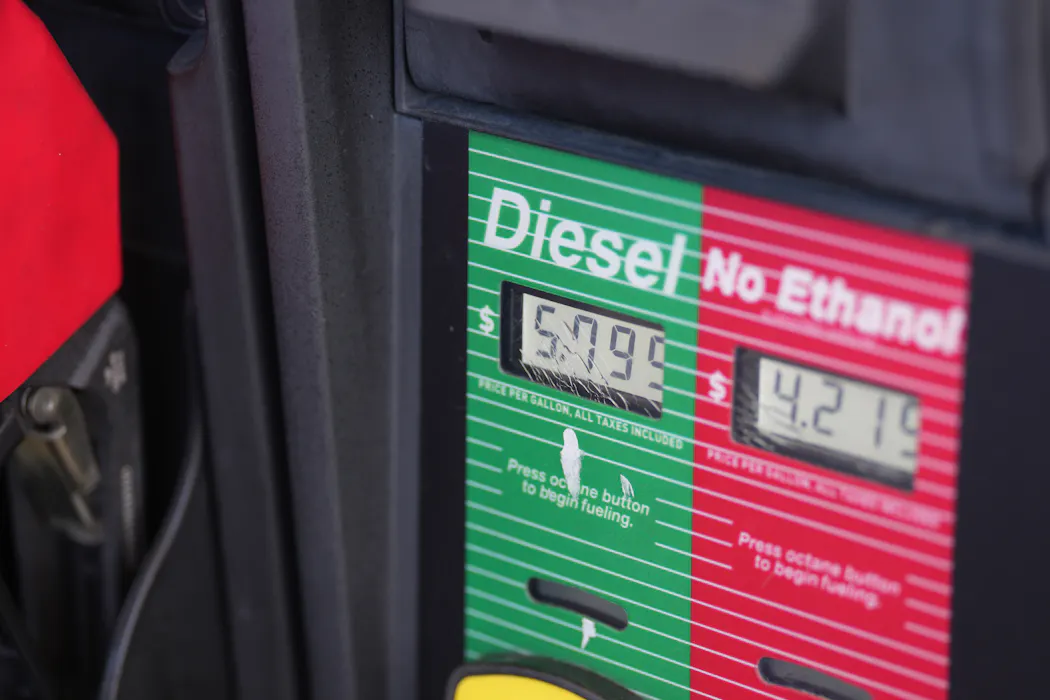
A spike in diesel prices is hammering broad sectors of the U.S. economy – especially agriculture and shipping – and becoming a flash point ahead of the November 2026 midterm elections.
This squeeze has prompted Republicans from hard-hit farm states to call for a ban on U.S. diesel exports, with President Donald Trump reportedly weighing the idea as well. He also announced a deal on Oct. 9 to supply Russian diesel to U.S. and global markets.
Meanwhile, the G7 countries have agreed to release an additional 100 million barrels of diesel and crude oil from their emergency reserves.
What would happen if the U.S. did enact an export ban? It’s a net exporter of petroleum products, so such a move would split the U.S. and world markets for diesel. The resulting mismatch between domestic demand and supply could depress U.S. diesel prices in the short term.
This would give some relief to American consumers, at least temporarily. But as a professor of finance who studies commodities and market volatility, I also see a big adverse shock hitting the rest of the world under that scenario.
The current political response to pricey diesel, however, shouldn’t be a surprise. A recent paper of mine, co-authored with two other economists, asks more broadly when governments are more inclined to restrict commodity exports. We found that export bans are more likely when prices are high and when politicians start weighing the preferences of commodity users, like consumers, over those of commodity producers, like the oil industry.
This could be what’s happening right now, amid record energy prices and just a few weeks from Election Day.
A global supply squeeze
Diesel prices are hovering near all-time highs. The Energy Information Administration reports that the average price of the U.S. benchmark, known as ultra-low sulfur diesel, has topped US$7 per gallon in some regions like the West Coast.
Soaring energy prices are also continuing to push U.S. inflation up more broadly. Consumer prices in September jumped year-on-year by a higher-than-expected 3.7%, with gas prices responsible for more than half of the most recent monthly increase.
How did this happen? Before the conflict with Iran erupted in February 2026, key diesel exporters included Russia, Middle Eastern producers, the United States and China. Since then, those first two export sources have withered.
Russia, now in the fifth year of its war against Ukraine, banned diesel exports in July 2026 after Ukraine launched an effective air campaign that has knocked out more than half of Russia’s oil refinery capacity and destroyed many diesel storage-tank farms. That retaliatory campaign has pushed Russia from being a top diesel exporter to importing refined oil products, including diesel.
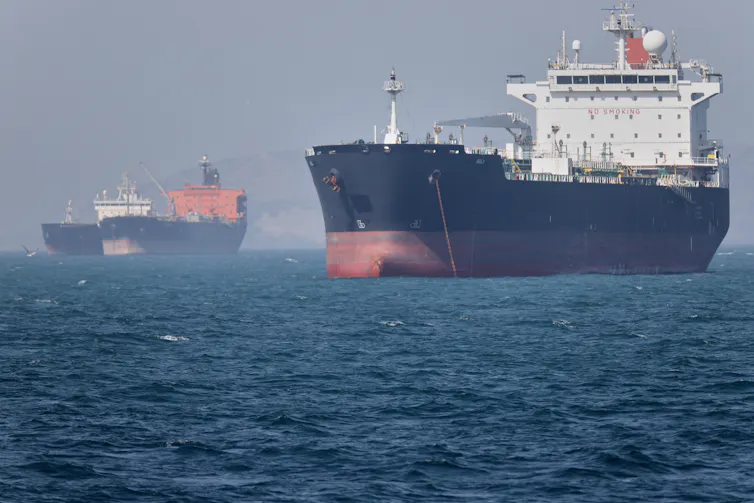
Meanwhile, in the Middle East, crude oil prices surged following missile attacks against Iran at the end of February. The Strait of Hormuz, which was the transit route for more than one-fifth of the global crude oil and natural gas output, essentially shut down amid fears over Iran targeting commercial ships sailing through.
Since then, increased shipments through Saudi and Emirati pipelines and actions by the U.S. Navy in the strait have helped restart petroleum flows. But the threat to Hormuz shipping remains real, as seen by recent strikes by Iranian forces on multiple tankers in early October.
These shocks have changed the economics of petroleum shipments in two ways. First, the price of transporting oil has more than quintupled, as tanker owners charge record fees to travel through the strait. Those fees, of course, bleed into the price that diesel buyers pay.
Second, in the strait, the content of tanker cargo has changed. Many ships are now loaded with crude oil, rather than diesel, after Iranian strikes on Gulf countries earlier this year knocked out a substantial share of the Middle Eastern refining capacity. Insofar as there isn’t much additional refinery capacity elsewhere in the world, even these restored crude oil flows can’t bring diesel prices down to prewar levels.
What an export ban would look like
The effects of removing Russian and Middle Eastern diesel from the market are being felt worldwide. One result is that U.S. diesel exports to the rest of the world have surged due to heightened foreign demand for the product and the high prices it can fetch abroad. Those export flows have been accompanied by the diesel price spike at home.
That jump in domestic prices is what’s driving discussions of a possible ban on U.S. diesel exports, and it reflects a dynamic that my co-authors and I laid out in our study of commodity export restrictions and bans. While we focused on agricultural markets, our findings also apply to the current diesel crunch.
Governments of commodity-exporting countries typically balance the interests of commodity producers and exporters, who prefer high prices, against those of domestic consumers, who like lower prices. When consumers’ wishes matter relatively more – for example, as elections approach – the likelihood of a ban rises.
American consumers never like high energy prices. Nowadays, after years of elevated inflation, they seem especially unhappy about them. Until the Iran war, Trump had been able to tout a substantial fall in petroleum product prices after he returned to office in January 2025. That’s no longer the case.
Higher diesel prices are being felt across the economy. The fuel is used to heat homes, especially in the Northeast, and to power machinery, tractors, trucks, boats and trains. This is why farmers and transportation operators are especially hard hit. Furthermore, these businesses typically try to pass their cost increases on to their customers. So shoppers are shelling out more for groceries and any other goods that must be transported.
Under the scenario of an export ban, the cost of U.S. diesel might fall in the short run, but world prices would spike. Soaring prices, however, would not be the only issue for the rest of the world.
Our research shows that a major exporting country’s ban would also increase market uncertainty and volatility. This is because restricting exports would effectively concentrate the rest of the world’s production, making the remaining supply base more fragile and increasing the rest of the world’s exposure to any subsequent output shocks.
If other countries think that their diesel situation is already bad, it would be much worse under a U.S. export ban. And the G7 move to release more diesel into the global market indicates that the rest of the world might understand how U.S. politics could lead to that outcome.
Michel Robe does not work for, consult, own shares in or receive funding from any company or organization that would benefit from this article, and has disclosed no relevant affiliations beyond their academic appointment.
Read These Next

Using light to control brain cells – neuroscientist Karl Deisseroth explains how he made his Nobel-w
Optogenetics, a field that started with an algae gene, is shedding light on new treatments for eye and…

As AI takes on more tasks, what happens when people have to jump in to clean up after it?
Having a human “in the loop” overseeing when an AI makes a decision is important, but what happens…
Ketamine’s role in alleged Cornell rape highlights flood of psychoactive drugs on campus
The growing availability of these substances is worsening the already bad problem of sexual assault…