Czech nonprofits applied lessons learned during the COVID-19 pandemic to the Ukrainian refugee crisi
Researchers found that while authorities have depended on nonprofits to deal with the refugee crisis, many nonprofit leaders had little say in planning and coordination.

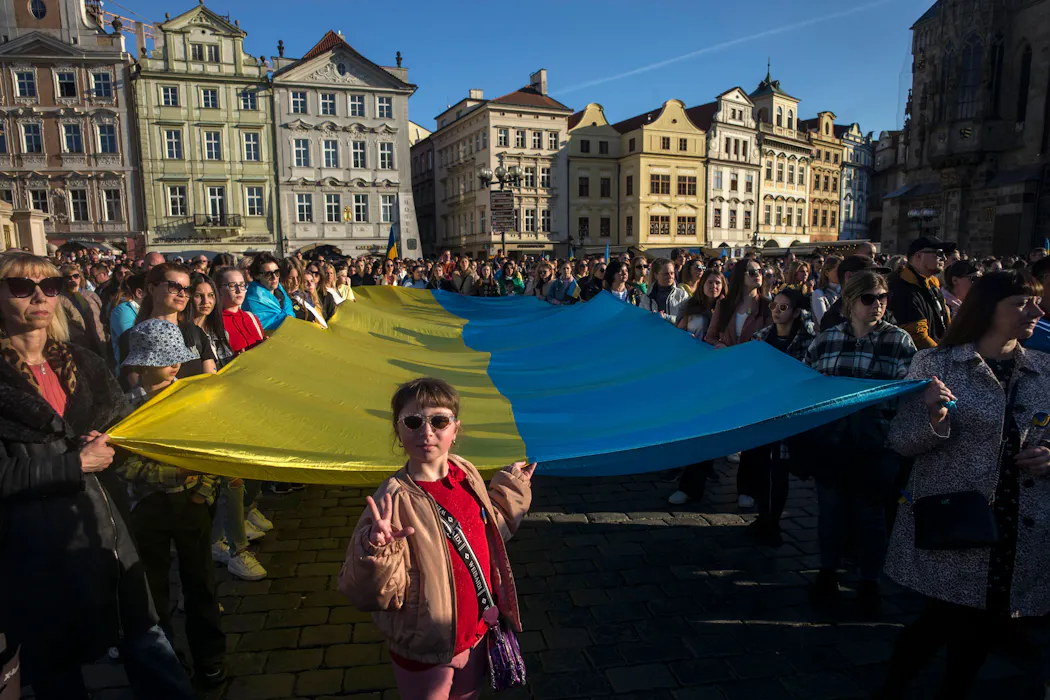
Within a few months of Russia’s February 2022 invasion of Ukraine, more than 500,000 Ukrainian refugees arrived in the Czech Republic.
Social service nonprofits responded immediately. They organized emergency housing, connected refugees with schools and healthcare, helped families navigate government services and distributed food and other basic necessities. In the first weeks of the crisis, those nonprofits relied on volunteers and existing community networks to meet urgent needs.
I research nonprofits. My Fulbright Scholarship in the Czech Republic coincided with Russia’s invasion of Ukraine, providing an unexpected opportunity to study how nonprofits responded to the refugee crisis. With my colleagues Monica Lea and Vladimir Hyánek, I interviewed 13 Czech nonprofit leaders between February and June 2022. About a year later, we surveyed 235 Czech nonprofits.
One finding stood out: Many nonprofits that mobilized to help Ukrainian refugees weren’t starting from scratch. Instead, they were able to rely on existing partnerships, volunteer networks and systems they had developed during the COVID-19 pandemic. The experience they gained during one crisis helped those organizations respond more quickly to the next.
We also found that nonprofits were central to delivering assistance but were rarely included in decisions about how that assistance was organized. They housed refugees, coordinated volunteers, distributed supplies and helped families connect with housing, schools, healthcare and government services. Although the central government depended on nonprofits throughout the crisis, many nonprofit leaders had little say in planning and coordinating these efforts at a national level.
In our study, which we published in Nonprofit Policy Forum, an academic journal, in June 2026, we found that the nonprofits working most closely with refugees had unique, firsthand knowledge of changing needs. Yet that experience was not always incorporated into government planning and decision-making.
Several described being consulted only after key decisions had already been made, or providing feedback that was never incorporated into planning.

Why it matters
The Czech Republic, with just over 10 million people, has faced one of the largest refugee inflows in Europe relative to its population.
Czech nonprofits initially scrambled to provide these refugees with housing, education and other essential support. According to the Ministry of the Interior of the Czech Republic, nearly 385,000 Ukrainians still live in the Czech Republic under temporary protection. As the crisis has continued, public debate in the country has shifted, with growing concerns about the long-term costs of supporting Ukraine’s war effort and the country’s refugees.
The Czech experience reflects a broader challenge. Many local communities increasingly face recurring and overlapping crises, from climate-related disasters and armed conflicts to public health emergencies. Responding effectively is important, but so is applying the knowledge, relationships and experience from one crisis to the next one.
That means that as complex crises become more common, preparedness will not depend on a government’s capacity alone.
Clearly, nonprofits will always need to mobilize and respond when crises strike. Our research highlights an important question: Will governments adapt their policies, funding and decision-making to reflect the central role nonprofits now play in countries like the Czech Republic?
What still isn’t known
Researchers still know little about how knowledge gained during one crisis can strengthen preparedness for the next. Understanding how governments and nonprofits preserve that knowledge, build on it and use it to shape planning may prove just as important as understanding how they respond during future disasters.
The Research Brief is a short take about interesting academic work.
Tara Kolar Bryan received funding as a Fulbright Scholar to the Czech Republic in 2021-2022 from the U.S. Department of State and the Czech Fulbright Commission.
Read These Next
Who should have a say in which species are saved? The California condor offers lessons for a global
When conservation affects local people, the question of who pays and who has a voice in decisions can…

A scuff on your bag, a dent in your mug – and suddenly it feels like time for a new one
While perfectionists hold themselves to high or even impossible standards, people who want perfect stuff…

A pregnant mom let her 5-year-old stay outside to collect goose feathers – and was placed on the chi
Child neglect statutes are intended to protect children. But some of them are so broadly written that…