You’ve been trying to get around Amazon – but it’s not that easy
For shoppers tying to avoid Amazon, its expansion into shipping and logistics for thousands of companies makes that choice more difficult.

You did the right thing this morning.
Instead of the one-click default to your laptop’s last opened tab, you opened Etsy and bought a ceramic mug from a maker you’d been following on Instagram. Yesterday, your sister’s birthday gift came from a Shopify store run by a kitchenware designer in Sacramento, California. You felt something when you clicked “buy,” a small, warm, fuzzy feeling. Not Amazon. Not a giant. Someone real.
The package will arrive on time, in unmarked brown cardboard, in two days.
It will arrive that way because Amazon delivered it.
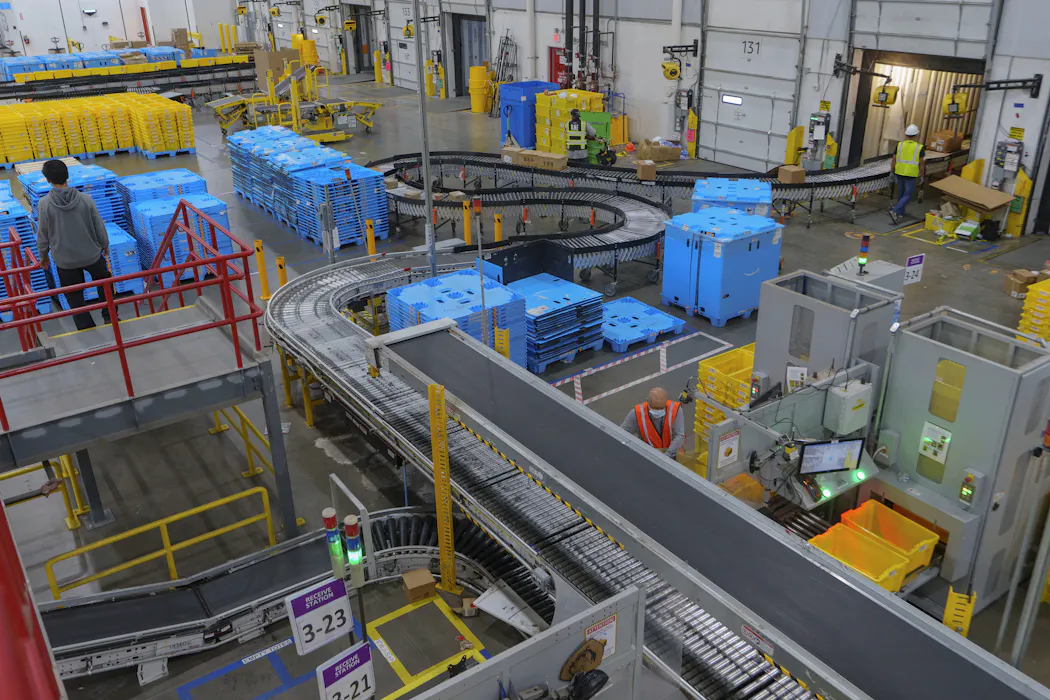
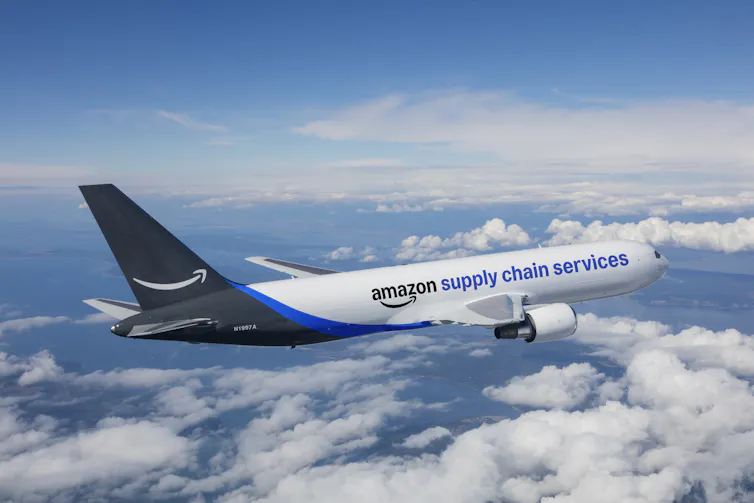
On May 4, 2026, Amazon announced the launch of Amazon Supply Chain Services. It opens Amazon’s warehouses, trucks and delivery network – built over decades to ship products from its own website – to outside companies of any size. Procter & Gamble, 3M, Lands’ End and American Eagle are among the first customers. The headlines framed it as a logistics story – Amazon is coming for UPS and FedEx – and most coverage stopped there.
But the bigger shift is one that consumers can’t see, and it has to do with how they support small businesses. A 2024 Pew Research survey found that 86% of Americans say small businesses have a positive effect on the country. For the millions of shoppers who have been redirecting their dollars away from corporate giants and toward small and local businesses, the May 4 announcement isn’t a logistics story at all. It’s about whether that effort still means what they think it means.
We’re scholars of consumer behavior and marketing who study how people square their purchasing decisions with ethical considerations, and we see a growing dilemma for consumers: If you pick the small brand instead of the giant, part of your payment actually goes somewhere you don’t expect. You may think you’ve made a conscious choice, but you’ve just walked through a different door into the same store.
And it’s getting harder and harder to escape.
Invisible but growing
Dragon Glassware is a small kitchenware company that began in a garage in Sacramento in 2017. You may have bought one of their wine glasses on their Shopify website, drawn in by the founder’s story and the small-business feel. Yet the order was picked, packed and shipped from an Amazon warehouse.
Another example is Poppi, which started at a Texas farmers market and went viral on TikTok as a cooler, healthier alternative to the giant soda companies. For years, the cans you ordered from Poppi’s own website – the ones that felt like a vote against Big Soda – were shipped to you by Amazon. Poppi was sold to PepsiCo for nearly US$2 billion in 2025, which is its own David-becomes-Goliath story.
These aren’t rare cases. Amazon’s Multi-Channel Fulfillment program, the service that ships these orders, now serves more than 200,000 U.S. merchants, and the network grew by roughly 70% in 2024 alone, according to Amazon. The same Amazon service also handles fulfillment for sellers on Shopify, Etsy, eBay and TikTok Shop. But you wouldn’t know this — the packaging is left unmarked by design.
What changed on May 4 is that Amazon opened this service up for all businesses – not just the small brands that have been there all along, but every kind of company at every size, from American Eagle retail orders to Procter & Gamble raw-material shipments between factories.
Peter Larsen, the executive quoted in the May 4 press release, said Amazon is doing for shipping what Amazon Web Services did for the internet. But there’s more to that comparison. Most people don’t know which websites run on AWS, and they don’t care. That’s the kind of invisibility Amazon is now building underneath physical things, too.
It’s also extremely lucrative. Amazon collects a fulfillment fee on every order it ships for an outside brand – roughly $15 for a three-pound package shipped in two days, according to Amazon’s own published rates. It also collects monthly storage fees on that brand’s inventory. And it gathers real-time visibility into what every competitor sells, to whom, in what quantities, at what moments of the year.
Amazon CEO Andy Jassy publicly described Supply Chain Services as a “major growth opportunity.” When Amazon says growth opportunity, it means the same thing it said about AWS – a business that could one day rival its retail arm.
Why the small brands are using Amazon
It’s tempting to think the small brands are selling out. They’re not. They’re doing the math.
A small kitchenware founder shipping out of her own garage can only get a wine glass to a customer in three to five days. Amazon’s network can get there in two. After 15 years of Amazon Prime, two-day delivery isn’t a luxury – it’s what shoppers expect. Small brands that can’t match it lose sales. Independent fulfillment companies exist, but Amazon’s service is typically cheaper and integrates directly with the platforms small brands already sell on, such as Shopify, Etsy, TikTok Shop and eBay.
The bigger implication is upstream, however. Amazon now controls roughly four out of every 10 dollars Americans spend online – more than four times the share of its nearest competitor. A small brand that wants to be discovered by new customers has little choice but to be on Amazon. Once there, the path of least resistance is to use Amazon’s warehouses for everything – including the orders that come in from Shopify and Etsy.
So for consumers, the choice technically exists. But the economics make it a decoy. And the more small brands are routed through Amazon’s network, the more Amazon can raise fees, change terms and shape the conditions for small commerce. In fact, Multi-Channel Fulfillment prices have already risen for three years running.
If even Procter & Gamble has decided to route part of its logistics through Amazon, what can a kitchenware founder in Sacramento realistically do?
For years, you’ve been telling yourself something every time you supported a small business – that your dollars meant something, that you weren’t pouring every dollar into the same handful of giants. But what does shopping your values even mean when the system underneath is invisible?
The impulse to shop your values isn’t naive. But it’s becoming harder to act on. For small businesses caught in the middle, deeper dependence on Amazon’s logistics means rising fees, with no leverage to push back. For those consumers who want choices, it means something uncomfortable: They can keep trying harder to avoid the giants, but the giants keep getting bigger anyway.
The mug will arrive Tuesday. It will be beautiful, made by hand, wrapped in brown paper tied with twine. The truck pulling up outside won’t have a logo on it. None of that is an accident. All of it is by design.
The authors do not work for, consult, own shares in or receive funding from any company or organization that would benefit from this article, and have disclosed no relevant affiliations beyond their academic appointment.
Read These Next

Young voters fear mass shootings like the one in Oregon, but that fear divides them on gun control
An Oregon school shooting comes weeks before midterms when young voters could break turnout records,…

Sexual violence concepts launched online are spilling into the real world – harming women and youn
Spurred by #MeToo backlash and post-COVID loneliness, online influencers have built social media networks…

Can social media bans protect young people’s mental health? Early research suggests that bans aren’t
Kids have found ways around most of the safeguards meant to keep them off social media platforms.