Would a $1 rideshare fee affect wealthier or working-class Philadelphians more? 2 Chicago studies of
Philadelphia Mayor Cherelle Parker has proposed a $1 fee on all Uber, Lyft and other rideshare trips in the city to help fund public schools.

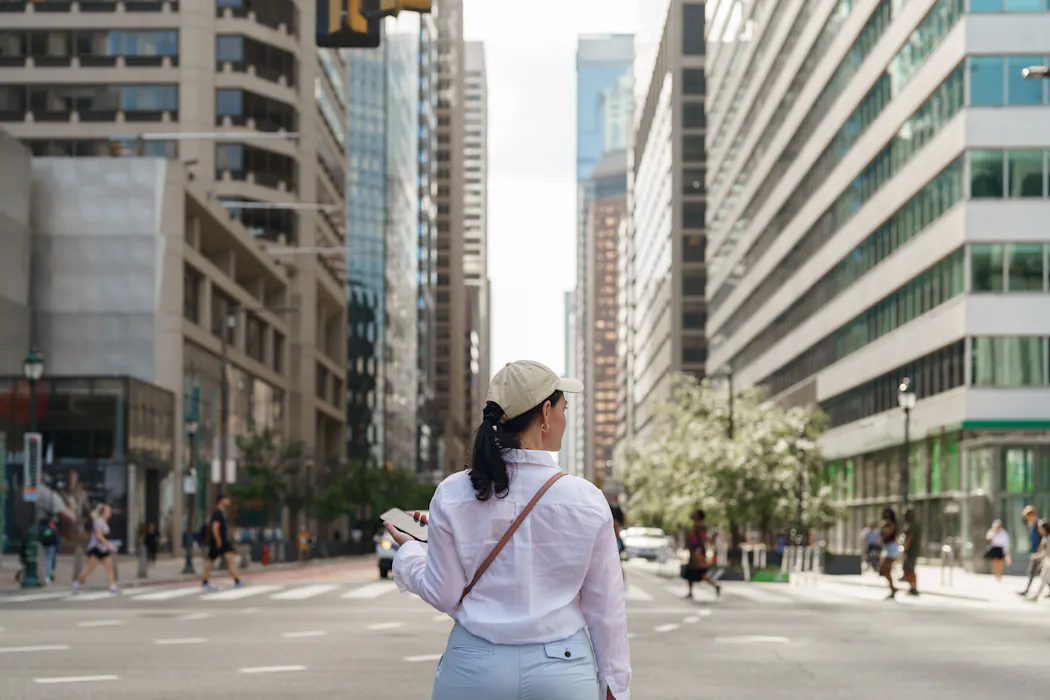
Philadelphia Mayor Cherelle Parker has proposed a US$1 fee on all Uber, Lyft and other rideshare trips in the city to begin in 2027. The projected $48 million annual revenue would go entirely to support the chronically underfunded Philadelphia school district, which faces a $300 million budget deficit.
Critics, including Uber, claim the tax will disproportionately hurt working-class riders.
Parker argues that the tax will be applied to the rideshare companies: The companies can choose not to pass them on to riders.
We are a professor and a Ph.D. candidate who research the benefits and costs of green technologies and policies. In 2025, we conducted an analysis to understand what the decision by Uber and Lyft riders to use rideshare instead of public transit told us about how they valued their time.
Our peer-reviewed findings might help Philadelphians decide whether they want to support the mayor’s proposal.
Lessons from Chicago rideshare study
We found that, per hour of time saved by taking Uber or Lyft, Chicago riders paid about $30. That’s roughly the average hourly wage in the Chicago region, which works out to $60,000 a year before taxes for full-time work.
Our analysis sampled eight days. About 1.4 million trips were recorded on these days, and we analyzed origin and destination information for 950,000 of these trips. The rest either started or ended at O'Hare airport, were ordered between midnight and 6 a.m. when public transit is unavailable, or had some missing data. We excluded rides in and out of O'Hare because although our analysis accounted for wait times for Uber and Lyft, our model could not simulate the queuing system at O'Hare.
Origin and destination information was consistently available at the community area level. A community area is one of Chicago’s 77 divisions, which can contain one or several neighborhoods. Each community area has an average of 35,000 people, although the largest is home to 105,000 people and the smallest to just over 2,000.
About 60% of the trips we analyzed had either origins or destinations in community areas with median household incomes over $100,000. A further 23% of rides originated or ended in areas with household incomes between $50,000 and $100,000. This suggests to us that most Uber and Lyft riders in Chicago are middle class or above.
About 1 in 6 trips – 17% to be exact – started or ended in community areas with household incomes of less than $50,000. A $50,000 household income is roughly 150% of the federal poverty line for a four-person family in Chicago.
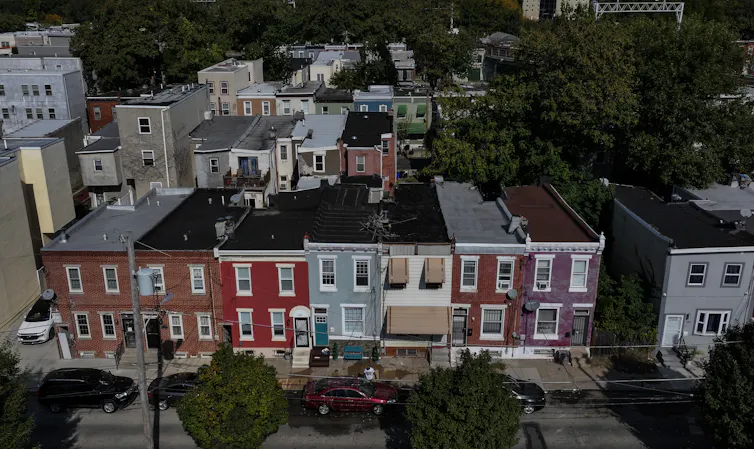
This suggests that ride-hailing is already unaffordable for these customers, and they are perhaps using it as a last resort. For example, public transit might not be available where they are or want to go, is too slow or is affected by bad weather.
Low-income riders sensitive to extra fees
Another Chicago study, conducted by researchers at MIT and published in 2023, provides some evidence on the effect of the city’s Ground Transportation Tax. Beginning in January 2020, Chicago added an additional charge of $1.13 per ride-hailing trip, and an additional $1.75 for weekday trips that started or ended in downtown between 6 a.m. and 10 p.m. The revenues went to the city’s Corporate Fund, which supports city operations and services, including improving service on Chicago public transit.
That study found that Chicago’s tax produced a significant reduction in trips between downtown Chicago and the South and Southwest of Chicago, two areas with a high proportion of low-income and Black residents.
The study notes that this is most likely because low-income people who live in these areas find ride-hailing too expensive to begin with, and are therefore more sensitive to additional fees.
In many parts of Chicago, the 6 a.m. to 10 p.m. weekday fee led riders to shift to pooled Uber and Lyft rides. Citing past research, the authors speculated that the reason this shift to pooled rides did not happen in South Chicago was that area likely has fewer Uber and Lyft drivers nearby, given that ride-hailing drivers tend to concentrate in wealthier areas with more demand.
This conclusion rests on a prior Chicago-based study conducted in 2018 and 2019 which found that areas with lower-income households requested five times fewer trips than areas with higher-income households.
A New York-based study similarly found that public transit, bike-sharing and ride-hailing all served wealthy areas of the city far better than they did poorer areas.
Limited data sharing in Philly
Philadelphians who worry that the additional $1 per ride fee will put ride-hailing beyond the reach of low-income riders should note that ride-hailing is already an unaffordable last resort for many in this demographic.
Also, what may be true in Chicago or New York may not be true in Philly. A Chicago ordinance requires rideshare companies to report data on their activities on a monthly basis. The analysis we did in Chicago was possible because Chicago publishes anonymized information about every Uber and Lyft ride taken in the city. This data includes the approximate origin and destination of the ride, approximate start and end times, and the cost.
One way to test which Philadelphia communities that a $1 fee would most affect would be for Uber and Lyft to make such data publicly available for Philadelphia, as they do for Chicago and New York. Uber’s assertion that this tax would disproportionately hurt working-class Philadelphians is based on its own analysis of its own data, not on transparent analysis of publicly available data.
Uber did not respond to our query about whether they share data that independent researchers can access to determine which Uber riders in Philadelphia would be most affected by the proposed fee. Lyft referred us to their March 2025 , which states that 61% of Philly rides start or end in low-income areas. They did not respond to a follow-up question regarding how a low-income area was measured or defined.
Read more of our stories about Philadelphia, or sign up for our Philadelphia newsletter on Substack.
The authors do not work for, consult, own shares in or receive funding from any company or organization that would benefit from this article, and have disclosed no relevant affiliations beyond their academic appointment.
Read These Next

Remote work made these colleagues more open with each other, not less
Remote work does not necessarily mean that social connections break down. Instead, it can provide the…
Belonging and belief: Why evangelical churches draw many migrants in the US
Many migrants find community in evangelical churches in the U.S. – part of wider shifts in the country’s…

Treating depression during pregnancy may benefit baby’s brain development – new research
Therapy during pregnancy for those who need it may have advantages for the next generation.