Supreme Court’s tariff decision still leaves a ‘mess’ for companies trying to grab refunds
Companies that had sued for tariff refunds are taking different approaches to getting their money back – or quitting the effort.

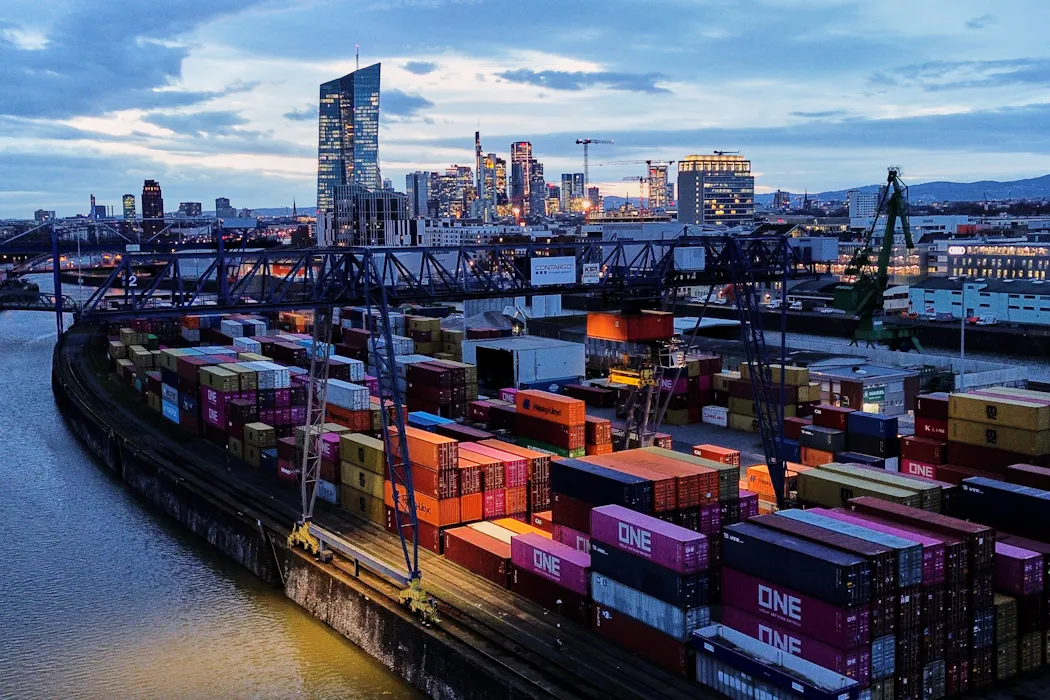
U.S. companies stung by President Donald Trump’s emergency tariffs had hoped for relief when the U.S. Supreme Court ruled in February 2026 in their favor. But settling on a remedy – namely, rebate checks from the government – may be an even bigger headache.
Fresh wrinkles are prompting businesses to take different routes as they try to recoup money, with many opting to sue to improve their odds. These lawsuits are also underscoring the complex ways that tariffs worked their way through corporate accounting. In some cases, their cost was a clear line item; in others, the impact was muddier – say, through changed supply lines or selective increases in retail pricing. And some have backed off from a legal fight altogether and sold their refund rights to investment firms, often at a deep discount, figuring that getting something is better than risk getting nothing.
These technicalities didn’t seem to concern most members of the high court. In fact, only one Justice, Brett Kavanaugh, raised the question of the decision’s practical complications in his dissent. But his warning of “substantial” repercussions now looks more prescient by the day.
“The United States may be required to refund billions of dollars to importers who have paid the … tariffs, even though some importers may have already passed down costs to consumers or others,” he wrote. “As was acknowledged at oral argument, the refund process is likely to be a ‘mess.’”
We are professors of finance and law who have been following these cases closely. To begin untangling the “mess” this ruling created, it’s helpful to focus on the different ways companies processed these tariffs – and why this means that a quick and clean remedy is unlikely.
To refund or not to refund
In its 6-3 decision, the high court concluded that a broad category of Trump’s tariffs imposed under the International Emergency Economic Powers Act exceeded the president’s legal authority. Many companies that had sued for relief in the form of rebate checks cheered the ruling.
Judge Richard Eaton at the Court of International Trade, tasked with overseeing the refund distribution, then ordered the Trump administration to immediately start the process by asking Customs and Border Protection to recalculate its revenues without the tariffs to determine the rebate total – a tally that the agency estimates at about US$166 billion. But no one is sure how long it will take or whether it will work. And that uncertainty is sparking a fresh round of litigation.
Consider the different approaches taken by two businesses that paid the tariffs: logistics giant FedEx and the retail chain Costco. Costco filed suit against the Trump administration before the Supreme Court decision, while FedEx was among the many businesses that sued after the ruling.
Fedex, which saw some of its cross-border business plummet by 25% to 35%, collected tariffs from both U.S. companies importing goods and from U.S. customers ordering from abroad. In this function as broker, it was able to separate out the tariffs as a line item. That means it can more easily calculate what it would pay back to its customers. If Fedex gets the rebates, it has said it will refund all clients who bore the cost.
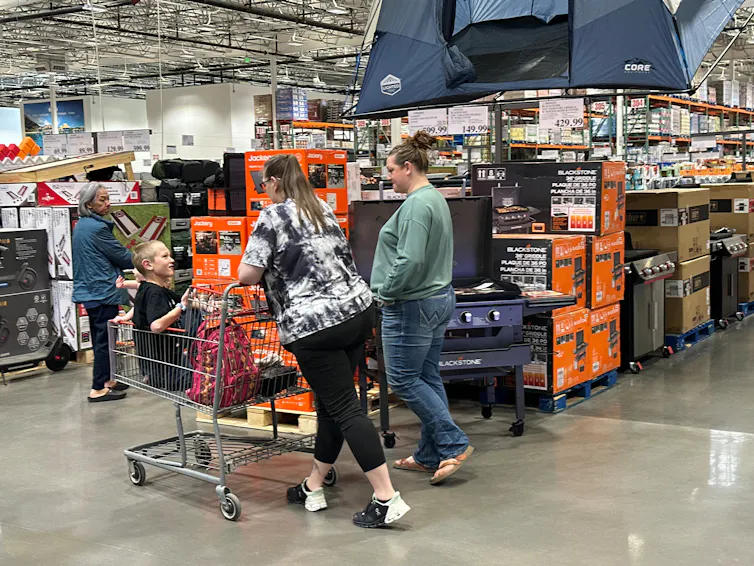
The accounting for Costco, by contrast, is less straightforward. It paid the duties but reallocated much of the cost internally. For some goods, it shuffled its extensive global supply chains to mitigate the tariffs’ bite or covered the cost by selectively hiking prices on items where demand would be less affected. It has not made as explicit a commitment of repaying its customers, although it has said it will try to honor it.
In both cases, executive pledges of refunds weren’t enough to prevent class action lawsuits by skeptical consumers since the Supreme Court’s decision, arguing they needed a more ironclad guarantee.
Avoiding the fight
Other companies, meanwhile, are waiving a legal fight altogether and selling their refund rights to investment firms, often at only a fraction of what they had paid in levies, in the expectation that full repayment is unlikely.
These companies typically are too small to finance a legal battle but big enough to have sufficient money at stake for Wall Street to take interest. For example, Atlanta-based Kids2, which sources almost all of its toy and infant products in China, sold its rights before the high court’s ruling for about a quarter of what it paid out in the emergency tariffs.
Legal complications aside, logistical snags are also emerging. In response to Eaton’s order, Customs and Border Protection chief Brandon Lord stated in a filing on March 6, 2026, that the government was “not able to comply” due to the “unprecedented volume of refunds” overwhelming the agency’s technology. It’s working on an online system to “streamline and consolidate refunds and interest payments,” to be operational in 45 days of that filing, he wrote.
In response, Eaton paused his order requiring immediate refunds, but he has demanded regular updates on CBP’s progress. On March 19, Lord reported that the four components of the new online system were between 45% and 80% functional.
New tariffs may loom
While some companies may get relief for levies they already paid, there’s the risk Trump could still make good on his threat to use other federal statutes to impose tariffs. Those laws aren’t an easy workaround for the administration, but they still provide some options for Trump to apply tariffs on imports, including those that had been affected under the emergency levies.
Further uncertainty, in short, is likely.
As the stock market volatility in 2025 after Trump’s “Liberation Day” announcement showed, this uncertainty can be costly. And the Supreme Court’s decision hasn’t allayed those fears. Companies have delayed investment, stockpiled inventory and diverted resources into compliance and legal review since the tariff wars kicked off.
Such actions can tie up capital that could otherwise fund new employment, higher wages or product innovation. Trump’s trade policy is, in fact, underscoring the basic economic lesson that tariffs don’t eliminate trade but simply make it more expensive, research shows.
Businesses have to decide to either pass these import taxes along to consumers via higher prices or absorb higher input costs themselves. Trump’s experiment is no different. According to fresh research from the New York Federal Reserve, as the average tariff rate jumped from 2.6% to 13% from January through November 2025, almost 90% of the burden hit consumers and businesses.
That’s why tariffs are a rare point of consensus among economists: They harm economic growth and are more costly today than ever before, given how interconnected global supply chains have become. And as the aftermath of the Supreme Court’s ruling shows, undoing their effect is a lot messier than tariff boosters would admit.
The authors do not work for, consult, own shares in or receive funding from any company or organization that would benefit from this article, and have disclosed no relevant affiliations beyond their academic appointment.
Read These Next

An AI model’s false tip to Philadelphia police reveals how digital agents can do as they’re told and
An expert on AI governance explains why these rare mistakes may soon be common, and with much higher…
Offering cash for votes is quite common – but here’s why it doesn’t work
Money or other material benefits are often not enough to override a voter’s preferences and partisanship.

What the failed attack on an Illinois temple reveals about anti-Hindu hate in the United States
Hostility toward Hindu worship practices draws on a long history of prejudice portraying the faith’s…