Controversy over Reese’s ingredients reveals standard food industry practices most consumers never n
Product reformulations are common in the food industry, and they can be done well, or poorly. Who remembers Doritos with olestra?


Springtime in Pennsylvania is peanut butter egg season. This year some consumers may taste the eggs a bit more critically and scrutinize the ingredients and label more carefully.
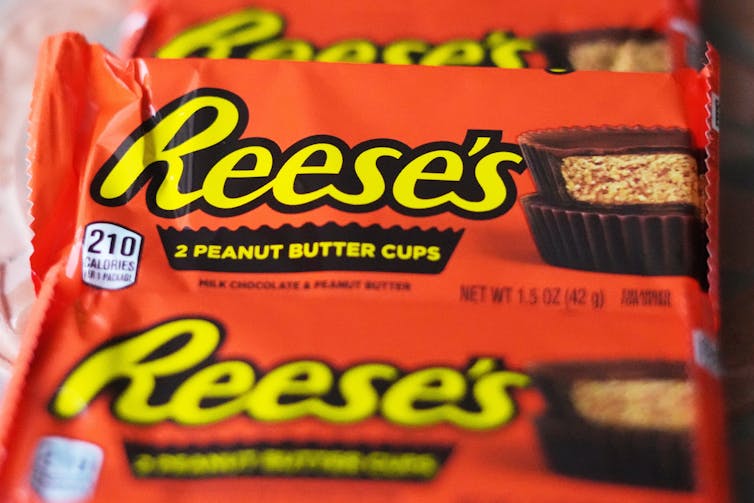
Reese’s, a Hershey brand, is known for combining chocolate and peanut butter in delicious and iconic ways. Reese’s products come in a variety of formats, called “line extensions.” These include everything from peanut butter chips for baking and chocolate peanut butter popcorn for snacking to limited-time offers for holidays – such as the popular Reese’s Peanut Butter Eggs for Easter.

On Feb. 14, 2026, Brad Reese, grandson of the founder, issued an open letter criticizing the Hershey Company for introducing line extensions – in this case, mini hearts for Valentine’s Day, with the flavors familiar to Reese’s lovers but made with cheaper ingredients, such as “chocolate candy” and “peanut butter creme.”
Ingredients like these seem similar but do not meet the FDA standards of identity for milk chocolate and peanut butter, the key components of the original Reese’s cups. For example, the FDA standard for milk chocolate requires at least 10% chocolate liquor.
Hershey responded in a statement: “As we’ve grown and expanded the Reese’s product line, we make product recipe adjustments that allow us to make new shapes, sizes and innovations that Reese’s fans have come to love and ask for, while always protecting the essence of what makes Reese’s unique and special: the perfect combination of chocolate and peanut butter.”
I am a certified research chef and food and hospitality professor in Philadelphia, where I founded the Drexel Food Lab, a culinary innovation and food product development lab. I am also a huge fan of Reese’s Peanut Butter Cups. When my older daughter was a toddler, learning her colors and shapes, I trained her to organize her trick-or-treat loot by separating the orange squares for dad.
As someone with decades of experience in product formulation, I am not surprised that the ingredients for some Reese’s products have changed over the years. One of my first jobs as an intern in corporate R&D was formulating cost reductions for existing products and later developing cost-effective line extensions building on the brand equity of the original product. What Hershey is doing with the Reese’s brand is Consumer Packaged Goods Marketing 101.
How food manufacturers deal with rising costs
Much has changed in the marketplace since Reese’s Peanut Butter Cups were developed by H.B. Reese in 1928 in Hershey, Pennsylvania, about two hours northwest of Philadelphia.
Inflation, tariffs, labor costs, fuel costs, employee benefits, competition and the vulnerability of climate-threatened crops, such as cacao, vanilla and sugar – none of which are produced anywhere near Pennsylvania – have made the confectionery business increasingly challenging.
When faced with rising costs, food manufacturers have three options:
1. Shrink the product. Reese’s Peanut Butter Cups have gradually shrunk from 0.9 ounce in the 1980s to 0.75 ounce today. That’s a 17% reduction. This phenomenon has been dubbed “shrinkflation.”
2. Raise prices. There is certainly a market for premium peanut butter cups, but how much will a consumer pay for the Reese’s brand? $5? $10? I suspect most consumers expect a single serving to be a couple of bucks at most.
3. Lower costs. While the company can improve operational efficiencies, changing the formula to reduce or eliminate high-cost ingredients is a standard industry practice to keep prices consistent for consumers in the midst of a dynamic supply chain. This phenomenon has been dubbed “skimpflation” and is Brad Reese’s main complaint.
Reformulations are common in the food industry. In addition to prices rising in general, a supplier could go out of business or have a shortage. A regulatory change or shift in consumer sentiment might prohibit the use of an ingredient. Wars, tariffs or climate change can raise costs temporarily or permanently.
Reformulations can be done well
Sensory and food science tools that we teach in our Drexel culinary and food science programs help ensure little market disruption and a consumer mostly unaware of the changes.
For example, a consumer discrimination test that food product developers love is a called the triangle test. Two samples from the original formula and one sample from the new formula – or vice versa – are presented to the consumer. If the consumer can identify the different one, the product developer did a poor job in preserving the beloved brand through the reformulation. But if consumers can’t tell the difference, the reformulation may be able to move forward.
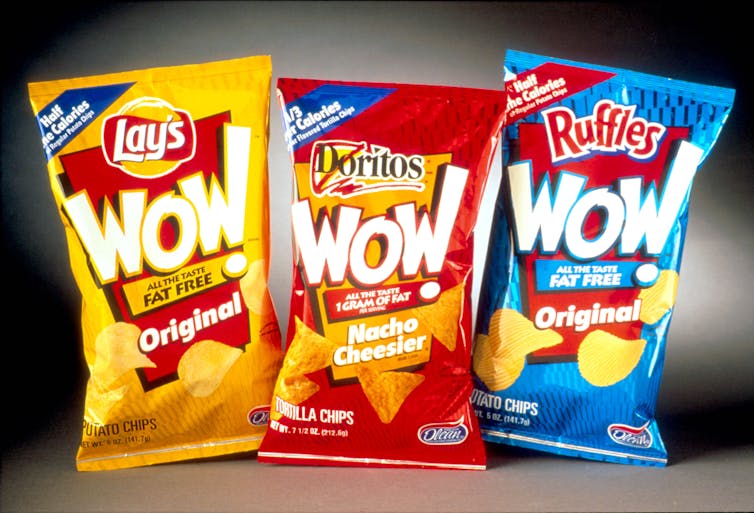
Sometimes product developers get it wrong in introducing a new formulation. Some of us are old enough to remember Crystal Pepsi, the McLean Deluxe burger or Doritos made with olestra. These products failed, respectively, due to lack of defined consumer benefit, misalignment with the brand, and bad press due to digestive side effects.
But most reformulations go unnoticed – the good work of food technologists who strive to keep food safe, affordable and delicious for consumers.
So, are these new Reese’s products inferior to the original? Maybe. Like with taste in art or wine, if it tastes good to you, it’s good. If not, send the company a note like Brad Reese did.
Read more of our stories about Philadelphia and Pennsylvania, or sign up for our Philadelphia newsletter on Substack.
Jonathan Deutsch has previously consulted with The Hershey Company. The Drexel Food Lab has conducted multiple projects with The Hershey Company.
Read These Next

An AI model’s false tip to Philadelphia police reveals how digital agents can do as they’re told and
An expert on AI governance explains why these rare mistakes may soon be common, and with much higher…

Offering cash for votes is quite common – but here’s why it doesn’t work
Money or other material benefits are often not enough to override a voter’s preferences and partisanship.

Human rights could improve – or worsen – based on how nations use the UN treaty against cybercrime
If the treaty enters into force, responsible nations will have to carefully monitor how other countries…