Aldi is coming to Colorado, and the disruption could lead to lower food prices
The grocer offers low prices and plans to build its own distribution center.

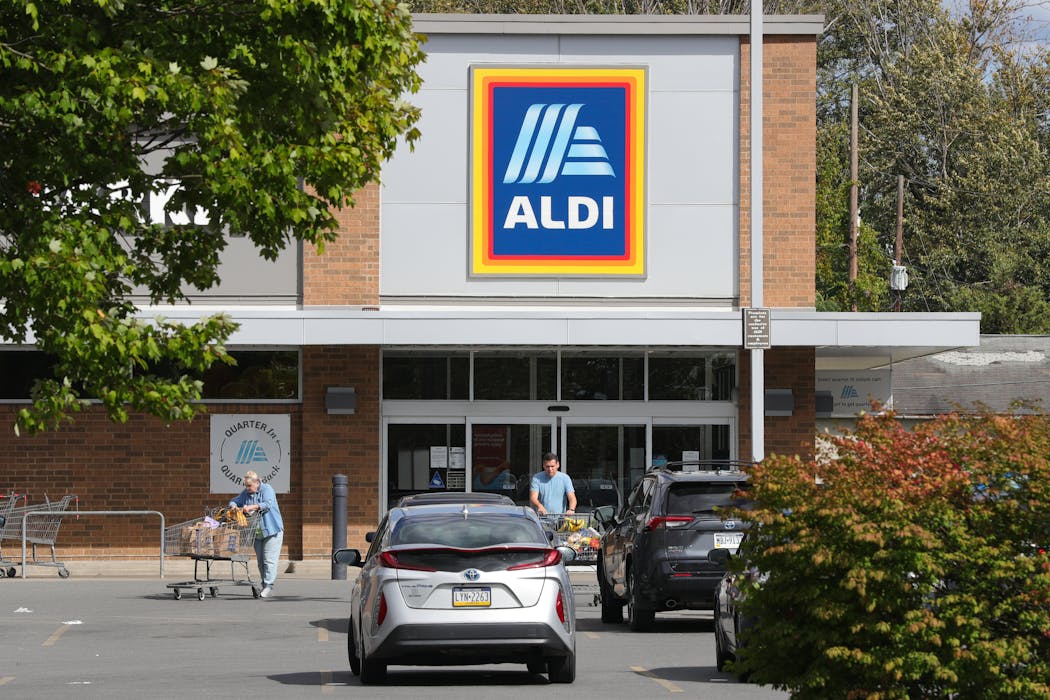
Grocery prices have risen by 25% in Colorado over the past five years, more than wages have grown over that same period.
One of the top issues facing Americans is the cost of living relative to housing, health care and food, according to a Reuters/Ipsos survey from December 2025.
Food prices are a more acute problem in Colorado than in many U.S. states due to a highly concentrated retail and supply chain system. King Soopers, which is part of Kroger, and Walmart control nearly half of the total market share. Safeway/Albertsons is losing market share and closing stores, Costco and Sam’s Club are limited, members-only warehouses, and the remaining stores are niche providers and small independents.
Other than raising concerns about food prices with politicians, consumers can’t do much to address this kitchen table topic.
But food shoppers in Colorado are about to get a new option. Grocery store giant Aldi announced that 50 stores and a distribution center will be built in the state over the next five years.

Opportunity for market disruption
It’s true that Aldi’s 50 stores will barely make a dent in a state with well over 1,000 places to buy groceries. But when entering a market, Aldi doesn’t try to compete head-to-head against the giants. Nationwide, it controls just 3% of market share versus Walmart’s 21% and Kroger’s 9%. Instead, Aldi enters a market as a lowest-cost retailer, something that is desperately needed in Colorado.
I spent 20 years in the food industry and research the supply chain.
From my experience, I’ve seen retailers consolidate their market share by lowering prices – only to raise those prices again once the competition has gone out of business. Quite possibly, Aldi’s supply chain strategy is the greatest opportunity to disrupt the stagnation in Colorado’s food market and create positive change for consumers.
Competition in Colorado
Making Colorado’s grocery market more competitive isn’t as simple as adding new stores. There’s a chicken-and-egg, no pun intended, conundrum between retailers and the food supply chain, leading to a lack of healthy market competition.
Colorado isn’t a particularly attractive market for food supply chains because it lies in the sparsely populated and remote Mountain West region, and other than beef, it isn’t a significant food producer. The state is largely a food importer. Its vegetables come from California, Arizona and Mexico, processed meats from Nebraska, Kansas and Texas, and packaged foods from the Midwest.
Colorado has a stable retail market through the two largest grocery chains in the U.S. – Kroger and Walmart – but the state does not offer an attractive opportunity for new entrants or even those existing players. Walmart, for example, has a lower market share of 11% in Colorado than its average U.S. share of 21%. These two companies have little incentive to compete by bringing costs down for Colorado’s consumers.
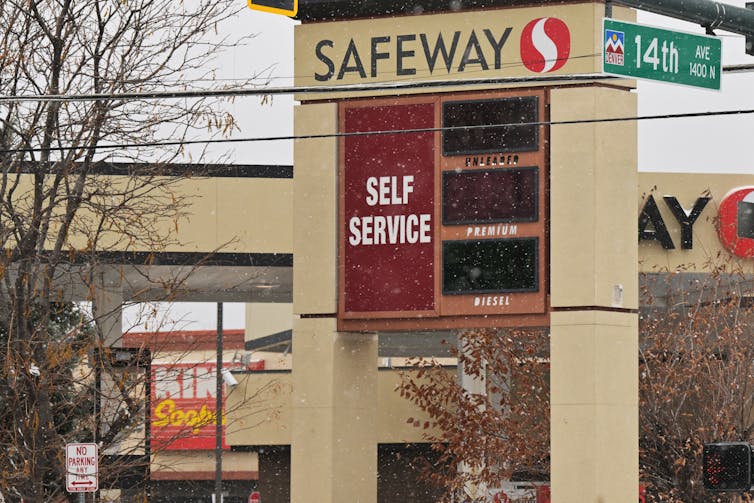
The grocer market was weakened in 2024 in Colorado and other parts of the U.S. due to a failed merger attempt between Kroger and Safeway/Albertsons. The merger, blocked by a federal court, left these companies in a no-man’s-land in the American food system: not large or efficient enough to compete against Walmart, and not nimble and focused enough to compete against the new upstarts, such as Trader Joe’s and Aldi.
Aldi to upset the market
Nontraditional supermarkets, such as Walmart and Aldi, pose an existential threat to the traditional American supermarket. Nontraditional supermarkets hold 63% of U.S. market share versus 37% for traditional.
It is becoming increasingly difficult for the traditional American supermarket, such as King Soopers, to compete with nontraditional stores that operate on razor-thin margins, pay higher wages and operate massive stores that offer a huge selection of offerings, such as 100 kinds of salad dressing.
In the face of the new realities of higher food costs, I believe that only Walmart can survive in this supercenter model. The alternative is a trend toward smaller, more nimble stores with lower costs and a smaller number of products.
Aldi’s arrival in Colorado may be the necessary catalyst for disruption. It has the lowest costs – and the lowest profit margins – of any grocery retailer in the U.S. Aldi mainly operates relatively small stores, which means it has lower overhead and sells fewer products than many of its competitors. The key to its low-cost strategy is that nearly all of its product lines are private label. They are produced by a manufacturer and sold under Aldi’s brand name, lowering marketing costs.
Aldi announced plans to build a distribution center in Aurora, Colorado, by 2029. The new center will join ones owned by Walmart and Kroger, creating a more robust, local food supply chain infrastructure that is necessary for lower food prices.
Supply chain innovation coming to Colorado
Americans spend 10% of their income on food, one of the lowest rates worldwide, but many feel like they are becoming less able to afford the groceries they need.
In Colorado, food insecurity affects 1 in 8 people. Rural areas of the state and pockets within cities have become food deserts where the largest supermarkets choose not to enter.
Aldi’s smaller stores, private label products and Colorado-based supply chain system could have a ripple effect on retailers in low-income areas where Dollar Tree and regional independents currently dominate. A stronger emphasis on nimble and efficient food supply chains in places with many supermarkets will inevitably spill into underserved communities with very few or none at all. It’s even possible that this could improve food affordability and accessibility across the state.
Jack Buffington does not work for, consult, own shares in or receive funding from any company or organization that would benefit from this article, and has disclosed no relevant affiliations beyond their academic appointment.
Read These Next

Using light to control brain cells – neuroscientist Karl Deisseroth explains how he made his Nobel-w
Optogenetics, a field that started with an algae gene, is shedding light on new treatments for eye and…

Americans who go to church and trust science are also more likely to believe in ghosts and curses, n
Belief in science and belief in magic can coexist.
Ketamine’s role in alleged Cornell rape highlights flood of psychoactive drugs on campus
The growing availability of these substances is worsening the already bad problem of sexual assault…