30 years after ‘Reasonable Doubt,’ Jay-Z’s career embodies hip-hop’s biggest contradictions
What happens when a rapper whose early work explored capitalism’s brutality becomes one of the system’s most successful beneficiaries?

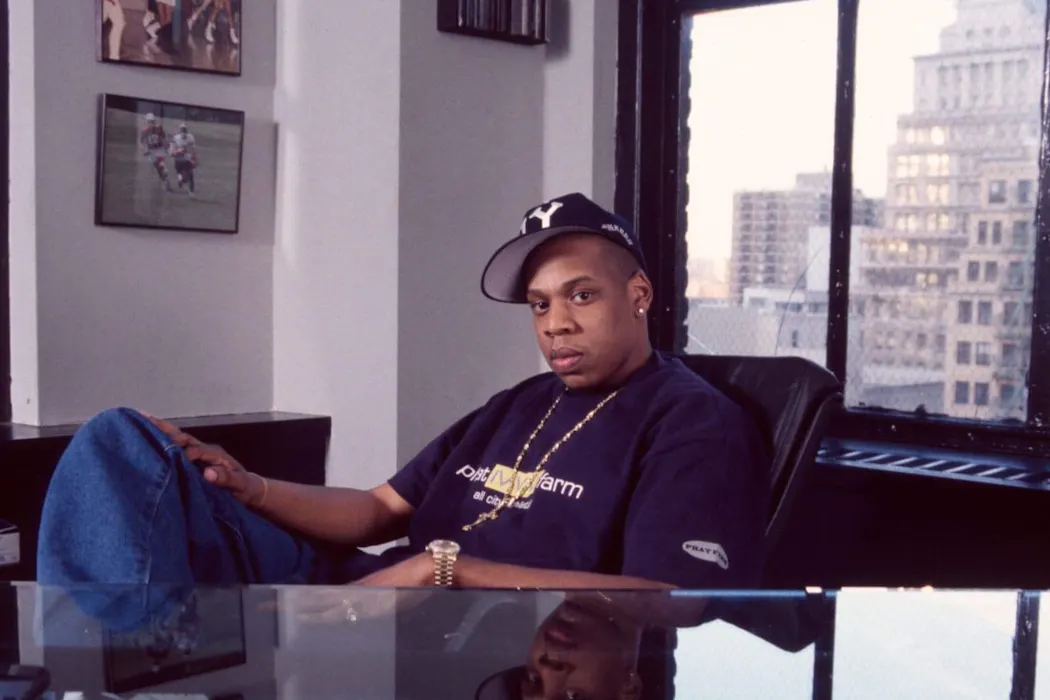
“Reasonable Doubt” was not the first rap album I ever owned. But Jay-Z’s debut was the first hip-hop album I bought with my own money. More importantly, it was the first one I studied as a young writer who aspired to become a rapper, a dream that eventually came true.
Jay-Z sounded cool in a way that resembled a jazz musician more than a conventional rap star. He rapped with a quiet calm that also conveyed supreme confidence. His lyrics were layered, skillful and unorthodox.
Yes, the tracks often revolved around drug dealing. But the hustlers who populated “Reasonable Doubt” weren’t degenerates. They were refined and astute thinkers. And unlike other gangsta rappers, there was a moral quandary at the heart of his storytelling. In tracks like “D’Evils,” Jay-Z’s narrator turns crime, aspiration and paranoia into meditations on capitalism and the psychic cost of wealth:
We used to fight for building blocks
Now we fight for blocks with buildings that make a killing
The closest of friends when we first started
But grew apart as the money grew, and soon grew black-hearted
And later:
My soul is possessed by D'Evils in the form of diamonds and Lexuses
The cinematic complexity displayed in its tracks helps explain why “Reasonable Doubt” was inducted into the Grammy Hall of Fame, and why it still matters 30 years later.
But the album also launched the career of a rapper whose own trajectory has come to mirror hip-hop’s own transformation.
In 1996, hip-hop was still fighting for legitimacy. Three decades later, it had been folded into the mainstream. Kendrick Lamar can win a Pulitzer Prize, Nas can have an endowed fellowship at Harvard University, and Jay-Z, who once couldn’t get signed to a label, can create a label of his own and become a billionaire business mogul.
Is it even possible for hip-hop to be seen as countercultural in 2026? And what happens when hip-hop’s most successful outsider becomes central to the very institutions he once seemed to challenge?
From moral panic to corporate behemoth
When “Reasonable Doubt” was released, hip-hop was both ascendant and under siege.
In February 1996, Tupac Shakur came out with “All Eyez on Me,” which became one of the bestselling rap albums of all time; seven months later, he was shot and killed. His friend-turned-rival, The Notorious B.I.G., was shot and killed in a drive-by shooting the following year. The media often cast these high-profile deaths as proof that rap music was inseparable from street violence, and the moral panic around hip-hop’s influence on young listeners only intensified.
How times have changed. Today, hip-hop powers advertising campaigns, luxury branding and streaming platforms. According to Nielsen, rap surpassed rock music as the most popular music genre in the U.S. in 2018. Today, it accounts for roughly 1-in-4 on-demand audio streams.
Jay-Z has played an outsized role in that transformation.
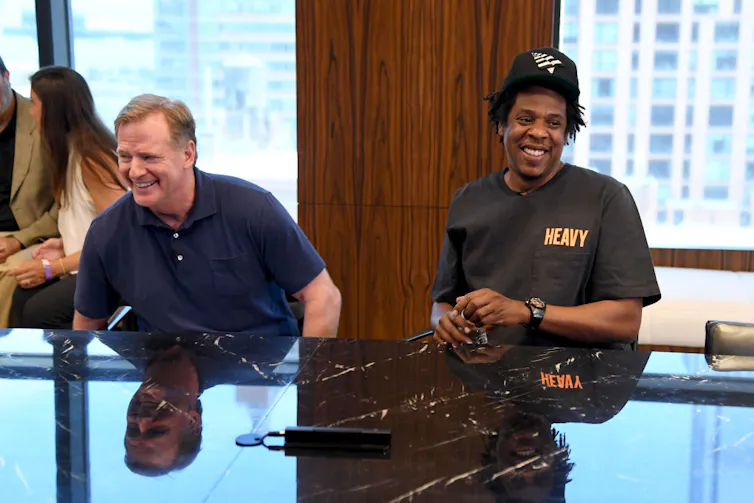
Since 1998, he’s won 25 Grammys for his own music. In that time, he’s also built a business empire. There’s his talent agency, Roc Nation; his streaming platform, TIDAL; his venture capital firm, Marcy Venture Partners; and his luxury alcohol brands, Armand de Brignac and D’Ussé. Through Roc Nation, he’s also a strategic partner with the NFL, advising the football league on its entertainment programming.
Forbes currently pegs his net worth at US$2.8 billion.
Confronted on capitalism
In April 2026, GQ published a long interview with Jay-Z.
This was a big deal: Jay-Z hadn’t interacted with the media like this since 2017, when he was promoting his 13th solo album, “4:44.”
How would one of hip-hop’s elder statesmen reflect on his career and his many successes?
In the interview, Jay-Z didn’t present his riches as a complicated outcome of capitalism’s contradictions. Instead, he talked about his wealth as if it were something his critics had failed to understand. When asked about the belief that there’s something inherently suspect about accumulating so much money, he pushed back:
“It’s almost like a cop-out. You get to demonize this group of folks without fixing the actual system that exists […] Your morality defines who you are. Your morality is not defined by a dollar amount.”
As for the notion that his career trajectory was somehow hypocritical:
“The only thing I heard coming up was the American dream. You could make it, if you pull yourself up by the bootstraps. I heard that my entire life – until we started being successful. Then it was like: You’re selling out because you’re making money.”
He then went on to insist that being handsomely paid is not some sort of betrayal to hip-hop, art or his community.
“I make art first and then I make sure that I’m compensated for my art. … That [capitalist] structure exists; I just see the world for what it is, not for what I want it to be. I’m a realist.”
To me, Jay-Z certainly sounded persuasive. He also sounded defensive. I think that’s because hip-hop has long been haunted by the idea that wealth compromises credibility, even as the tracks have always contained aspirational themes of luxury and entrepreneurship.
Don’t hate the player, hate the game
For my generation, Jay-Z sold aspiration in addition to albums.
I wore Rocawear denim suits in high school with a kind of conviction that now feels almost funny to admit. In college, drinking Belvedere vodka, which appeared in many a Jay-Z track in the early 2000s, felt like a rite of passage.
That’s because Jay made luxury seem urbane, sophisticated and distinctly Black. Even later in life, when I’d smoke Cohiba cigars, drink D’USSÉ or read about art collecting, I felt like I was living inside a script he had helped write.
Looking back, I can see that much of my admiration for him was cloaked in materialism. Now, I think about the work of political scientist Cedric Robinson, who wrote extensively about what he called “racial capitalism.”
He argued that capitalism has always been structured through race. It does not merely tolerate racial hierarchy; it depends on it. That means Black wealth – even spectacular Black wealth – does not automatically equal Black liberation. One Black billionaire can be held up as evidence of progress, while the broader system that continues to produce Black inequality remains intact.
In other words, if Jay-Z’s ascent becomes shorthand for Black progress, then the critique of the system that continues to oppress those at the margins starts to fade. The culture begins to confuse exceptional mobility with collective freedom.
At the same time, I don’t think Jay-Z can be simply understood as a sellout. Communication scholar A.J. Escoffery has written a lot about what he calls “reparative media.” Essentially, he calls for media institutions to do more than offer tokens of representation to marginalized communities. Media companies need to be built or owned by those communities.
Jay-Z’s defenders will sometimes describe him along these lines – as a Robin Hood-like figure who has taken capital from historically white-owned institutions and redirected some of it toward Black communities or Black entrepreneurs. Even if those gestures remain, at heart, capitalist – like his investments in cannabis brands – he’ll often use his positioning and clout to fund minority-owned businesses.
In the GQ interview, the rapper seemed to acknowledge the compromises he felt compelled to make, and he spoke of the limits Black artists face in industries they do not own:
“[There’s] nowhere you’re going to go that Black people control distribution and control media. At some point you’re going to have to partner with somebody.”
In that, Jay-Z highlights what hip-hop continues to grapple with. The genre no longer has to prove it belongs in the mainstream. But it has to figure out what it means to survive without being fully absorbed by it.
Jabari M. Evans does not work for, consult, own shares in or receive funding from any company or organization that would benefit from this article, and has disclosed no relevant affiliations beyond their academic appointment.
Read These Next
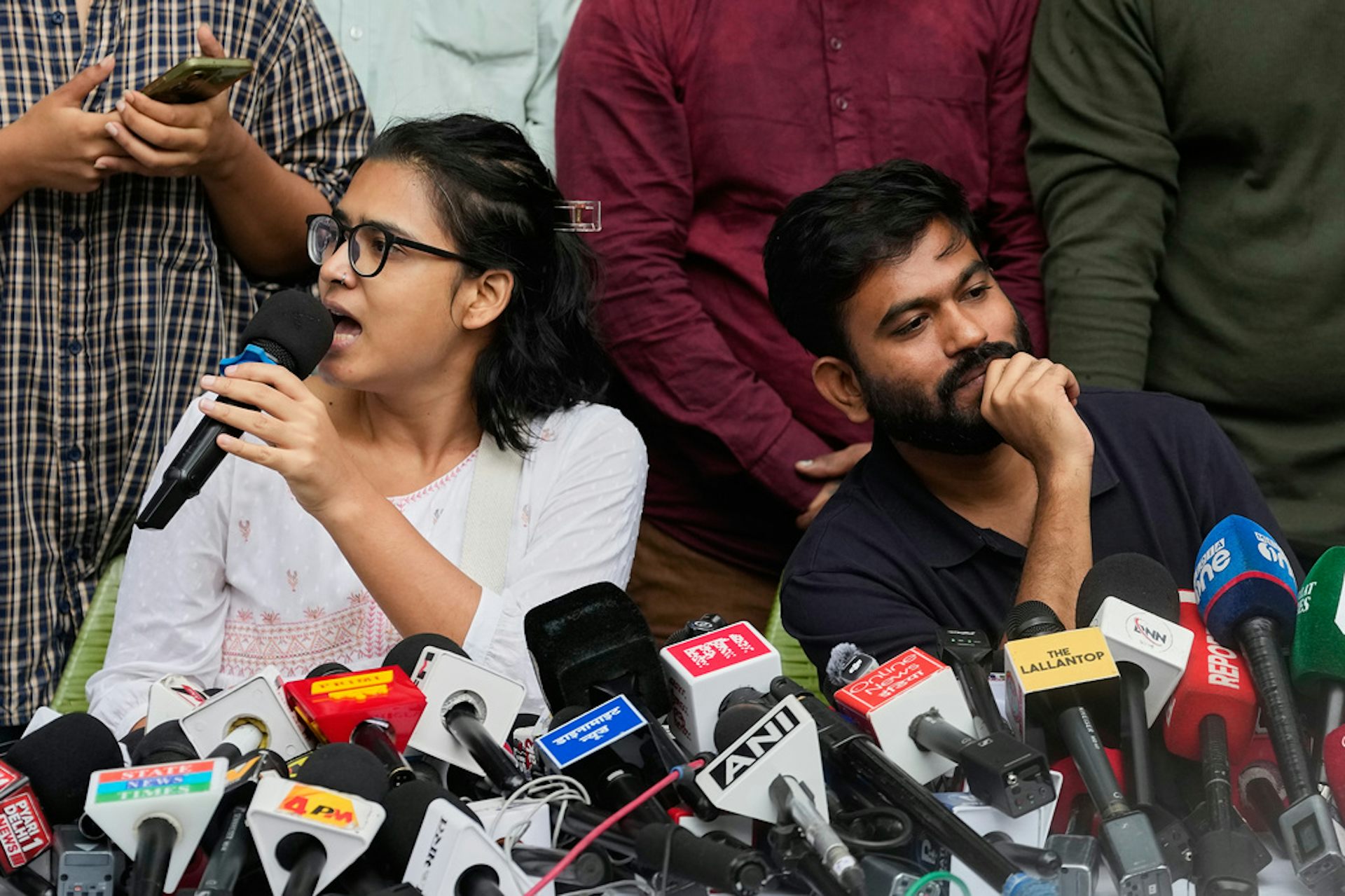
Indian Gen Z ‘cockroach’ protesters aim to upend assumptions about democracy – and populism – in Mod
The protests challenge the government’s view of who “the people” are, what democracy means, and…

Are transgender sports bans really about protecting women? Survey data tells a different story
In a recent national survey, Americans with the most negative views of women were the biggest proponents…

Palestinian citizens face a painful choice in Israel’s election: To vote or not
More than a third of Israel’s Palestinian citizens are expected to sit out the election.