What we misunderstand about absent fathers
As a new father, a scholar used his research on absentee fatherhood to reimagine his own childhood without his dad.

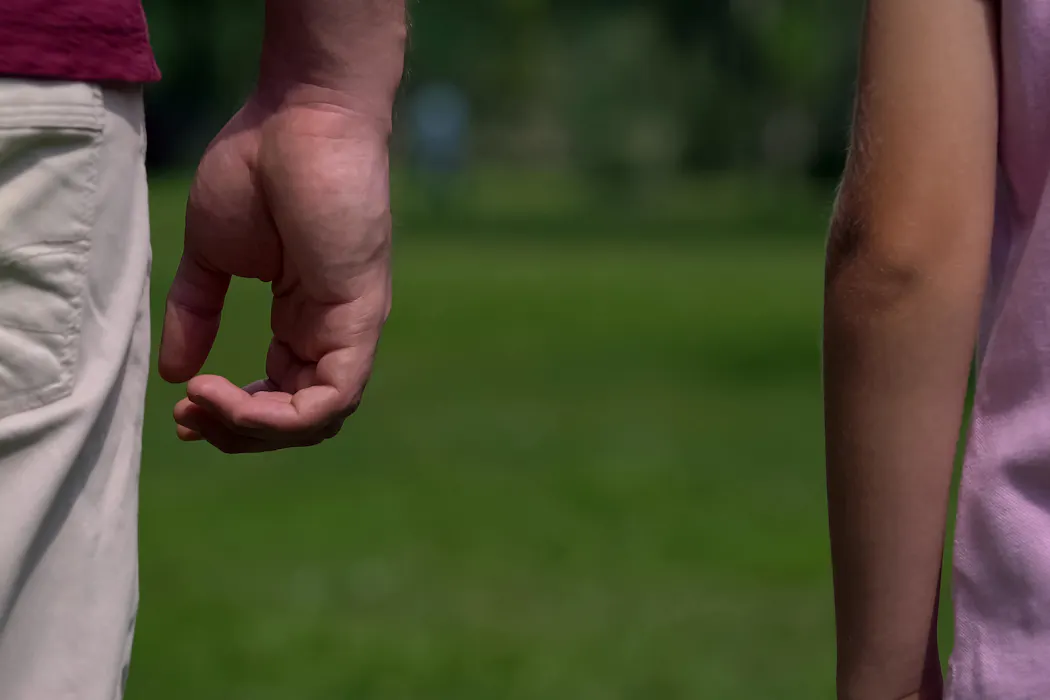
“What do dads do on Tuesdays?”
This wasn’t a rhetorical question when I posed it to my wife as our daughter’s birth approached. Before my daughter was born, I had seen my father just once in the past 27 years. That’s over 1,400 Tuesdays. In fact, as a kid I hardly saw fathering any day of the week, save for on TV sitcoms; absent dads were prevalent within my family and among my peers.
My daughter was born on a Saturday. My first Tuesday as a father came and went in a blur of exhaustion. I’d always loved playing and working with kids. I felt generally competent in what to do with my newborn daughter. Yet as I held her, insecurity from my father’s absence kept me questioning: Will I be better than my absent father?
Absence assumes different forms
Years before my daughter’s birth, I was a first-year Ph.D. student intending to study Black men and how their memories of childhood affected them as adults.
My pivot toward focusing on fatherhood began while I was conducting interviews for a larger study on men of all races and unemployment. After completing these interviews, I was surprised to see that 85% of my respondents grew up with absent fathers. The nature of the absences – how they occurred and how they felt – struck me as a more compelling area of study.
Historically, scholars and policymakers looked at whether fathers lived with their kids as the sole criterion when designating them as “present” or “absent.” Yet, my respondents’ stories revealed distinctions that “nonresident” alone did not capture. Specifically, my analysis identified four unique patterns of absence: “consistent,” “inconsistent,” “extended” and “absolute.”
Consistent absence includes regular interactions, like every Tuesday after school or every weekend.
Inconsistent absence involves irregular and unpredictable interactions – a dad who promises to show up on Tuesday but doesn’t appear until Friday, or disappears for weeks at a time.
Extended absence occurs when years pass between interactions: meeting your father for the first time at 9 years old, and then having no interaction with him until he shows up at your high school graduation, for instance.
Finally, absolute absence means interactions never occurred or they can no longer occur, such as a father who died or disappeared, with his whereabouts unknown. Some people in this category didn’t even know their fathers’ names.
These categories complicate what can otherwise be oversimplified.
For example, the fathers of Presidents Bill Clinton and Barack Obama were both absent, but in distinctly different ways.
Clinton’s biological father died in a car accident before he was born – an absolute absence. Obama’s father left the family when Barack was 2 years old and reappeared only once, years later – a relationship characterized by extended absence.
In contrast, other famous people saw their absent fathers more regularly.
The parents of the rapper Ye, formerly known as Kanye West, divorced when he was 3 years old, but he grew up spending summers with his father, putting the absence in the “consistent” category. Similarly, Maroon 5 singer Adam Levine regularly saw his dad on weekends after his parents divorced, which I also classify as a consistent form of absence.
Better than my father, or better than his absence?
Ironically, I became a father as I began my dissertation research on absent fathers. Using the four categories of paternal absence I developed, my dissertation examined how men’s experiences with absence shaped their own aspirations for fatherhood and romantic relationships.
I wanted to showcase the complexity and range of experiences of growing up with an absent father, while also exposing the disparity in how people remembered their absent fathers. Specifically, some people knew their fathers, while others knew only that their father was absent. This memory gap makes it harder for some new dads to envision what it means to be better than their own fathers.
Like me, the men I interviewed for my research relayed anxieties about navigating fatherhood. Like me, they wanted to be better than their fathers.
But we all differed in how prepared we felt for the task. Some had vivid memories to guide them: One respondent, who experienced inconsistent absence, hated that his father never showed curiosity in getting to know him. So when he became a parent, he made sure to ask his daughter questions so she would know he cared about her life.
Yet those with little to no memories of their father may aspire to be, as another respondent put it, “a father like my mother.”
Doing this work, I’ve been able to reimagine my own experience with absence.
I used to assume that the pattern of absence I experienced with my own dad reflected a standard. My parents divorced when I was 3 years old. I saw my father regularly until moving away at 6 – a form of consistent absence. But the rest of my childhood passed without seeing my father, shifting me to extended absence. I used to wrongly dismiss less extreme patterns of absence, such as seeing one’s father weekly or monthly, as “not absence.”
My unique experience of absence has also distinctly shaped how I remember my father. My memories mainly come from 6 years old and earlier. Many are unfavorable, like his smoking in the car, knowing I had asthma. Some fond ones exist, like the two of us walking on the beach or feeding ducks at a local pond.
Still, what I recall most is my fear of my father. The origins of this fear escape me. I’ve been told he abused my mother, but I don’t remember witnessing it.
These scant memories presented a paradox as I entered fatherhood: I didn’t want to be feared like my father, but I didn’t know exactly what made me afraid of my father. This uncertainty loomed throughout my early years of parenting: When my daughter cried in my arms or preferred my wife over me, was it simply a sign of normal fussiness? Or had I unknowingly become a scary figure, like my father?
From abandoned son to present father
I last met my father 20 years ago. I was full of hate when that meeting began, but this hatred soon dissipated. First, I realized I wasn’t angry at my father, because I barely knew my father. I was angry at his absence. Second, I learned that his father was absent, too.
They say “hurt people hurt people.” Before my dad was an absent father, he was missing his dad, too. This doesn’t excuse his absence or his treatment of my mother. But it did make it harder to hate someone who was probably hurting like me.
As I continue to explore the impact of absent fathers as an academic, I continue to reconcile my transition from abandoned son to a present father. Lacking inspiration or guidance from my own father, I’m practicing fatherhood on my terms.
For me, that’s meant building traditions. From the outset, we’ve created routines around music, dancing, bath time, reading and talking about “big emotions.” Our most meaningful tradition has been our weekly daddy-daughter breakfast, which I started when she was 18 months old. She’s now 8.
Sometimes we go on Tuesdays. But any day of the week is fair game.
Matthew Alemu previously received funding from The Rockefeller Foundation, which provided financial support to the Michigan Recession and Recovery Study (MRRS) at the University of Michigan where Dr. Alemu was a graduate research fellow
Read These Next

Palestinian citizens face a painful choice in Israel’s election: To vote or not
More than a third of Israel’s Palestinian citizens are expected to sit out the election.

Yemen’s Houthis are bringing their war to Saudi Arabia – and reframing the narrative of being an Ira
A deadly bombing at Riyadh’s international airport is the latest in a tit-for-tat retaliation campaign…
Guilfoyle resigns as ambassador to Greece – adding to the global vacancies sapping US embassies
Ninety-two out of 196 U.S. ambassador jobs are currently unfilled. That includes countries that are…