How Amazon workers made glamour a form of protest
Glamour isn’t just for the rich and famous. As the ‘Ball Without Billionaires’ showed, the blue collar can bedazzle.

Strutting down the catwalk in a Cindy Castro frock, 37-year-old Amazon worker Samari Jomar Mercado looked like an ethereal punk-rock fairy: sleeve tattoos, lace bag on her wrist and a white ribbon billowing from her nape like a flag. After a dramatic pivot and pit pose, she paused to salute her rapturous crowd.
“For years she worked 10 hours a day, six days a week … lifting heavy items at a fast pace,” emcee Lisa Ann Walter announced as Mercado sauntered by. “She circulated a petition among her co-workers and filed an OSHA complaint about air quality … and is here today to show others that you don’t have to be afraid to speak up.”
At the May 4, 2026, fashion show in New York’s Meatpacking District, “Ball Without Billionaires,” the models were employees from Amazon, Whole Foods and The Washington Post protesting the Met Gala that was set to take place 5 miles away. The star-studded soiree was co-chaired by Amazon founder Jeff Bezos and his wife, Lauren Sánchez Bezos.
“So let those billionaires have their Met Party,” scoffed co-host Gabriella Karefa-Johnson. “We’re going to do something way more fabulous down here!”
As I watched reel after reel of the Ball Without Billionaires spill from my Instagram feed, it was clear that the downtown labor rally worked precisely because the runway models really – to wield the term made mainstream by drag queen RuPaul – “werked.”
The word has its origins in queer ballroom parlance. According to media scholar madison moore, it refers to “a type of aesthetic labor … seen on the body [that] highlights the effort that goes into making memorable aesthetic moments happen.”
In other words, the poise, verve and bravado displayed by the models were part of the activism that was on display – not merely a front for a larger cause.
“[G]reat style is never simply style for style’s sake,” writes moore in “Fabulous: The Rise of the Beautiful Eccentric.” “It’s also a form of protest, a revolt against the forms and systems that oppress and torture us all every day.”
In fact, in a time when artificial intelligence imperils the livelihoods – and lives – of laborers across economic classes, sumptuous spectacle can be an act of resistance in its own right.
I would never claim that glamour could undo the exploitative, demoralizing reality of so many jobs in the Bezos era. But political movements that reject the mysterious pleasures of artifice are only doing themselves a disservice by excluding those who otherwise would be ideologically aligned with them.
Pleasure vs. purity tests
Purity tests related to flashy femininity have been around for a long time.
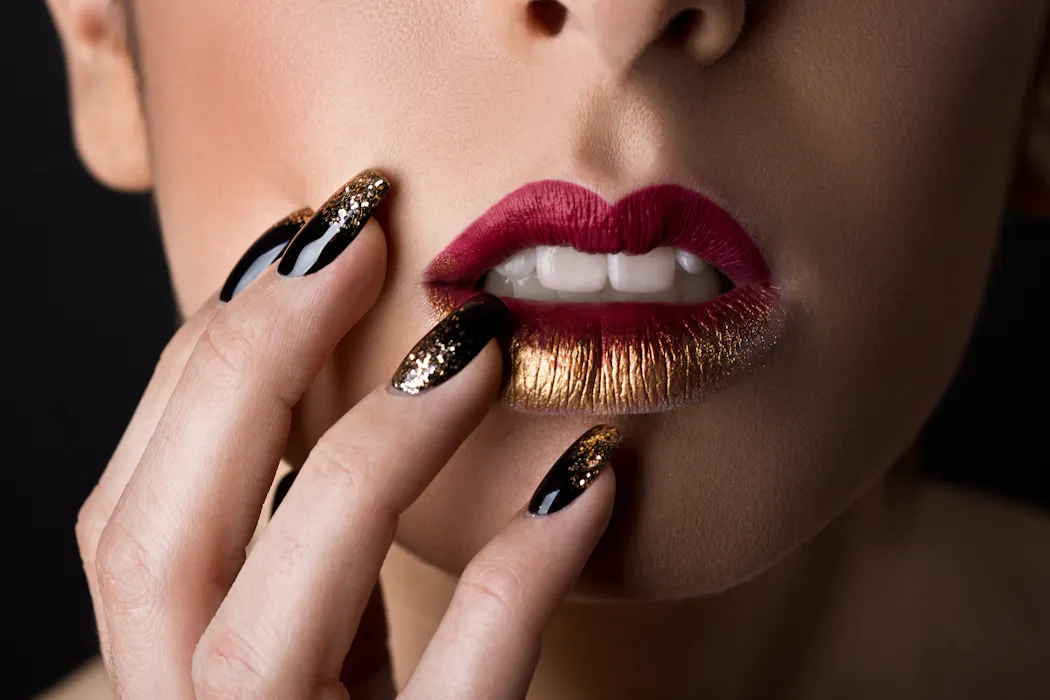
But as I argue in my recent book “Lipstick,” self-adornment can be an act of willful self-determination and creativity; a love of visual panache need not be wholly shunned as a sign of materialism and superficiality. It can even unite people across differences through joyful sartorial flourishes in public space.
So why aren’t more people signing up for decadent dissidence?
Whether it’s stigmas against shiny fabrics or traffic-stopping lip shades, anti-glamour sentiments go all the way back to the late 19th century, a period when early feminism overlapped with Victorian mores around feminine modesty and virtue.
While not all feminists back then rejected frippery, those with the loudest voices tended to come from elite New England families that prized simplicity and self-restraint.
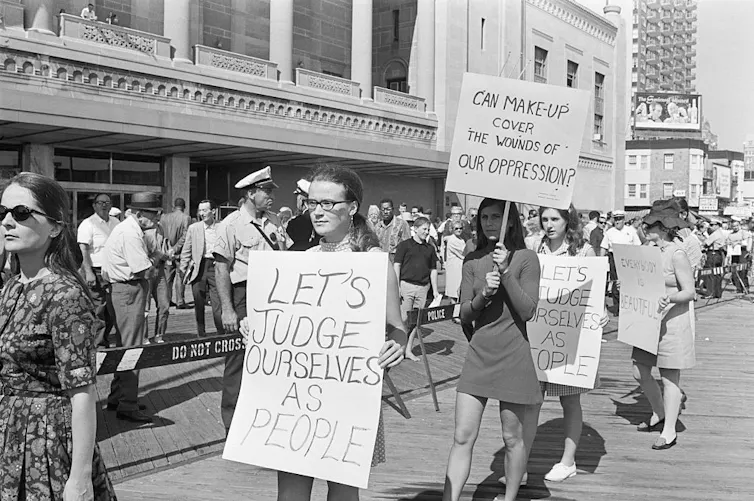
Nearly a century later, many feminists saw glamour as a tool of oppression. During the 1968 Miss America protests in Atlantic City, New Jersey, demonstrators from the National Women’s Liberation Movement threw items associated with restrictive beauty standards – including cosmetics, false eyelashes, hairspray, girdles and bras – into a “Freedom Trash Can.”
The antipathy of left-wing movements toward glamour usually stems from justified concerns over the harms of what Karl Marx dubbed “commodity fetishism.” When a satin skirt or silk scarf is valued primarily for the status endowed upon its wearer – rather than its functionality as clothing – products take on a mystical status. This can obscure economic realities, including the all-too-common exploitation of the workers who made the clothing.
In his seminal 1972 book, “Ways of Seeing,” art critic and socialist John Berger argued that glamour was merely the “happiness of being envied” and that people were trying to transform themselves through buying more and more products they didn’t really need.
So it’s no wonder that anyone wary of misogyny and capitalism might also be wary of fashion and beauty culture – which, at least superficially, augurs only the transient thrill of surface-level gratification.
That said, I think a sanctimonious stance against glamour only winnows the coalition of people willing to speak truth to power.
Beauty as resistance
During my research for “Lipstick,” I surveyed nearly 100 cisgender women, transgender women and nonbinary people between the ages of 18 and 78. Whether painting one’s pout was deemed empowering or degrading often reflected the feminine expectations of different generations.
Those who came of age in the past three decades of the 20th century were often more ambivalent about what lipstick – and bright makeup in general – signaled to others. Part of that tension comes from makeup being seen as an obligation – of womanhood, of courtship, of work attire – which, as I argue in “Lipstick,” often precludes it from being a form of creative expression.
On the other hand, when self-adornment isn’t tied to the pressure to conform, it can become a practice that privileges play, experimentation and transformation.
In her essay “Beauty Laid Bare: Aesthetics in the Ordinary,” the late radical feminist bell hooks argues that “[l]earning to see and appreciate the presence of beauty is an act of resistance in a culture of domination that recognizes the production of a pervasive feeling of lack, both material and spiritual, as a useful colonizing strategy.”
To take it a step further, everyday glamour among the marginalized and working class reveals that a fierce look has little to do with luxury designers and their exorbitant price tags. The blue collar can also bedazzle.
Don’t ‘throw out the bubblebath and the baby’
Much contemporary anti-glamour sentiment betrays a strain of misogyny, even when wielded by women of good intent.
Some of this antagonism falls under what independent scholar Sophie Lewis calls “feminist machismo.” As examples, Lewis points to feminist legal scholar Catherine MacKinnon dismissing femininity as women kowtowing to their own sexual degradation and columnist Moira Donegan mocking the “girlish silliness” of Katy Perry.
In Lewis’ forthcoming book “Femmephilia” – a text that extols both bombshell Marilyn Monroe and Beat poet Diane Di Prima – the author wryly asserts, “In villainizing the power and pleasure of the womanish tout court, cultural feminists throw out the bubblebath and the baby.”
History provides multiple instances in which feminists not only fought against the patriarchy but also unabashedly embraced feminine pleasure.
At New York mayor Zohran Mamdani’s inauguration, singer-songwriter Lucy Dacus sang “Bread and Roses,” a labor and suffragist anthem based on a 1912 strike of the same name. Led largely by immigrant women who wanted higher pay and better working conditions at their Massachusetts textile factory, the strikes were the first in which song played a crucial role.
“We want bread, but we want roses, too!” read one of the picket signs, suggesting that a good life is not made of mere subsistence but of sweet-smelling extras.
Whether it’s “Bread and Roses” or “Bread and Lipstick,” the credo is the same: People need beauty and pleasure – and, yes, even glitz – to make life worth living. Events like Ball Without Billionaires seem to usher in a new chapter in activism – one in which solidarity might also be forged in stilettos.
“I have never felt so much love and empowerment with a crowd,” Mercado told her Instagram followers a few days after her runway debut. “Labor is art, art is culture and culture is ours. We demand better and we deserve better.”
Eileen G'Sell does not work for, consult, own shares in or receive funding from any company or organization that would benefit from this article, and has disclosed no relevant affiliations beyond their academic appointment.
Read These Next
Indian Gen Z ‘cockroach’ protesters aim to upend assumptions about democracy – and populism – in Mod
The protests challenge the government’s view of who “the people” are, what democracy means, and…

Chiricahua is the nation’s newest national park – what does that mean?
What comes next for Chiricahua, now that is has been officially redesignated as America’s 64th national…

An AI model’s false tip to Philadelphia police reveals how digital agents can do as they’re told and
An expert on AI governance explains why these rare mistakes may soon be common, and with much higher…