The costume maker who convinced Hersheypark to embrace candy mascots and ‘chocolatize’ their old-tim
Hersheypark underwent a total transformation in the 1970s, when candy mascots and thrill rides replaced barn animals and old-timey recreations of Tudor England.

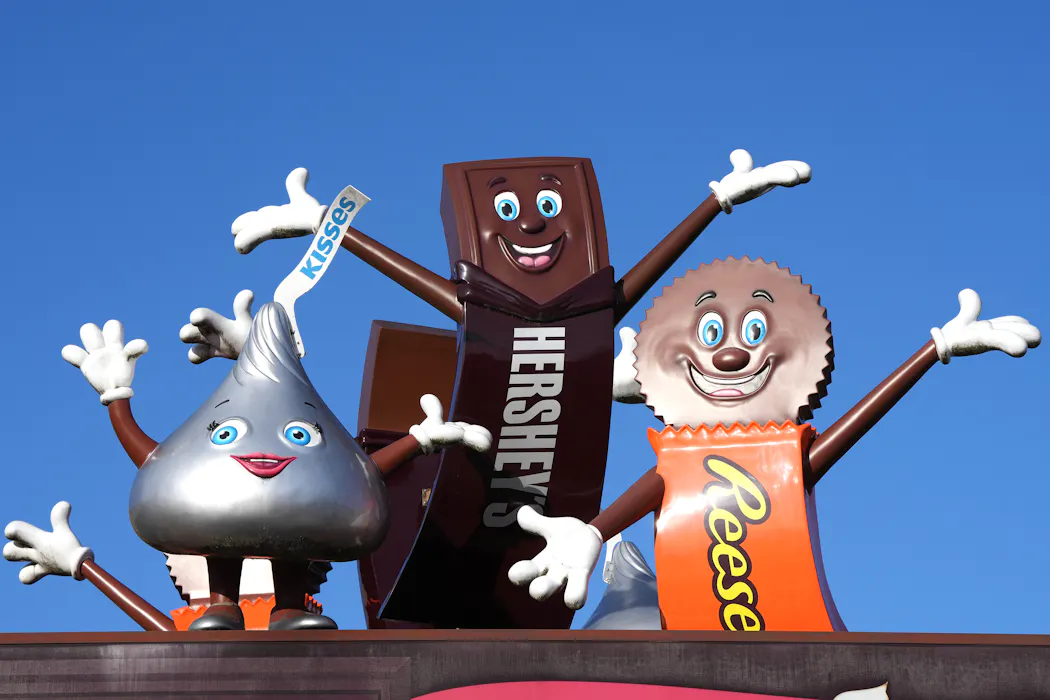
A theme park has to have an identity. If you want to know the two things that Hersheypark does especially well, just approach the entrance.
There you will meet a friendly candy mascot – perhaps a Hershey bar, Reese’s Cup or Jolly Rancher. Soon thereafter, you will encounter Candymonium, one of the park’s newest colossal roller coasters. These marvels of engineering elevate riders as high as 210 feet (64 meters), send them through dizzying loops and corkscrews and propel them at speeds as high as 76 mph (122 kilometers per hour).
If you were to reduce the park’s formula for success to basic math, it would look like this: candy theme + thrill rides = fun.
It wasn’t always like this. Hersheypark became a theme park in 1973. If you had visited that year, no 7-foot Hershey bar would have greeted you. Instead, you would have experienced England during the reign of Queen Elizabeth, petted farm animals and watched a blacksmith bend metal into a horseshoe inside a barn.
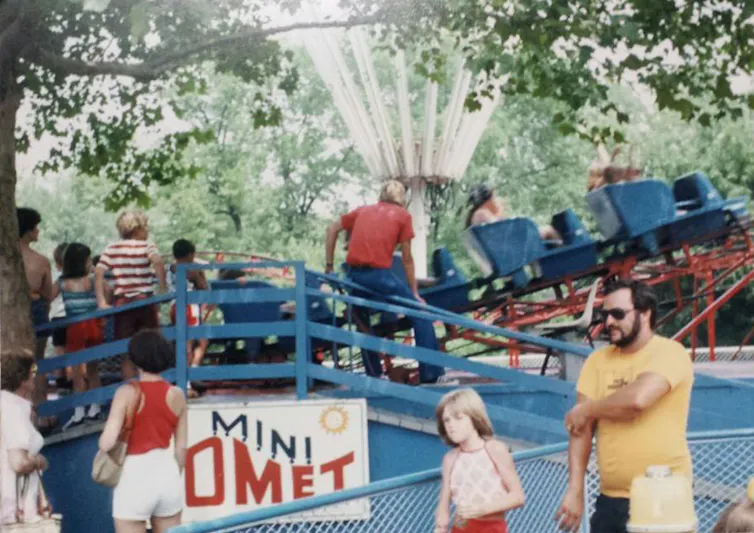
And the only major roller coaster back then, the wooden Comet, had made its debut way back in 1946 and was hardly a marvel of modern engineering.
As a professor of American studies at Penn State Harrisburg who recently wrote a book on Hersheypark, I was surprised to learn in my research that the park has undergone a complete transformation since the 1970s.
An amusement park in decline
Hershey Park dates back to the early 1900s, when company founder Milton Hershey built it as a recreational venue for his chocolate factory workers and their families. The name was changed to Hersheypark, one word, in 1973.
Over the years, it evolved into a major amusement park that thrived in the 1940s and 1950s. On summer days, residents of Hershey and nearby towns would flock to the park to enjoy a day of picnics, carnival rides, band concerts, swimming and dancing. Looking back with nostalgia, many later referred to those decades as the golden era.
It was in the 1960s that the park first encountered problems. The rides had become old and outdated, and there were acts of vandalism. Many families stopped coming. One Hershey executive called it “an iron park with a bunch of clanging rides.”
In 1971, Hershey Estates, which owned the park, faced a momentous decision: renovate the park or close it forever. It chose the former.
Disney raises the bar
Renovating required more than minor touch-ups. That was because the amusement park industry was evolving, thanks to Walt Disney. Actually, “evolving” does not capture the speed and magnitude of the change.
In 1955, Disneyland exploded on the scene as the nation’s first theme park. Theme parks differ from the old amusement parks in several ways. Enclosed behind a barrier, a theme park is immaculately clean and features fancy landscaping and roving mascots who pose for photos and spread positive vibes. The price of admission grants visitors access to all rides and attractions, which are, of course, themed.
Disneyland’s massive popularity sparked a theme park-building craze across the country in the 1960s that put pressure on traditional amusement parks, like Hershey Park, which suddenly seemed old-fashioned and behind the times.
In 1971, Hershey Estates hired the top firm in theme park design, Randall Duell and Associates, to convert Hershey Park into a Disneyland of the Northeast. They enclosed the park in fencing, charged a single price for admission and themed the whole place.
But what theme would work best? The answer seems like a no-brainer: Hershey’s famous candy brands, of course. But the brands were the property of Hershey Foods, which was separate from Hershey Estates. Hershey Foods, viewing Hersheypark as new and untested, did not want to risk visitors associating its brands with what could be a failing theme park.
Designers opted instead for a historical theme.
A quaint makeover
If you were to visit Hersheypark in the 1970s, you would be taken back in time to experience Tudor England, the German Rhineland from the 18th century, the agrarian culture of the Pennsylvania Dutch, small-town America of yesteryear and the coal mining districts of Pennsylvania’s past.
The strategy was twofold. The local population could relish seeing their own history recreated, from the early migrations from Europe to the present day. At the same time, tourists from New York, Philadelphia, Washington and Baltimore could enjoy escaping their hectic urban lifestyles by traveling back to what was portrayed as simpler times.
In 1974, the park added mascots. It took a page out of Disney’s playbook and introduced the Furry Tales, a trio of woodland animals: Dutch the bear, Chip the chipmunk and Violet the skunk. The Furry Tales were Hersheypark’s answer to Mickey and Minnie Mouse and Donald Duck.
The person hired to fabricate these cute animal costumes was Bill Scollon. One day, Scollon asked Bruce McKinney, a Hershey executive, if he had considered candy-themed characters. After McKinney explained the unfortunate roadblock with Hershey Foods, Scollon had a hunch. When he acted on it, he would change Hersheypark forever.
Chocolatizing the park
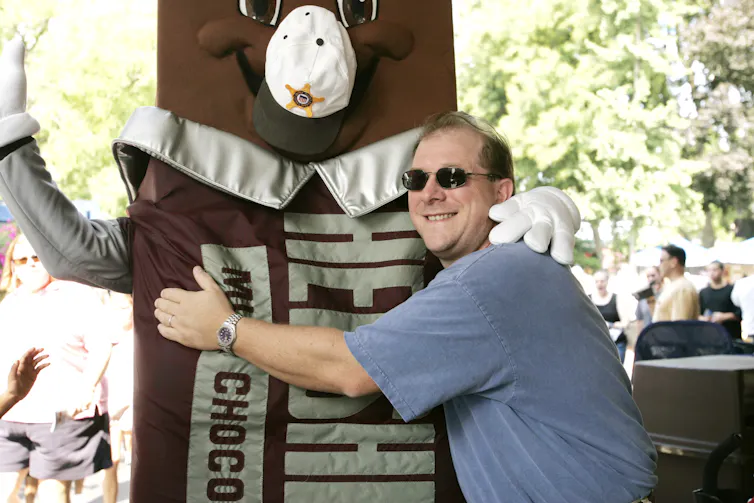
Scollon suspected that Hershey Foods had failed to recognize the magic of product characters because they could not see and touch one. So he constructed a Reese’s Peanut Butter Cup suit, which he showed to McKinney. Impressed, McKinney escorted Scollon, in costume, to places where Hershey Foods executives would be. They too were delighted, and their resistance promptly melted away.
Once product characters strolled into the park in 1974, the floodgates opened. “We started to chocolatize Hersheypark,” McKinney recalled. “We Hersheyized everything.”
Hersheypark now had chocolate theming, but not thrill rides. Randall Duell’s firm discouraged parks from investing in costly roller coasters that appealed to teenagers but not other age demographics. Hersheypark reversed course in 1976, and this time McKinney was the catalyst.
That year, he was flipping through an industry trade journal when he happened upon a photograph of the Revolution, the first looping roller coaster of the modern era, under construction in West Germany. Later that year, the Revolution attracted huge crowds when it opened in Magic Mountain, a California theme park.
“I harbored all of these feelings,” McKinney recalled, “of what it would be like to have that thing in Hershey.”
The price tag was steep: US$3 million, which was a staggering amount at the time. But McKinney secured his prize. Hersheypark commissioned the company responsible for the Revolution to design a similar looping coaster for Hershey. In 1977, visitors streamed into Hersheypark all summer to experience the sensational sooperdooperLooper – and many then purchased an “I survived” T-shirt.
This spectacular success kindled a desire in Hersheypark officials to invest heavily in thrill rides. Today, the skyline in Hershey is dominated by roller coasters
What happened to those 1970s attractions? The Furry Tales coexisted with candy characters for about a decade before quietly vanishing in the 1980s. As for the history-themed areas, the thrill rides effectively pushed them to the background. Though some have been torn down and replaced by new and more exciting attractions, others have survived. That is because Hersheypark makes a conscious effort to preserve its colorful past. So if you look carefully as you stroll about the park, you will still witness remnants of this bygone era.
Read more of our stories about Philadelphia and Pennsylvania, or sign up for our Philadelphia newsletter on Substack.
John Haddad does not work for, consult, own shares in or receive funding from any company or organization that would benefit from this article, and has disclosed no relevant affiliations beyond their academic appointment.
Read These Next
How Lula turned the tables on the right in Brazil and the US with his comeback presidential victory
Lula won through a resonant message and new outreach success on social media. But governing in the face…

AI chatbots can be a valuable health resource for older adults – if they embrace ‘informed skepticis
AI can help you navigate health information, but evaluating the credibility and quality of responses…
Boo! Feeling scared on Halloween can be fun for children but can sometimes push their limits
A children’s literature author explains how some of her favorite Halloween-themed children’s books…