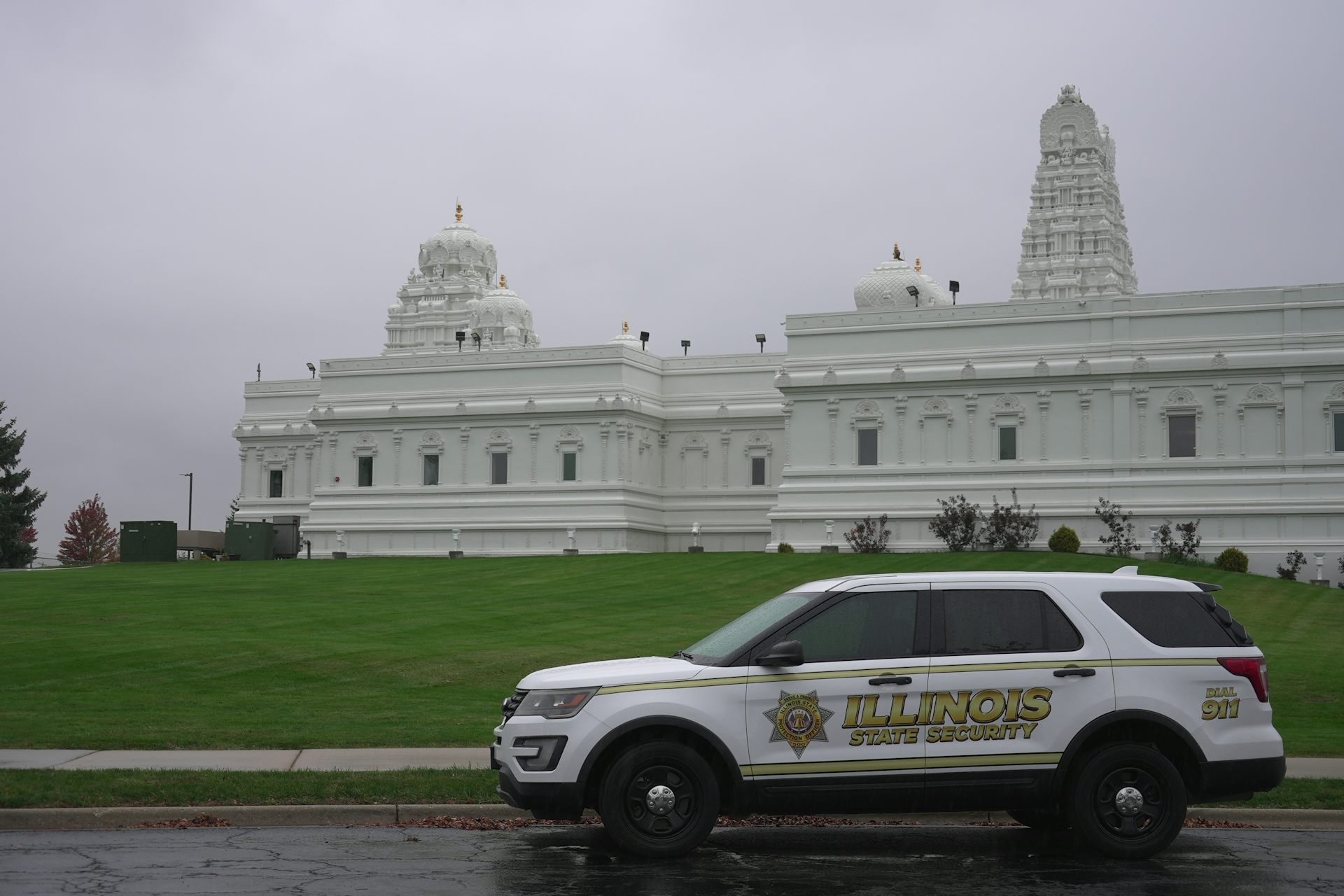
As the Oscars approach, Hollywood grapples with AI’s growing influence on filmmaking
AI tools can now generate movie scenes, resurrect lost footage and replace entry-level jobs – forcing Hollywood to rethink creativity, labor and authorship.

I teach a course on AI and filmmaking at USC’s School of Cinematic Arts, and lately, rather than planning each session well in advance, I’ve been structuring the class the night before. I’ll browse platforms like X, Substack and YouTube, selecting the most provocative articles and video clips to present the following morning.
It’s a testament to how quickly artificial intelligence’s relationship to filmmaking is evolving: Each week brings new – often startling – developments.
The next morning in class, my students and I debate the ethics, aesthetics and the storytelling changes taking place in these collaborations with AI.
And we’re not alone: Throughout Hollywood, everyone – aspiring actors and filmmakers, stars, screenwriters and studio execs – seems to have a take on what’s coming next. But I think three trends in particular are going to be hot topics of conversation at this year’s Oscars parties.
Nothing uncanny about this clip
In February 2026, a 15-second AI-generated video clip of Tom Cruise battling Brad Pitt on a burned-out highway overpass went viral.
Depending on the viewer, the video elicited either admiration, outrage or existential hand-wringing.
Created by Irish filmmaker Ruairi Robinson via a generative-AI tool called Seedance 2.0, the video marked yet another milestone in the propulsive growth of AI tools.
Seedance 2.0 – which was developed by ByteDance, the Chinese company behind TikTok – is now one of the many AI tools available to create short-form video clips. But unlike most AI-generated videos, Pitt and Cruise don’t look creepy, uncanny or animated in the clip, which almost perfectly mimics live-action footage. The appearance of two A-list stars in a fairly realistic scene created by a relatively unknown director using stolen likenesses jolted the industry.
The backlash was swift. Disney sent a cease-and-desist letter, claiming that the video was generated from a dataset that most likely includes Disney’s copyrighted characters. The actors’ union, SAG-AFTRA, pointed to the video’s “blatant infringement” of the actors’ likenesses, as well as their voices.
“SAG-AFTRA stands with the studios in condemning the blatant infringement enabled by Bytedance’s new AI video model Seedance 2.0,” the guild wrote in a statement. This practice, the guild added, “undercuts the ability of human talent to earn a livelihood,” while disregarding “law, ethics, industry standards and basic principles of consent.”
In class, after watching the video, we explored the ethics of using someone’s likeness without permission, the challenges facing actors who build careers based on their unique ability to embody characters, and what the future holds for our understanding of acting.
If filmmakers can prompt fake actors to deliver precise performances, where does that leave human actors?
In with the old
Since 2023, the skyline of the Las Vegas strip has been dominated by an illuminated orb called the Sphere: an entertainment complex featuring a 360-degree LED screen covering 160,000 square feet (14,864 square meters). The Sphere recently surpassed 2 million tickets sold for a reimagining of the classic 1939 film “The Wizard of Oz.”
The film, which premiered in August 2024, was shortened, its color was enhanced, and it was stretched to expand across the interior of the dome. AI was used to transfer the imagery from the film’s original, modest aspect ratio to the giant dome. This required generating new imagery around the edges of the original shots in what’s known as “AI outpainting.” The technology was also deployed to boost the original film’s resolution and to enhance certain scenes.
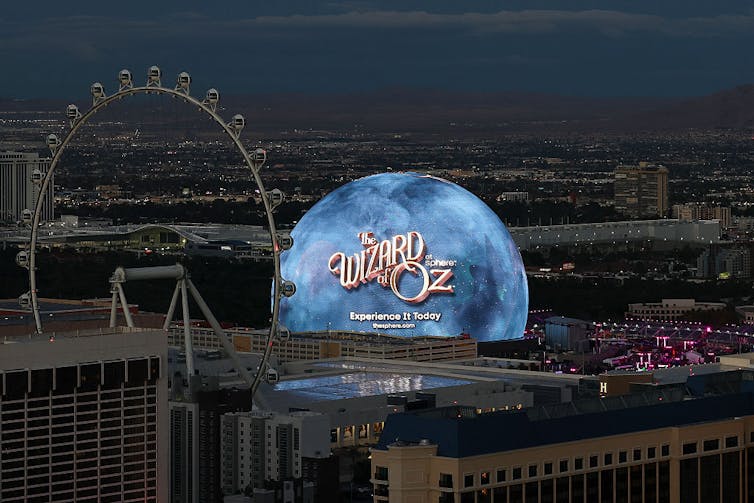
Some critics fretted that this fairly radical augmentation of the original classic would offend viewers. Instead, it has drawn them in droves to the Sphere, where they’ve been willing to shell out between US$100 and $200 per ticket.
Not bad for a movie about a girl from Kansas made in 1939.
Given the resounding success of “The Wizard of Oz,” experts expect producers to plumb the film archives for other potential hits and enhance them with AI before screening them in venues as varied as IMAX theaters and Cosm, another 360-degree dome with locations in Los Angeles, Dallas and Atlanta.
Or AI can simply be used to create material that was never completed for a historic film.
In fact, The New Yorker recently profiled AI media entrepreneur Edward Saatchi, who is working to recreate and reincorporate lost footage from Orson Welles’ 1942 feature “The Magnificent Ambersons.” While Welles was in Brazil shooting a documentary, executives at RKO Radio Pictures reedited the film without his approval after a poor preview screening. They cut around 45 minutes, replaced the original ending with a happier one and destroyed most of the footage that had been removed.
Saatchi’s idea is to build a dataset that includes the existing film, as well as scripts, notes, images and even new performances by actors. Then he plans to use his AI platform, Showrunner, to create new scenes from this data.
While Saatchi hopes to honor the director’s creative vision by producing the film he originally intended, his efforts open up some thorny questions.
Is it appropriate to take an existing artwork and revise it without the creator’s input? Isn’t there something sacrosanct about a film, the intentions of the director and the performances of the actors in a film’s original form? To what extent should these questions be overlooked if refashioning old movies will introduce them to new audiences?
Fewer opportunities?
There’s also an undercurrent of anxiety in my classes. What will happen, my students often wonder, once they graduate?
They’re worried that within a year or two, AI will have replaced entry-level film industry jobs, from concept artists to apprentice-level editors, before they’ve even had a chance to enter the workforce.
They have reason to fear.
In 2024, the Animation Guild published a sobering report claiming that by 2026, “creative workers will be facing an era of disruption, defined by the consolidation of some job roles, the replacement of existing job roles with new ones, and the elimination of many jobs entirely.”
Some of those predictions have borne out: 41,000 jobs in film and television have disappeared in Los Angeles County alone over the past three years.
But I’ve tried to counter the hard statistics with some stories of thoughtful practices.
For example, filmmaker Paul Trillo at the AI studio Asteria has talked about how he seeks to keep artists at the center of the process. When he detailed the company’s work on a music video for the singer-songwriter Cuco, he was keen to highlight the number of artists working on the project. Yes, AI tools were used. But they were integrated in a way that replaced the tedious work, not the creative practice.
“Rather than removing [artists] from the process, it actually allowed them to do a lot more so a small team can dream a lot bigger,” Trillo explains at the end of the video.
In January 2026, the management consulting firm McKinsey published a report that largely echoes Trillo’s positive outlook. It forecasts more adoption of AI throughout the industry. But it also points to ways that the technology could lead to different kinds of work and open up new possibilities. For example, as AI-generated scenes become commonplace, studios will need technicians who know how to blend real footage with digitally created worlds. And as AI lowers the cost of producing polished films and shows, it could allow more “micro-studios” and independent filmmakers to create professional-quality content.
At the same time, the report also quotes a studio executive who concedes that AI could represent “a more significant platform shift than we have ever seen before in our industry.”
So it’s no wonder my students, along with varied critics, commentators and industry professionals, are nervous.
However, from where I stand, I’m convinced that the industry will weather this radical disruption. It’s adapted to big changes in the past: the addition of sound in the 1920s, the threat posed by videotape in the 1980s and streaming in the 2000s.
In the end, people will always crave new, artfully told stories. While the filmmaking tools and job market may be in transition, that core need for storytelling is not going away.
Holly Willis does not work for, consult, own shares in or receive funding from any company or organization that would benefit from this article, and has disclosed no relevant affiliations beyond their academic appointment.
Read These Next
Offering cash for votes is quite common – but here’s why it doesn’t work
Money or other material benefits are often not enough to override a voter’s preferences and partisanship.
El Niño is threatening California’s fragile coast again – the 1982-83 El Niño opened eyes to the ser
The destructive 1982-83 El Niño, then the strongest on record, eroded cliffs, leaving homes hanging…
Horror’s monsters find new meaning with queer and trans audiences – how ‘Teenage Sex and Death at Ca
Horror as a genre has traditionally been rife with transphobia and homophobia. But LGBTQ+ fans love…