Has Little Caesars Arena boosted economic activity in Detroit? We looked at hotel and short-term ren
In 2026, Little Caesars Arena will host the Pistons, Red Wings and concerts with A$AP Rocky and Cardi B. But building it wasn’t necessarily a huge moneymaker.

Detroit’s population reportedly grew in 2023 for the first time in 60 years, a trend that has continued in recent years. Over the past decade, the city center has experienced substantial private and public investments and development.
I personally witnessed some of the changes in Detroit while I was studying for my Ph.D. at the University of Michigan’s sport management program. I am now an assistant professor at the University of Florida, where I research how sport affects local economies.
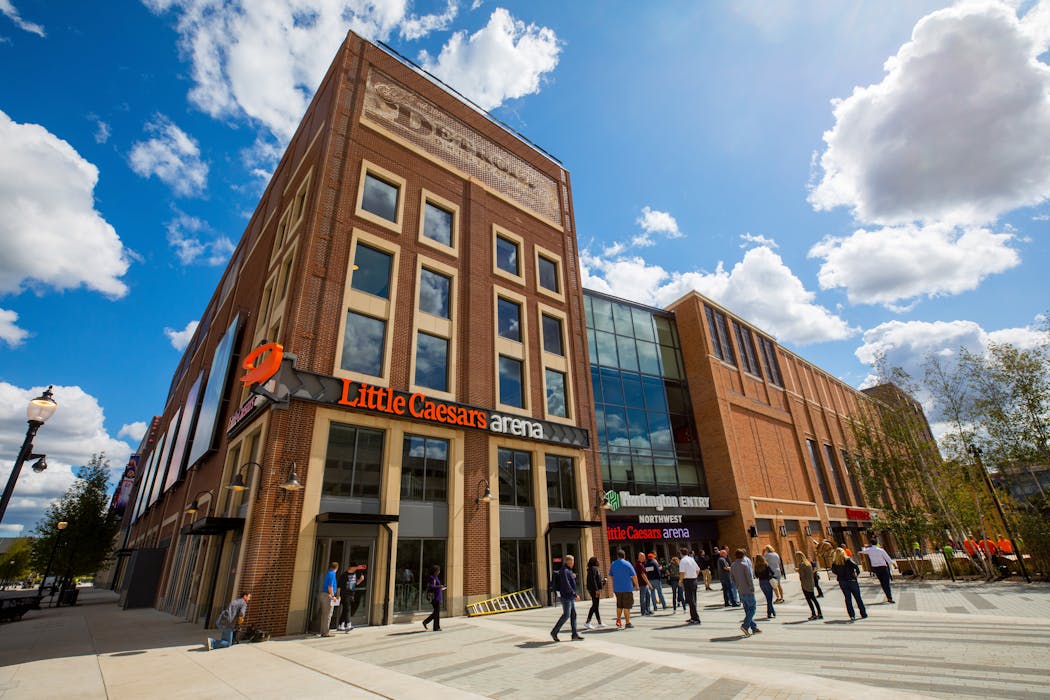
One of the changes I witnessed was the construction of Little Caesars Arena and its opening in 2017. The venue cost an estimated US$863 million, including $324 million in public money – a substantial amount, especially considering it was allocated so close to the city’s bankruptcy filing in 2013. The financing deal also included property development agreements, some of which have yet to materialize.
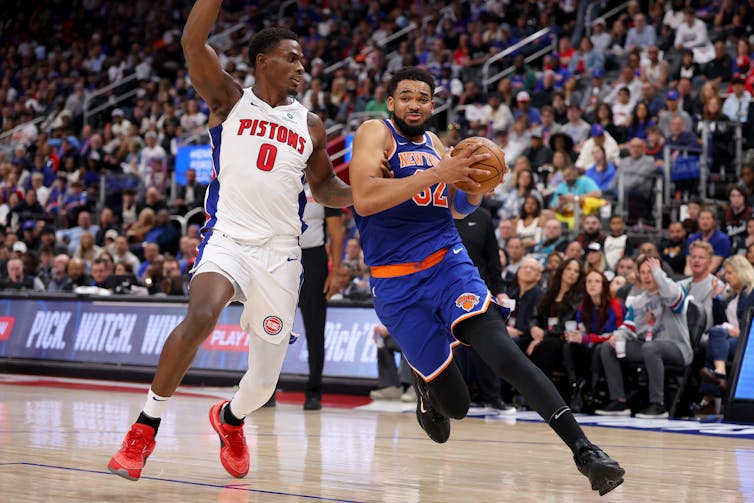
The arena’s primary users and operators are the NBA’s Detroit Pistons and the NHL’s Detroit Red Wings. The Red Wings are owned by the Ilitch family, which founded Little Caesars pizza in Detroit in 1959.
My colleagues Nasim Binesh, Kyriaki Kaplanidou and I recently published research examining how much impact the arena had on the hospitality industry in Detroit.
Sport venues and the promise of financial gains
A persistent debate on the benefits of sport venues to local economies is taking place at the same time public officials continue to commit substantial resources toward them.
In just the past five years, in cities such as Buffalo, Las Vegas and Nashville, local and state officials have partnered with sports teams to build new stadiums, frequently offering the franchises incentives, including tax write-offs, free rent and construction cost-sharing.
Far less often, these attempts to build stadiums fail. That happened recently in Kansas City – where voters rejected a new stadium – and Philadelphia, where the team reversed its decision to build the arena near the city’s Chinatown.
As I note in a study co-authored with Mark Rosentraub, a professor at the University of Michigan, cities are competing with each other for new residents and tax revenue from development and economic activity. Some officials clearly perceive maintaining or obtaining “major league” status as an advantage so important that they are willing to spend tax dollars to assist wealthy franchises.
This may explain why it happens, but it does not necessarily justify it.
Little Caesars Arena and the lodging industry
In our study, we examined the lodging industry, including hotels and short-term rentals, which experienced substantial growth coinciding with Detroit’s economic growth.
Short-term rental data was purchased from AirDNA, and hotel data was obtained from STR. Both of these sites compile and sell data, primarily to investors and owners of short-term rentals and hotels.
Our quantitative analysis examined millions of records from 2015 to 2022. Rentals within the city’s boundaries increased from 462 units in 2015 to 2,582 in 2022. A healthy cluster near the city’s downtown grew substantially over this period.
In 2015, 24,592 nights were booked in short-term rentals. By 2022, that number had increased to 161,952. Over the same period, demand for hotel rooms decreased by 19%.
However, hotel rates increased over the same period from an average of $128.20 in 2015 to $197.05 in 2023, meaning that despite the decreased demand, annual hotel revenues increased from $229.6 million in 2015 to $306.1 million in 2023.
Hotels and short-term rentals in Detroit are subject to the state’s 6% sales tax. Hotels also must pay citywide lodging taxes ranging from 3% to 6%, depending on the number of rooms. Lodging taxes are not currently collected for short-term rentals.
The arena opened, then what?
So, how much did the new arena affect the supply and demand for lodging?
To answer that question, we compared Detroit’s numbers with short-term rental data from Grand Rapids, the second-largest city in the state.
The answer is not that much.
Detroit’s short-term rental growth was not dissimilar to that in Grand Rapids – even though no major league franchises play there and no major stadium had been built there. Demand in Grand Rapids grew 1,210% versus 1,284% in Detroit. The number of units available grew by 702% in Grand Rapids, compared to 674% in Detroit.
Regarding the impact of Little Caesars Arena, our study suggests sport events there do not appear to have a positive impact on the lodging industry.

While sporting events had little impact, the arena also hosts concerts with big-name acts, including Harry Styles, Jay-Z and The Weeknd. Our research shows these concerts significantly increased occupancy rates in short-term rentals – although the effect did not translate to hotels.
But the rentals needed to be very convenient to the venue. Increases on concert nights were more than three times higher in short-term rental units located within a mile of the arena compared to the city as a whole.
Gidon Jakar does not work for, consult, own shares in or receive funding from any company or organization that would benefit from this article, and has disclosed no relevant affiliations beyond their academic appointment.
Read These Next

Many drugs have mirror chemical structures, one helpful and the other harmful – a Nobel-winning disc
From thalidomide to resveratrol, molecules with the exact same chemical properties can have drastically…

From jargon to impact: Teaching undergraduates the art of public communication
Teaching public storytelling to students can help them communicate better in the world.

Why your boss matters more than remote or hybrid work when it comes to burnout and job satisfaction
A return to the office can mean very different things to different workers, which is why this debate…