Trump wants to shutter the Kennedy Center for 2 years – an arts management professor explains what t
While the center’s need for major upgrades is real, the dramatic and disruptive closure of the entire campus isn’t in order, a scholar of arts institutions explains.

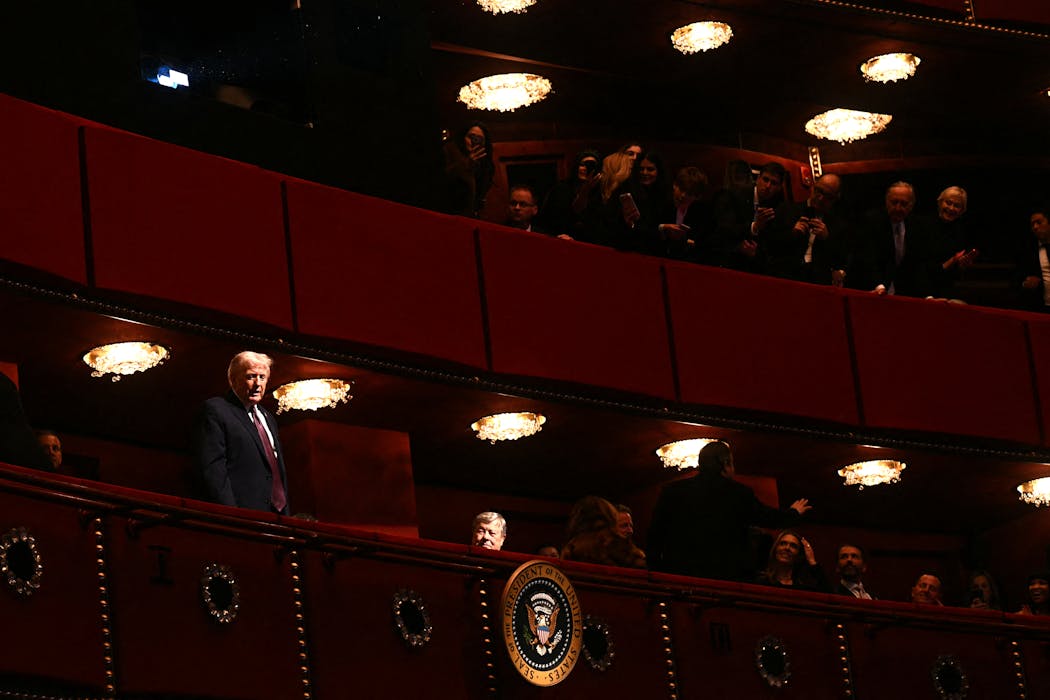
President Donald Trump announced on Feb. 1, 2026, that he would shut down the John F. Kennedy Center for the Performing Arts for two years. Trump said this closure would begin on July 4 and was necessary for “Construction, Revitalization and Complete Rebuilding.” The next day, he denied that this meant he would demolish the facility altogether. The multi-venue arts center has endured cancellations by performing artists and boycotts by patrons throughout the first year of Trump’s second term, during which he made himself chairman of its board. Trump’s handpicked board members then voted to rebrand the center to include his name.
To help readers understand what this upheaval means, The Conversation U.S. asked E. Andrew Taylor, an arts management professor at American University – which like the Kennedy Center is located in Washington, D.C. – to explain whether Trump has the power or justification to carry out a complete overhaul of this living memorial to President Kennedy.
Does Trump have the authority to shut the center?
Trump wears many hats in this drama.
None of them give him individual or direct authority over the Kennedy Center’s buildings, grounds or operations. However, those hats give him multiple points of leverage.
As president of the United States, Trump has authority to appoint about half of the members of the Kennedy Center governing board – which he stacked with his appointees in February 2025. As chair, appointed by that newly constructed board, Trump has significant influence over how the governing body works.
By law, the Kennedy Center is governed by its full board, while its federal funding for operations and facilities is reviewed and approved by Congress. In practice, both the board and Congress appear to have deferred to the President, as have most of the enforcement agencies that might challenge him here.
In yet another twist, the center’s board reportedly changed its bylaws in 2025 to limit voting by the 23 board members not appointed by the president. One of those members, Rep. Joyce Beatty, an Ohio Democrat, sued the board and the center’s executive leadership team in December. In her lawsuit, she claimed the board had exceeded its statutory authority and improperly excluded active board members when it renamed the center to add the president’s name. That lawsuit is pending in federal court; no rulings have been issued.

Why is his actual authority hard to define?
The Kennedy Center was established by Congress as “a living memorial to John Fitzgerald Kennedy.” Since its opening in 1971, it has remained a complex public-private enterprise that is both a part of the federal government and a tax-exempt nonprofit.
The center was built with a and long-term revenue bonds held by the Treasury Department. Its ongoing operations have always been funded by a mix of public money, private contributions and earned revenue from ticket sales, events, food service, parking and the like.
To oversee this complex enterprise, Congress established and authorized a governing board, granting it authority to “plan, design, and construct each capital repair, replacement, improvement, rehabilitation, alteration, or modification necessary to maintain the functionality of the building and site at current standards of life, safety, security, and accessibility.”
Until now, major expansions and updates of the campus have been approved by Congress.
Is Trump’s claim that the center needs major upgrades accurate?
There are two claims here that deserve separate attention.
One is that the center needs major upgrades. That is true. The other is that those upgrades require full closure of the entire campus for multiple years. That is suspect.
As for upgrades, the original Kennedy Center building is a sprawling and complex facility with more than 50 years of wear and tear.
A comprehensive engineering and architectural review of the center in 2021 identified 323 capital and minor repair projects that would cost roughly US$252 million to carry out. Only about $45 million has been spent on those projects so far.
The remaining big-ticket items include fully replacing seats in the Concert Hall, replacing the original Opera House pit lift system, dealing with parking garage and loading dock structural issues, and attending to long-deferred elevator repair and replacement.
At the same time, many parts of the Kennedy Center campus are fairly new. The REACH, a $250 million complex with all new buildings and infrastructure, opened in 2019 to increase capacity for community and educational events.
While the need for major upgrades is well supported, the dramatic and disruptive closure of the entire campus for two years is not. A thoughtful, phased renovation and repair strategy would allow for major improvements while the lifeblood of the center – the artists, audiences and donors – could still flow through the campus with at least some performances, programs and events taking place.
In fact, that phasing was the plan in the most recent budget request the center delivered to Congress, until Trump pivoted.

How have Trump’s interventions affected the center so far?
That depends on who you ask.
Ticket sales and attendance have reportedly dropped dramatically, and multiple artists and arts organizations have canceled their planned performances, including singer Renée Fleming, composer Philip Glass, banjoist Béla Fleck and “Wicked” composer Stephen Schwartz. The Washington National Opera, a longtime resident organization, announced its separation and departure from the center in January.
Kennedy Center communications leader Roma Daravi blamed declining attendance on “liberal intolerance.” She also claimed the center’s renaming “recognizes that the current Chairman saved the institution from financial ruin and physical destruction.” Kennedy Center President Richard Grenell dismissed the artists canceling their shows as being “booked by the previous far left leadership.”
What would happen should the center shut down altogether?
The Kennedy Center is not only a venue for its own productions, programs and touring performances.
It’s a hub for live performing arts and arts education for the entire region and the nation as a whole. Independent producers and promoters rent its venues for their performances and events. Each year, it serves over 2.1 million students, educators and school administrators in all 50 states with professional development, summer intensives for young artists and performances for young audiences. And its free and public performances have been a mainstay of cultural life in Washington for decades.
Where all of this activity would relocate for years is unclear. There are few comparable venues in the region, and those available are already booked with productions and tours that were bypassing the Kennedy Center. The National Symphony Orchestra would be particularly vulnerable to a two-year closure of its primary venue. It is not obvious where a large ensemble with such an active rehearsal and concert schedule would be able to perform.
There are also touring productions currently scheduled to perform after the proposed closing date, including “The Outsiders,” “Back to the Future: The Musical” and “Mrs. Doubtfire.” Although those tickets were still for sale as of Feb. 3, whether those performances will take place is now in doubt. Those shows’ national tours may be disrupted if the center shuts down.
The center itself, like all such arts venues, survives and thrives on an enduring and connected network of relationships – among artists, touring productions, artist managers, production teams, technical staff, venue management, audiences and donors.
These relationships are sustained through trust and consistency. My three decades of experience teaching and studying arts management suggest that once those relationships are betrayed or delayed, it’s a long road to build them back.
What might be next? And what does it mean?
It’s anyone’s guess whether Trump’s Truth Social post about closing the center will prove true or merely provocative. The board, the center’s leaders, its staff and the people scheduled to perform there after July 4 appeared to be surprised by the announcement.
As a rule, any multi-hundred-million-dollar renovation or demolition requires deliberate and collaborative effort, rather than a decree.
In the short term, the sudden announcement is yet another twist in a wrenching narrative for makers and lovers of the arts across the Washington region and around the country. While a few years and a few hundred million dollars might restore the building’s physical infrastructure, it may take much more time, effort and energy to restore its reputation.
E. Andrew Taylor does not work for, consult, own shares in or receive funding from any company or organization that would benefit from this article, and has disclosed no relevant affiliations beyond their academic appointment.
Read These Next

These state supreme court races could decide abortion access and trans rights
Ohio, North Carolina and Michigan have open seats on their state supreme court, and these hotly contested…

Why your boss matters more than remote or hybrid work when it comes to burnout and job satisfaction
A return to the office can mean very different things to different workers, which is why this debate…

Armed poll watchers: New Jersey’s 1981 racist voter intimidation campaign is a cautionary tale ahead
An armed voter suppression campaign in New Jersey in 1981 finds echoes today in the Trump administration’s…