El Niño created a skiers’ paradise in Chile – now it’s Sierra Nevada and Southern Rockies’ turn
What happens on the slopes in Chile holds clues for the western US snow season. But all that precipitation can also bring trouble.

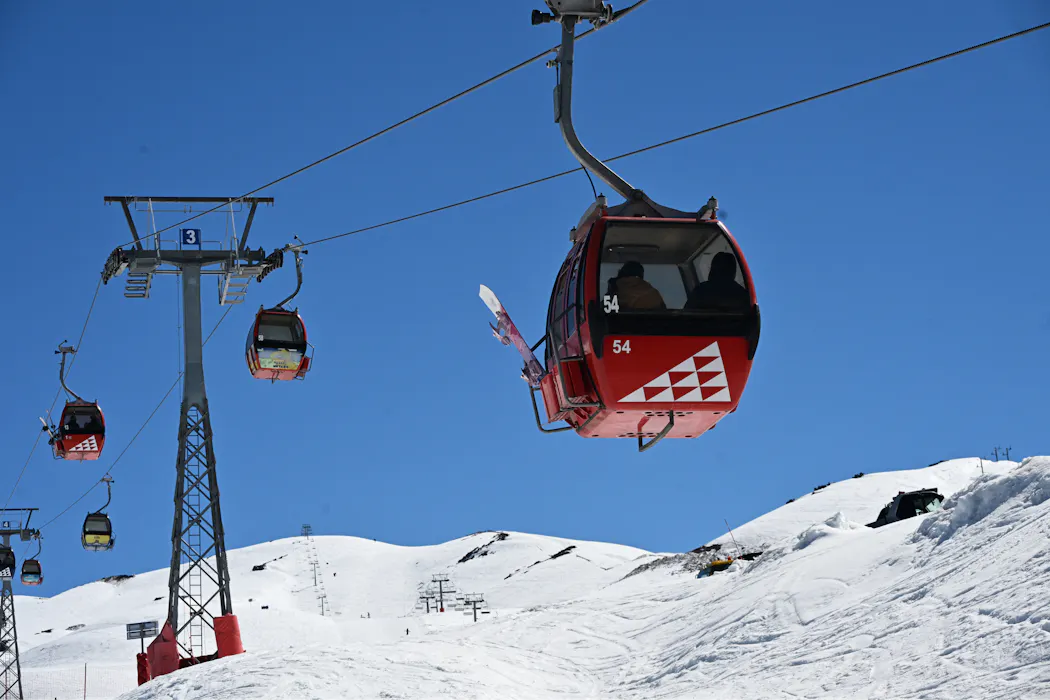
El Niño has a reputation for being a skier’s dream, bringing lots of snow to California’s Sierra Nevada and the southern Rockies. Tahoe-area resorts were already seeing the effects in mid-November 2026 as several feet of snow fell and some resorts prepared to open early for the season. But El Niño’s supercharged precipitation can spell trouble, too.
I’m an avid skier and snow scientist at Colorado State University. As the U.S. snow season begins amid what’s forecast to be one of the strongest El Niños on record, let’s take a look at what Chile’s very snowy winter might tell North America about what’s to come.
The pros and cons of all that precipitation
El Niño is a natural climate phenomenon that raises global temperatures and shifts weather patterns around the world.
It is defined by rising surface temperatures in the east-central tropical Pacific Ocean. When temperatures there are at least 0.5 degrees Celsius (0.9 Fahrenheit) warmer than average for three months, the world is in El Niño. The August-October average was 2.5 C warmer (36.5 F, making this among the warmest periods on record going back to 1950.

In the U.S., the southern half of the country tends to be wetter than usual during strong El Niños. That happens because the Pacific jet stream shifts southward, steering storms with it. The northern tier of the U.S. tends to be drier and warmer than normal.

That pattern is almost exactly what’s being forecast for the U.S. winter of 2026-27. It’s also what the U.S. Southwest is already experiencing – to the extreme.
Powerful storms supercharged by El Niño in October and November caused widespread destructive flooding in the Four Corners region of New Mexico, Arizona, Colorado and Utah. Fast-melting snow and days of heavy rain flooded the San Juan River and Rio Grande, damaging hundreds of homes.
Recovering from last year’s snow drought
Community water systems and farms across the West need that precipitation after last winter delivered one of the lowest snow years on record for almost the entire western United States.
Major reservoirs in the Colorado River basin dropped during the year to their lowest levels since they were first filled. The two biggest – Lake Powell and Lake Mead – together supply water for about 40 million people and hydropower for hundreds of thousands of people.
The very low snowfall, as well as unusually warm midwinter temperatures that drove sublimation – the evaporation of snow – reduced water stored in the mountains. And that was followed by record-high summer temperatures.
Fall 2026’s heavy rain and snow may help make up for last year and start to alleviate a long-running drought that has been causing water supply problems across the western U.S. for a quarter century.

In a positive sign, Lake Powell rose with the recent rains. Overall, the Super El Niño conditions being forecast for 2026-27 are expected to bring more than average rain and snow this winter across much of the southern and central United States, where it’s also likely to alleviate drought.
What happens in Chile …
Snow scientists like me keep an eye on the South American winter in El Niño years like this because it can give us a sense of what’s coming for North America.
Keep in mind that El Niño has been strengthening over the past few months – including through the South American winter that just ended.
South America saw a huge amount of snow, particularly in the central Chilean Andes. In some areas like Portillo, the snow accumulation was the deepest since the current drought began in 2010, and the deepest in the past 70 years north of Santiago at the top of the Limarí River.
The snow was a boon for Chile’s ski resorts. Valle Nevado got over 24 feet (7.3 meters) of snow and extended its ski season, originally scheduled to end in early October, into early December. Even the extremely dry Atacama Desert saw widespread snow followed by an explosion of spring flowers.
Historically, snowy winters in Chile have meant snowy winters for California’s Sierra Nevada and the southern Rockies, too. The warm El Niño ocean allows the atmosphere to pick up more moisture in this zone than usual, and this brings snowstorms to the U.S. Southwest.
If that pattern holds this winter, the southern and central parts of the West should see well-above-average snowpack and active ski seasons, and those dangerously depleted reservoirs will have a chance to at least partially refill.
Steven R. Fassnacht does not work for, consult, own shares in or receive funding from any company or organization that would benefit from this article, and has disclosed no relevant affiliations beyond their academic appointment.
Read These Next

‘SNL’ ‘Sister’ sketch nails the failures of US healthcare policy
Medicare and Medicaid provide limited help with caregiving for older adults – and that means unpaid…

Is it genuine love – or obsessive passion? Kierkegaard, the father of existentialism, had some thoug
Philosopher Søren Kierkegaard is best known for his writing on faith and existentialism, but love is…

Paid sick leave laws are no guarantee for Philly’s immigrant restaurant workers
Doctor’s note requirements, industry norms and fear of retaliation prevent many immigrant restaurant…