
Massive super PAC spending did not secure Republican victories in 2026, but it remains a pernicious
Republicans lost across the board in the midterms – whether they had super PAC support or not. Does that mean that super PAC spending doesn’t matter as much as we’ve been told?

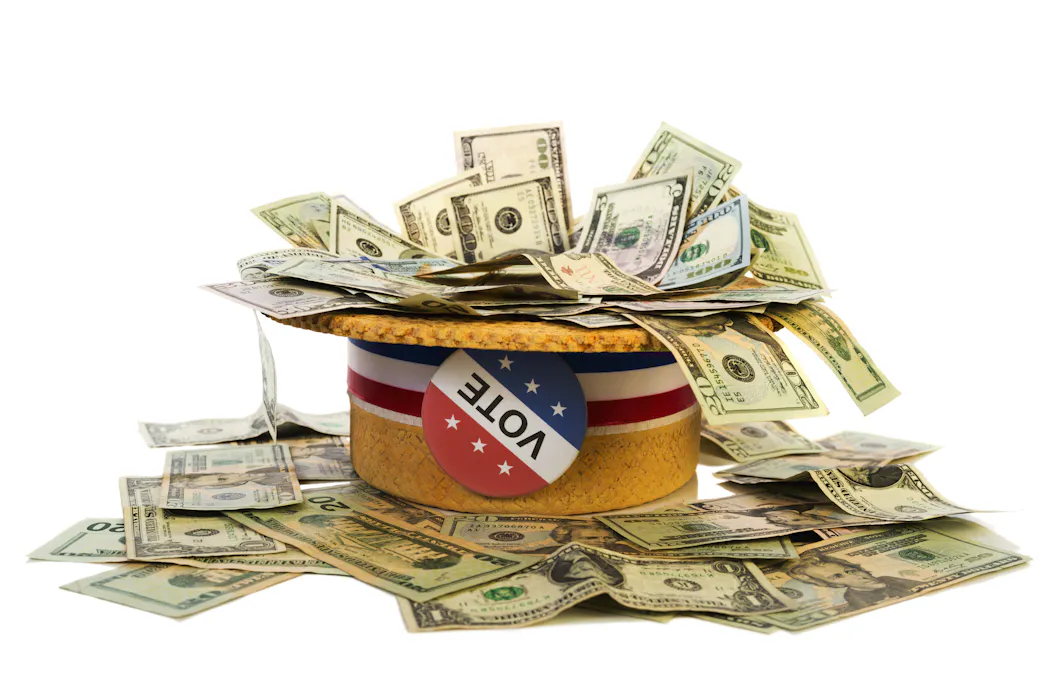
It was almost as if all the money didn’t matter.
Republican super PACs substantially outspent Democratic ones in the 2026 midterm elections – particularly in Texas, where Elon Musk spent an astounding US$224 million on behalf of Republican Ken Paxton’s Senate campaign.
Yet Republicans lost across the board – regardless of whether they had super PAC support.
Not only did they lose, but the swing toward Democrats was remarkably consistent across the entire country, regardless of how much money was spent or what the fundraising imbalance was.
So, do the 2026 election results mean that super PAC spending, which represents the single-largest category of campaign spending in competitive races, doesn’t matter as much as we thought? Do they mean that Americans should worry less about the effect of these super PACs on politics?
As a political scientist who studies campaign spending, I would say no. Here’s why.

The limited effects of super PACs in general elections
Super PACs are political committees that engage in political advocacy but do not donate money to candidates or directly coordinate their strategies with them. Because of this, there are no limits on what super PACs can spend or on the size of the contributions they can receive.
They have limited effects on general elections. In competitive general election races for the House and Senate, it is usually the case that both candidates have significant funding, so the incremental value of each dollar declines as spending increases.
In each election cycle, approximately 90% of voters vote for the same party they did in the previous election. Voters such as these are unlikely to be moved by super PAC advertising.
Most importantly, super PAC spending is less efficient than spending by candidates or parties. By law, candidates and parties receive the “lowest unit charge,” or LUC, from television networks – that is, they pay the lowest permissible rate for advertising in a particular time slot. Super PACs do not receive the LUC, and thus they can pay two or three times as much per advertisement.
In a broader sense, however, the fact that super PACs cannot legally coordinate with candidates means that they are not able to spend money as wisely as candidates do. Usually, candidates and parties have access to the top consultants, they are likely to have information about what worked in the last election in their state or district, and they often have targeting information about voters.
A super PAC could acquire these things, but it cannot acquire them from the candidates themselves. In addition, many super PACs are ephemeral – they are organized to advocate for one particular candidate or set of candidates, and they do not last more than a few months. As a consequence, they do not have the ability to learn from their past efforts.
This may have been a particular problem in Texas. The sheer volume of spending by Musk in such a short time frame meant that there was little infrastructure to support his spending – all his super PAC could do was buy a lot of relatively untargeted advertisements.
Yet despite their often crudely targeted efforts to help candidates, super PACs still are a pernicious influence in politics for four reasons.
1. Super PACs spend a tremendous amount of money
Nearly two-thirds of super PAC spending in 2026 can be traced to only 100 people. These 100 people have very narrow business interests, but few of them are as controversial as Musk.
One reason Musk’s massive spending was not helpful was that Paxton’s opponent, James Talarico, made his criticism of Musk a part of his campaign. Most super PAC donors are not as likely to provoke the sort of backlash that may have blunted Musk’s effectiveness in Texas.
Without public pushback based on an awareness of a donor’s agenda, this spending can reorient campaigns to be about the idiosyncratic ideas of an unrepresentative group of billionaires. It makes campaigns about something other than what parties, candidates and voters want them to be about. Parties and candidates, in turn, must raise more money than before just to be heard.
2. Super PACs shape elections long before November

Super PACs play a major role in primary elections, where voters are choosing among candidates of the same party and cannot simply use a candidate’s party label to choose whom to vote for. Some of the most expensive elections in 2024 and 2026 were primary elections in safe districts where one party was overwhelmingly favored to win the general election.
In the 9th District of Illinois, for instance, super PACs spent $9.1 million in the Democratic primary in support of six candidates. Few voters in the 9th District knew how much had been spent, who the groups were, or even what issues motivated these groups until after the election.
Super PACs have also increased their spending in nonpartisan municipal elections, where there is little advertising or media coverage and therefore voters often have even less information about the candidates or their policies.
3. Super PACs can be a vehicle for nefarious schemes
During the 2026 midterm campaign, conservative super PACs in Ohio and Massachusetts sent out deliberately deceptive mailings highlighting obscure socialist candidates, aiming to siphon votes away from the Democrats these groups were really concerned about.
While politics can often be dirty and these mailings were not illegal, they enable the candidates these groups supported to claim they have nothing to do with them. A candidate, a party or an established interest group has a reputation to protect, and voters can hold them accountable for the quality of their campaigns. Super PACs do not have to worry about this because they do not appear on the ballot, and they do not have members or stockholders who can put pressure on them.
4. Super PAC spending can affect how legislators behave
Even legislators with very safe seats must constantly worry about whether one vote, or one statement, might cause someone to spend a large sum of money against them. Many legislators cast votes they know their constituents will dislike in order to avoid antagonizing groups that might spend against them in their primary.
It’s legal, if deplored, by the public
Most Americans want limits on super PAC spending.
Many Democratic candidates in 2026 called for campaign finance reforms. It is tempting to believe that the new Democratic majorities in Congress will do something to rein in super PACs. There are many obstacles to doing so, however.
For one, the Supreme Court is unlikely to change its views on the legality of independent spending. The justices have decreed it is speech, and they see no constitutional restraint on this kind of speech.
While voters support campaign finance reform, they rarely list it as their top priority. And although Republicans benefited more from super PAC spending in 2026 than Democrats, many Democratic candidates have been dependent on it as well. The Democrats’ comfortable majority may make it easier than before for Democrats to receive more super PAC support.
Although super PAC support did not propel Republicans to victory in 2026, the real danger of super PACs is that most politicians, regardless of party, have become dependent upon them.
Robert Boatright does not work for, consult, own shares in or receive funding from any company or organization that would benefit from this article, and has disclosed no relevant affiliations beyond their academic appointment.
Read These Next
Why Americans are losing confidence in public education
Political polarization and declining student test scores are two factors fueling people’s mistrust…

Your gut bacteria helps your body keep track of time, and when you eat influences how much nutrition
Both light and food provide signals your body listens to as it calibrates essential functions, including…

‘Strict liability’: The legal standard that could help rein in AI
Making AI accountable for “strict liability” in court would shift risk from the public to the companies…