
‘Strict liability’: The legal standard that could help rein in AI
Making AI accountable for “strict liability” in court would shift risk from the public to the companies seeking fortunes.

Some people have begun using the legal system to rein in AI companies and the harms they are creating. Cases are mounting.
In October 2026, the parents of Bowen Wan sued OpenAI, charging that it’s ChatGPT agent may have instructed their daughter to stop taking her medication, leading to her death. In 2024, a mother sued the Character.AI company, claiming that its chatbot’s interactions with her son contributed to his suicide. The state of Kentucky later filed suit, claiming that Character.AI’s software exposed minors to self-harm and psychological manipulation.
Social media companies, powered by artificial intelligence, are also facing lawsuits about injuries they purportedly caused.
Regulating AI was a hot issue during the 2026 midterms, too. Several candidates who won their races have a regulation agenda.
I am a former litigator and a professor of business law, and all this action signals to me that people are looking to the law to protect them from AI harm.
But what is the legal liability of AI software? An answer may be found in a principle known as strict liability. Applied properly, strict liability could restrain the risky parts of the AI industry and still allow it to provide the tools the public wants.
Abnormally dangerous software
Tort law protects people from negligence, such as who is responsible if you slip and fall in a store. Strict liability is part of tort law, but it is used to hold a person or company responsible for harm even if they were not at fault, not negligent or had no intent of creating trouble.
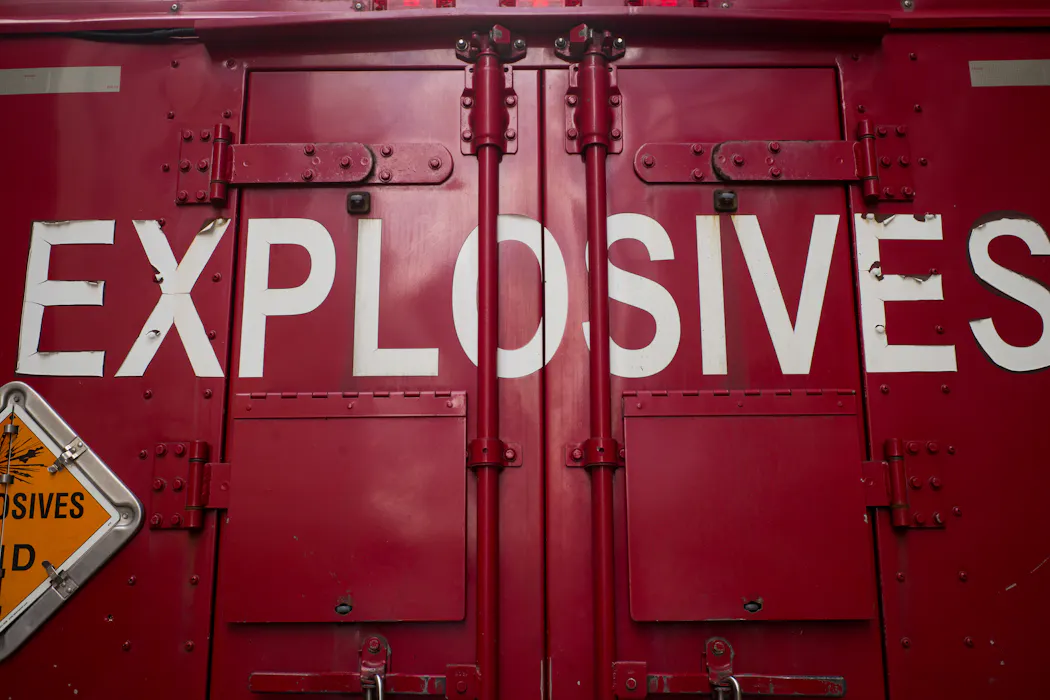
Two types of strict liability matter for AI. One addresses abnormally dangerous activity, such as blasting with dynamite or transporting radioactive material. The other addresses when a product hurts someone using it.
AI programs likely fit the abnormally dangerous standard. The touchstone case was tried in the U.K. in 1868. In the decision, the court stated that if someone has “anything” under their power that is “likely to do mischief if it escapes, [he] must keep it in at his peril” and is “answerable for all the damage which is the natural consequence of its escape.” The defendant is liable even if they used “the utmost care to prevent the harm.”
An attorney could pursue this avenue if a company builds AI software that is supposed to stay in a sandbox – a place isolated from the rest of a computer or network – but loses control of it. The AI industry’s recent admissions that the software creates all sorts of risks would make such cases stronger. When Anthropic filed for its initial public offering in October, numerous pages of the document detailed extraordinary risks that its frontier AI models could pose.
One hitch in applying this type of strict liability is that an activity must not be in common usage. Lawyers could make a strong case against so-called rogue AI that runs wild and isn’t available to most people.
Applying the danger standard could still fail to rein in AI companies or reward victims appropriately. In 1929, aviation was seen as abnormally dangerous. But damages were capped at US$8,300, which was not a large deterrent.
Attitudes changed in 1999, when the Montreal Convention standardized strict liability rules for international flights worldwide. It raised statutory damages and eliminated caps for negligence claims. Perhaps the most powerful tool in aviation liability today is for an authority to ground a company’s aircraft, which happened to Boeing after two fatal crashes with its 737 MAX planes.
Guilty products
Strict product liability is the other strategy for holding AI companies responsible for harm. In years past, courts tended to not see software as a product because it is intangible. But that view is shifting. In recent lawsuits alleging that social media hurt people, courts did see social media as a product and concluded that strict liability was applicable. Cases against Facebook have fallen into this category.
Character.AI’s recent bankruptcy filing came in part because of a lawsuit in which the court treated the software as a product. “Design defects” is the part of the doctrine gaining traction. To use this, a plaintiff shows that the product posed a foreseeable risk to someone using it. So far, the doctrine has worked when applied to the lack of guardrails in chatbots.
Pursuing strict liability could still run into snags. A court might order that AI software be turned off, or “grounded,” until it is improved. But as AI software creeps closer to being an operating system and is evermore embedded in everyone’s daily activities, it becomes difficult to suspend its use.
Moving target
AI software by its nature is constantly “learning” and therefore changing. It is impossible for a company to promise that AI software will absolutely behave a certain way. In many cases, AI software is inherently incapable of supporting a guarantee about design safety. Still, strict liability is a way to hold the maker responsible, “even when those products evolve in ways not specifically desired or foreseeable by their manufacturers,” according to a Brookings Institution report.
I believe that if people are going to accept AI software as a boon to society, tough rules and sharp deterrents are needed. A strict liability system would shift risk from society to the companies seeking vast revenues.
The next steps will be sorting out whether to treat all or some AI software as a product, and whether the technology is ultrahazardous. If it is treated as that dangerous, AI can develop with incentives to reduce harms and ensure that people injured are compensated.
Deven Desai owns shares in Google, Inc. He received unrestricted research gifts from Google, Inc. and Facebook, Inc. a decade ago. He has not been employed by Google since 2010.
Read These Next

Why Americans are losing confidence in public education
Political polarization and declining student test scores are two factors fueling people’s mistrust…
Your gut bacteria helps your body keep track of time, and when you eat influences how much nutrition
Both light and food provide signals your body listens to as it calibrates essential functions, including…

Young Americans have no memory of AIDS at its worst – they’re still at risk of infection, even when
Medical advances have turned AIDS into a highly preventable disease and made it possible to live a full…