How candidates are (quietly) talking about climate change – 3 election strategies you’ll see across
Voters have a lot of weighty issues on their minds, but that doesn’t mean they aren’t worried about climate change.

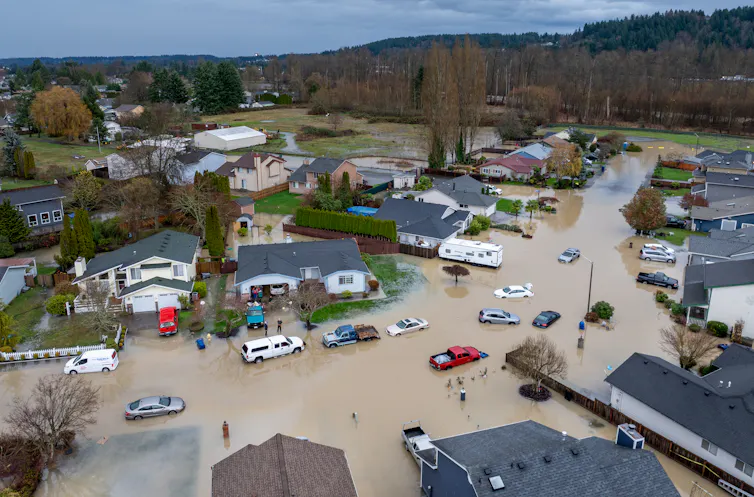
Amid wars, inflation, emerging risks from artificial intelligence and threats to democracy, Americans have a lot to be worried about these days. But polls show the majority of voters in 2026 are also concerned about climate change as temperatures and disaster risks rise.
So why are fewer candidates talking openly about climate change in their midterm election campaigns than just a few years ago?
At the University of Michigan’s School for Environment and Sustainability, we study climate communication and are following how Democratic candidates are discussing climate change in their campaigns.
Democratic candidates seem to agree on one strategy: campaign centrally on affordability, emphasizing how ordinary people are struggling to afford to fill up their cars, pay their electric bills and insure their homes against hurricanes and wildfires. It’s part of a concerted effort to make the election a referendum on Republicans’ support for the Trump administration’s contributions to inflation, such as tariffs and the Iran war.
Fossil fuel industry interests have long sought to polarize the public over the phrase “climate change.” As one of us, Geoffrey Henderson, discusses in his new book, “Getting to Work on Climate Policy: The Strategy of Labor-Environmental Coalitions,” campaigns pitting economic concerns against environmental ones have made it harder to build support for policies meant to slow climate change.
When it comes to talking about climate change today, three distinct camps of Democratic candidates and officeholders reveal three different strategies.
The energy populists
The energy populists talk a lot about lowering energy prices for consumers but very little about either climate change or fossil fuels.
Many have been painting data centers, rather than fossil fuel producers, as villains. Candidates often use messages focused on how utilities and data centers are raising voters’ electric rates. They propose measures to lower these costs, like requiring data centers to bring their own energy sources onto the grid.
In North Carolina, former governor Roy Cooper, now running for U.S. Senate, emphasizes lowering energy and utility costs. Sherrod Brown of Ohio, campaigning to return to the Senate, argues that his opponent’s votes in favor of data centers have led to “higher electric rates.”

Discussing energy affordability, without directly calling out the risks to the climate from burning fossil fuels or advocating for more renewable energy, aligns with the argument that climate change messages can alienate swing voters, who prioritize affordability.
If energy populists are elected, they could become silent backers of climate policies to reduce greenhouse gas emissions – both Brown and Cooper have a record of supporting renewable energy – or obstacles to climate policies.
The climate champions
Not all Democrats, even in battleground states, think climate change should fade into the background this election. However, few are as outspoken today as they were in the past.
In Massachusetts, Sen. Ed Markey’s website pledges that he will champion “bold action to invest in clean energy” if reelected in November. In Maine, Senate candidate Troy Jackson asserts that politicians should not pit working-class people against renewable energy, casting the climate-versus-affordability debate as a false choice.
Rhode Island’s Sheldon Whitehouse, one of the Senate’s most outspoken supporters of pro-climate policies, contends that candidates should link higher costs to climate change, such as increased home insurance costs due to hurricane risk. He also points to President Donald Trump’s blockade of the cheapest energy sources – namely, solar and wind power – which he attributes to fossil fuel industry influence.
If elected, these candidates’ messages suggest they will pursue policies that help reduce U.S. contributions to climate change. However, they may need to convince independent voters that their focus on climate change will not overshadow their attention to other challenges.
The all-of-the-above proponents
Another group of candidates wants to have it both ways. They call for actions that can respond to climate change and rapidly build out renewable energy, while also promising cheaper gasoline and more fossil fuel jobs. Scientists warn that more fossil fuel use cuts against global climate goals.
Unlike the other camps, this group does not identify villains in their narrative. These candidates are following the script from the Obama administration, whose “all of the above” energy strategy espoused continued fossil fuel use alongside policies to reduce planet-warming emissions.
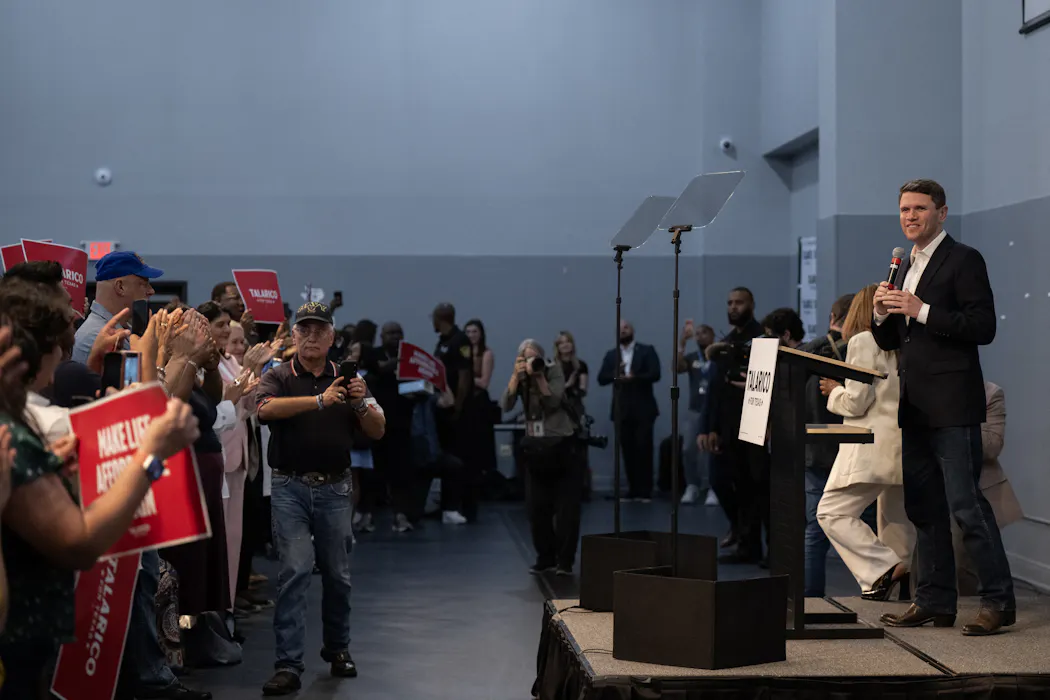
In Iowa, U.S. Senate candidate Josh Turek hosted a roundtable in April 2026 on how climate-fueled extreme weather is raising insurance costs. But he has also focused on lowering the cost of gasoline and diesel. James Talarico, campaigning for the Senate in Texas, has similarly promised to fight climate change by boosting renewable energy while lowering costs by promoting all energy sources.
These candidates may be trying to signal their potential to support climate policies while respecting their states’ cultural connections to fossil fuels. Turek and Talarico are both running in states with abundant wind power.
Where are the voters on this issue?
Studies from the U.S. and Germany find that politicians usually underestimate public support for efforts to address climate change.
So how well do candidates’ platforms represent today’s voters?
Yale’s spring 2026 survey found that 49% of voters believe global warming should be a high priority for Congress and the president. But 70% of moderate or conservative Democrats share this view, alongside 84% of liberal Democrats. Even 1 in 3 liberal-to-moderate Republicans considers the climate a high priority.
Yet polling also suggests that other issues, such as the increasing cost of living, are even more important to many voters. This data suggests that pro-climate messages could appeal to swing voters most strongly if climate policies are seen as complementary to affordability.
Still, a recent survey shows that voters open to Democratic candidates are more likely to support a candidate who prioritizes climate change. Climate messaging may especially resonate with young voters. Over a third of those ages 18 to 29 in a recent Harvard Youth Poll considered climate change an urgent national crisis. Young Republicans are more supportive of addressing climate change than their older counterparts.
While many shifts in the way candidates talk about climate policy have little impact on people’s willingness to participate in collective efforts to address it, messages emphasizing cost savings durably increase support for renewable energy across party lines. Voters’ current concerns about inflation could make climate messages involving affordability especially effective in 2026, though the impact of these messages may vary from state to state.
Retail politics and the way forward
These different approaches reflect the Democratic Party’s efforts to build a “big tent” that can attract voters with a wide range of views and priorities. Yet Democrats are generally coalescing around a message designed to appeal to working-class voters: that Trump and the Republicans are raising your cost of living.
November’s midterm elections will offer some insight into whether Democrats’ energy affordability message will resonate in the 2028 presidential election.
Geoffrey Henderson has worked on a project that received funding from the National Science Foundation.
Nathaniel Geiger has received funding from the National Science Foundation.
Read These Next
Students take up to 88 standardized tests before high school, but more testing doesn’t improve learn
Students’ scores on standardized tests can affect schools’ ratings, adding to the pressure teachers…
Maine Sen. Collins’ success bringing home federal funds is a perfect example of the thin line betwee
The line between political favoritism and effective representation is remarkably thin. Why is access…

Why haven’t farm animals evolved against humans? A biologist explains why there won’t be a chicken u
From domesticated foxes to tuskless elephants, humans have directly and indirectly influenced the evolution…