This year’s primary elections showcase some of the problems with US electoral system
Primary winners represent the views of a small group of people who turn out inconsistently and often do not even represent the the views of the parties’ voters, to say nothing of the general public.

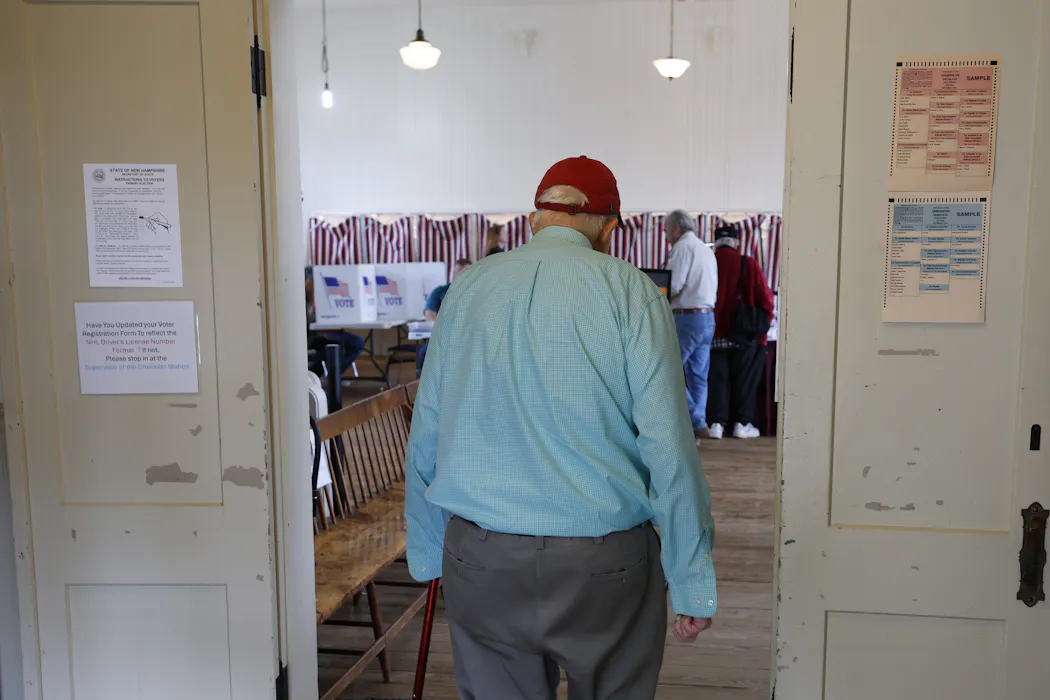
The last 2026 primary elections were held on Sept. 15 in Delaware. Although totals are not yet available, there is evidence that turnout was higher than in most prior election years.
This year’s primaries were also the most competitive in recent history; 13 congressional incumbents were defeated, the largest number since the 1950s other than the years when redistricting forced some incumbents to run against each other.
Primary competition is often a predictor of general election competition. In wave election years, as this year is expected to be, the party that gains seats in Congress often had more competitive primaries, a consequence of the increase in candidates seeking nomination and the enthusiasm of voters. This year, that competition bodes well for Democrats.
The story the 2026 primaries tell about democracy, however, is less rosy. The 2026 primaries were held on 21 dates, from March to September. State turnout levels varied substantially, and in many states it appears that politically moderate voters stayed home. Some states, such as Maine and Michigan, had heated battles in marquee races, while other states, such as Connecticut, had virtually no competition.
From my perspective as a political scientist, each of these facts represents a problem for democracy. If the purpose of primaries is to allow each party’s voters an opportunity to choose candidates, the 2026 primaries – like primaries in most years – did not achieve those goals. In fact, their outcomes represented the views of a small group of people who turn out inconsistently and often do not even represent the views of the parties’ voters, to say nothing of the general public.
My recent book, “The Problem with Primary Voters,” co-authored with Caroline Tolbert and Nathan Micatka, documents these problems. Here they are, and how they undermine democracy.

1. Turnout in primaries is very low
In the past three midterm elections – 2014, 2018 and 2022 – primary turnout averaged approximately 20% of the voting age population.
Turnout varies according to competition at the state level, state primary rules and state political culture. Western states such as Montana and Washington average slightly over 30% turnout, while Connecticut, New York and Virginia average less than 10%.
Because so few general election races are competitive, a tiny sliver of voters effectively choose most of Congress through their votes in the primary.
2. Primary voters are not representative
If primary voters looked like everyone else, low turnout might not be a problem. But they don’t.
They are much older, somewhat better educated, less racially diverse and wealthier than other eligible voters. Most importantly, the representativeness of primary voters does not increase when primary turnout goes up.
In Massachusetts, for instance, turnout increased by half from 2014 to 2022 – from 14% to 21% of the voting age population. Yet turnout among the very wealthy more than doubled, while turnout among the least wealthy actually decreased, leaving the electorate less representative, by income, in 2022 than it had been in 2014.
3. Very few people consistently vote in primaries
We studied data about more than 3 million American voters for our book. We found that fewer than half of primary voters in any given year voted in the primary four years earlier.
This creates a problem of representation, and this lack of consistency, we found, is a particular challenge for U.S. House or state legislative candidates: They cannot know who will actually show up in the primary. And even if they try to represent their party’s voters, the voters who show up are unlikely to be there because of them.
In 2026 this problem was made worse by the mid-decade redistricting prompted by the Supreme Court’s Louisiana v. Callais decision, along with the decisions by governors in Louisiana and Alabama to postpone their states’ primaries. No one has studied voter awareness of primary dates, but surely many eligible voters do not know when their states’ primaries are held, especially in states without a competitive primary for governor or U.S. Senate, or where dates have recently changed.
Low primary turnout can also lead to unexpected results – and these results can create misleading perceptions of the election.
In 2026, for instance, upset victories by Democratic Socialist candidates in New York, with an 11% turnout, and Colorado, with a 34% turnout, led to a spate of news stories about the success of socialists. But these candidates’ victories were the result of small shifts in particular districts, not major changes in the Democratic electorate.
Can primaries be improved?
Many reform advocates who are concerned about political extremism have proposed changing primary election laws.
The reforms include adopting a top-two nonpartisan primary, such as those in California and Washington, or a top-four nonpartisan primary with a ranked-choice general election, as is used in Alaska. In each of these cases, a specific number of candidates chosen in a nonpartisan primary go on to the general election.
Others have proposed mandating open primaries, where any voter can request the ballot of either party.
These reforms can have targeted, albeit limited, effects – they can increase competition in lopsidedly partisan districts and give members of the minority party more of a voice.
However, these reforms are unlikely to solve the turnout problem. Increasing turnout by 5 percentage points or so will not necessarily make the electorate more representative or encourage people to vote more consistently.
To increase the participation, representation and consistency of primary voters, I believe it is necessary to consolidate primary dates. One way to do this would be to establish a national primary day. If all states voted on the same day, we expect turnout would increase in part because people would know when to vote, and those who vote based on a sense of duty, as opposed to partisanship, would be more likely to show up.
If this seems too far-fetched, reformers could still push states to consolidate their primaries on fewer days – to create a set of regional primaries.
Some scholars have argued that political parties should exert more control over nominations, and that strong parties may not need the input of voters in order to offer voters clear and responsible choices about public policies.
It is true that most democratic countries do not use primaries at all. Yet there is no chance that America will get rid of primaries any time soon. If we are going to have them, and they are to fulfill their purpose, it is important that they be predictable – that politicians know who the voters will be and that the voters look like the population.
Otherwise voters, nonvoters and politicians risk learning the wrong lessons from the primaries.
Robert Boatright does not work for, consult, own shares in or receive funding from any company or organization that would benefit from this article, and has disclosed no relevant affiliations beyond their academic appointment.
Read These Next

What is a professional patient advocate, and why might you need one?
Family members can offer invaluable support to patients, but a trained advocate can provide an objective…

Why people keep looking for Noah’s Ark in a natural rock formation in Turkey: A scholar of early Chr
A formation known as Durupınar, just a few miles from the Iranian border in Turkey, has been associated…

Does your sleep tracker get it right? A Pittsburgh neuroscientist weighs in
Can a sensor on your wrist really tell how your brain slept? Here’s what happens when sleep trackers…