Ethiopia is sliding back toward war – a look at what is driving the fighting and why it matters
An offensive in the Tigray region followed months of aerial strikes by the Ethiopian government. The situation could spark a wider regional conflict.

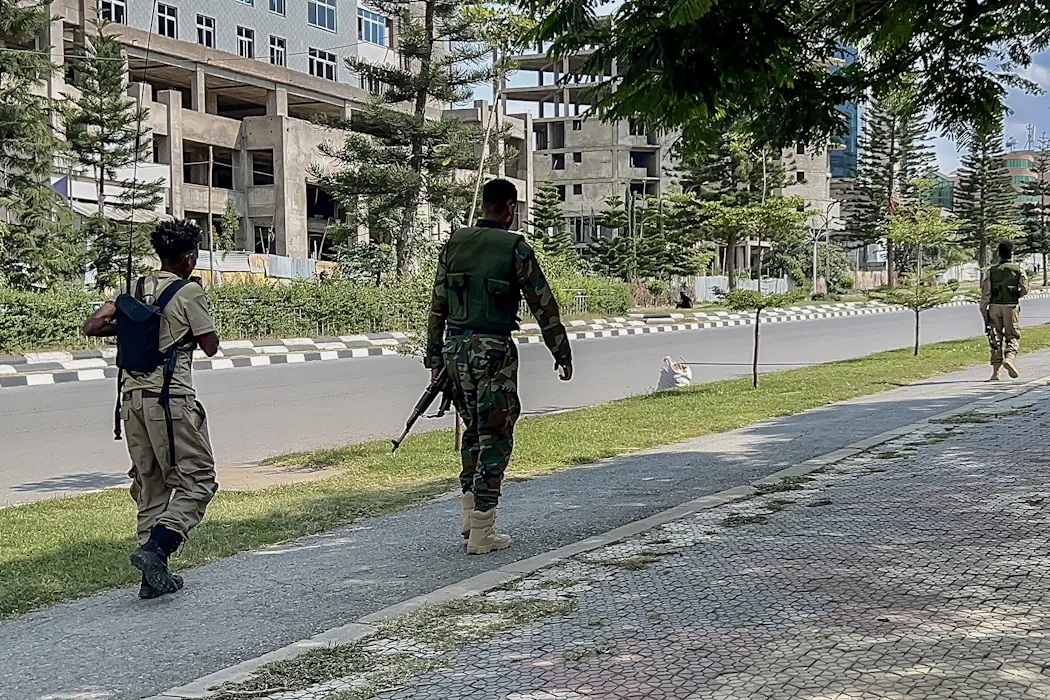
Four years after a fragile ceasefire ended widespread conflict in Ethiopia, the region is again slipping back into full-out war.
On Sept. 23, 2026, advancing soldiers of the Tigray People’s Liberation Front (TPLF) seized government positions in northern Ethiopia.
It followed the announcement of a new alliance of seven armed movements in opposition to the Ethiopian government and deteriorating relations between the country and neighboring Eritrea, which it accuses of supporting the new alliance.
As an expert on conflict in the Horn of Africa and Ethiopian national security, I know the spiraling conditions now have been long in the making. The November 2022 Pretoria Cessation of Hostilities Agreement ended immediate fighting between Ethiopia and Tigrayan rebels, but it did not constitute a comprehensive peace settlement. Crucially, it was never followed by wider political negotiations to address the root causes of the war. The concern now is that the conflicts will intersect with the civil war in neighboring Sudan, causing a complicated, regionwide conflagration.
How has the conflict escalated?
The Sept. 23 ground offensive by the TPLF drew global attention to the situation in Ethiopia. But in reality, the ratcheting up of tensions between the federal government in Addis Ababa and the TPLF has been going on for months.
Throughout August and September, the region of Tigray – Ethiopia’s northernmost constituent state, with an estimated population of roughly 7 million – has been subjected to federal air and drone attacks. Tigrayan organizations and human rights groups reported that schools, residential areas, a farmer training center and a truck carrying food aid were all hit during the air campaign.
The strikes occurred amid mounting tensions over the TPLF’s restoration of the regional political administration that preceded the 2020-2022 civil war, an incomplete disarmament of the group and renewed localized clashes. In short, the federal government accused Tigrayan forces of remobilizing; the apparent purpose of the federal attacks was to degrade Tigrayan military capability.
The federal government had also been squeezing the region economically, by withholding funds needed to pay Tigray’s civil servants and limiting access to banks and fuel, according to the TPLF.
The situation escalated further on Sept. 20 when seven armed organizations announced the formation of the Ethiopian Peoples’ Forces Alliance for Survival in opposition to the federal government.
Three days later, Tigrayan forces began a coordinated ground operation against federal positions at airports in the regional capital Mekele, along with two other Tigrayan cities, Axum and Shire. Fighting then spread along Tigray’s borders with the Amhara and Afar regions.
Federal forces mounted a counteroffensive, and on Sept. 28 pro-government forces claimed to have entered Alamata – an important transport and supply center south of Mekelle.
Who are the main actors?
Prime Minister Abiy Ahmed’s federal government and the Ethiopian National Defense Forces retain formidable advantages in the current conflict: a national professional army, combat aircraft and drones, and federal revenues.
Its main opponent in the north is the TPLF, which was the dominant organization in Ethiopia’s ruling coalition from 1991 until Abiy became prime minister in 2018. It remains the strongest organized political and military force in Tigray.
The most striking partnership in the new alliance is between the TPLF and the Fano movement in Amhara, which fought alongside the federal army during the 2020–2022 civil war.
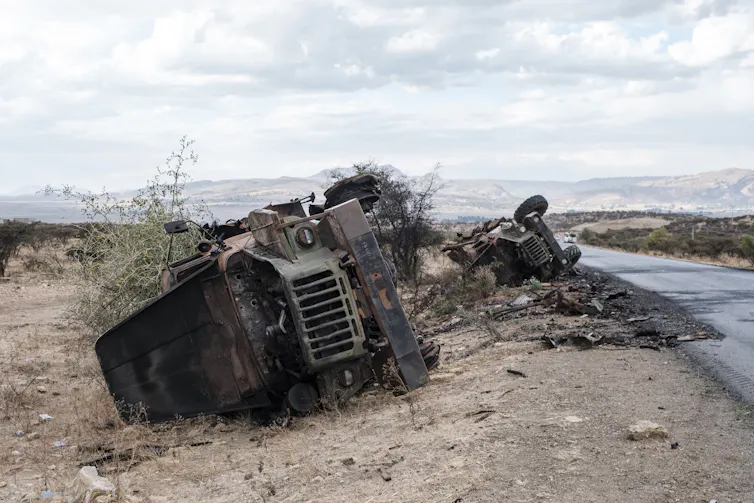
Some of the alliance’s members have limited military capacity, and there remains serious disagreements over territory and political objectives.
Nevertheless, it has adopted a workable minimum program: removing Abiy’s government, establishing an inclusive transitional administration and undertaking constitutional reform.
For its part, Eritrea is the most important potential external actor. Eritrean forces fought alongside Ethiopia’s federal military during the previous war and were accused of atrocities against Tigrayan civilians. Addis Ababa now accuses Eritrea and Sudan of backing the new alliance. Both countries deny the allegation.
What is the wider background to the tensions?
The conflict is rooted in an unresolved constitutional struggle over federalism, regional autonomy, territory and the distribution of political power.
After becoming prime minister in 2019, Abiy dissolved the former ruling coalition and created a new one that the TPLF declined to join.
Relations deteriorated further when Tigray held a regional election in 2020 after the federal government postponed national and regional elections. War began later that year.
Over the next two years, as many as 600,000 people may have died from violence, hunger and the collapse of health services, while more than 2 million were displaced.
The 2022 ceasefire agreement halted large-scale combat, but its political and security provisions were never fully implemented.
The TPLF began handing over heavy weapons in line with the accord, but further disarmament never happened as a result of a failure of Eritrean and other nonfederal forces to withdraw from parts of Tigray.
The agreement also required Tigray’s representation in federal institutions, including both houses of parliament. An inclusive interim regional administration was to be established until regional and federal elections could be held.
But that arrangement became effectively indefinite, with successive heads of Tigray’s interim administration appointed by Abiy.
In 2025, the TPLF’s legal registration as a party about to compete in elections was revoked, and Tigray was excluded from Ethiopia’s June 2026 national vote. Tigray’s reintegration into Ethiopia’s federal institutions likewise remained incomplete.
Meanwhile, the status of western and southern Tigray remained unresolved. Hundreds of thousands of displaced people have been unable to return to these areas claimed by both Tigray and the Amhara region of Ethiopia.
So in part, the seeds to the conflict now were sown in the 2022 ceasefire. What was supposed to open the way to a comprehensive peace agreement instead hardened into a new and increasingly unstable status quo.
How could this affect the wider region?
The first danger is a direct confrontation between Ethiopia and Eritrea.
Relations between the two governments have deteriorated sharply over the demand by Ethiopia, which is landlocked, to have access to the Red Sea. Statements from Ethiopian officials contemplating the acquisition of the Eritrean port of Assab by force have caused alarm in the Eritrean capital of Asmara.
Such rhetoric has contributed to the conditions under which Eritrea might decide to support Ethiopian armed groups now.
A direct Ethiopian-Eritrean war would transform an internal Ethiopian conflict into an interstate war along the Red Sea’s western hinterland, with potentially devastating effects. A war between the two neighbors between 1998 and 2000 killed tens of thousands and displaced as many as 650,000 people on both sides of the Eritrea-Ethiopia border.
The second danger is convergence with the civil war in neighboring Sudan. Ethiopia has accused Sudanese forces of supporting the TPLF and other Ethiopian armed groups; Sudan has denied the charge.
Sudan’s army, in turn, has accused Ethiopia of assisting the paramilitary Rapid Support Forces, which have been fighting government forces for control of the country.
The risk is that Ethiopia’s conflict and Sudan’s war become mutually enabling. For example, Eritrea could support the armed alliance to deter the Ethiopian government from pursuing access to the sea through the Eritrean port of Assab. Sudan’s army could support the same groups to pressure Ethiopia to end its alleged backing of the Rapid Support Forces. Such involvement could provide armed organizations with cross-border bases, weapons and supply routes, widening both conflicts.
Egypt and Gulf Arab countries already involved in Sudan could likewise be drawn more deeply into the Ethiopian conflict.
The third danger concerns Ethiopia’s trade corridor through Djibouti. Ethiopia depends on Djibouti for the overwhelming majority of its maritime commerce, including fuel imports. If fighting in Ethiopia’s Afar region threatens the highway and railway linking Addis Ababa to Djibouti, the conflict would have immediate national and international economic consequences.
For the United States, which has blamed the TPLF for the escalation, the stakes extend beyond humanitarian concerns. Ethiopia is one of Africa’s most populous countries, hosts the African Union and has long been an important U.S. security partner in the Horn.
Can both sides return to the ceasefire?
The agreement’s political framework has been overtaken by events, and Ethiopia’s conflicts are no longer confined to the relationship between Addis Ababa and Mekelle.
Preventing a wider war will, I believe, require an immediate halt to airstrikes and offensive ground operations, restoration of communications and humanitarian access, and independent investigations into attacks on civilians. It will also require negotiations toward the comprehensive political agreement that was supposed to follow the 2022 Pretoria agreement.
Those negotiations can no longer be limited to the federal government and the TPLF. They must address the wider alliance, other political constituencies, contested territories, regional representation and the future of Ethiopia’s federal system.
The question is no longer whether Addis Ababa and Mekelle can restore their former bilateral arrangement. It is whether Ethiopia can establish an inclusive constitutional process before its previously separate conflicts converge into a national and potentially regional war.
Read more: Ethiopia’s peace deal is unravelling – what went wrong with the Tigray agreement
Alemayehu Fentaw Weldemariam does not work for, consult, own shares in or receive funding from any company or organization that would benefit from this article, and has disclosed no relevant affiliations beyond their academic appointment.
Read These Next

Chiricahua is the nation’s newest national park – what does that mean?
What comes next for Chiricahua, now that is has been officially redesignated as America’s 64th national…

An AI model’s false tip to Philadelphia police reveals how digital agents can do as they’re told and
An expert on AI governance explains why these rare mistakes may soon be common, and with much higher…

Offering cash for votes is quite common – but here’s why it doesn’t work
Money or other material benefits are often not enough to override a voter’s preferences and partisanship.