Dementia caregiving can expose hidden family tensions – but early planning can ease the strain
The demands of caregiving can reverberate through family relationships, exposing old disagreements about expectations and responsibilities.

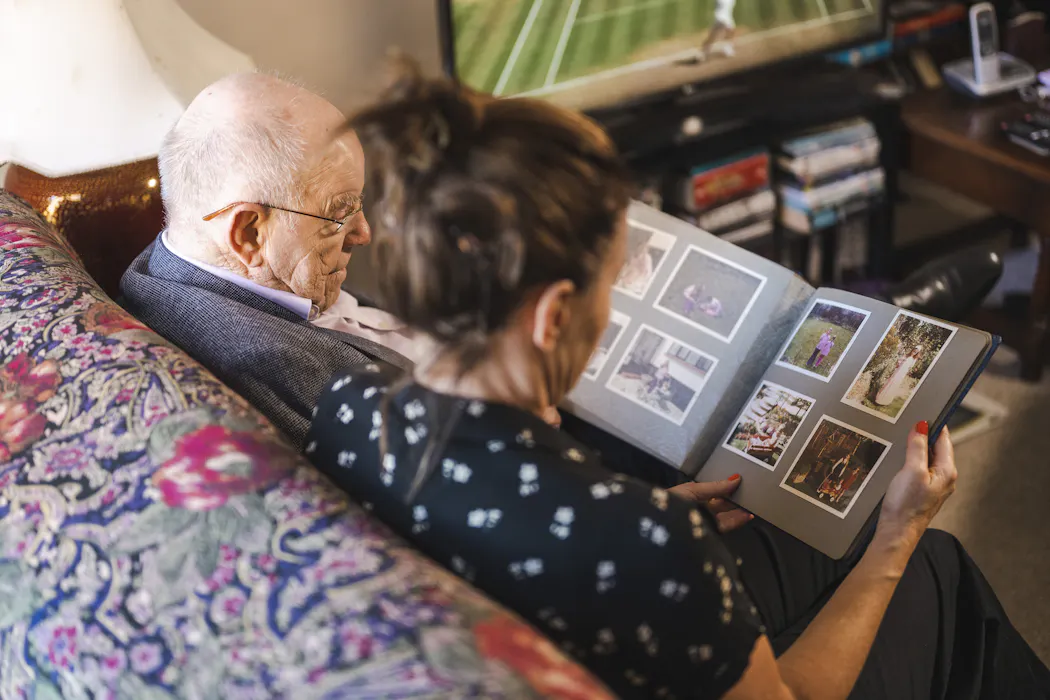
“Families are messy, aren’t they?” a daughter commented during a series of focus groups I ran with caregivers of older adults with memory issues.
Many people would agree with that sentiment. The complexity can be compounded when caring for someone who has a disease such as Alzheimer’s or another form of dementia that impairs their memory, language and sometimes personality.
Yet discussing how caring for their loved one affects family dynamics – be it longstanding family feuds, unmet expectations about family responsibilities or the desire to keep health issues private – is often seen as taboo.
I am a sociologist and demographer studying how family dynamics change as people get older and need care – and how that relates to expectations about caregiving for older adults.
The makeup of families is changing, and that’s shaking up how caregiving can reverberate through family relationships. Caring for family members or friends with dementia can be especially thorny because of the ways the condition changes how a person behaves and how they interact with others. But a little planning and support can help families through the challenges.
Caregiving is a common experience
Americans are living much longer, which means that people are sharing more years of their lives with their family members. For instance, children are more likely to have a living grandparent today than in previous generations.
And that means it’s more likely that people will have a parent or grandparent who may experience cognitive decline at some point in their lives.
More than 5 million U.S. adults age 65 and older are currently living with dementia – an umbrella term describing a loss of cognitive abilities around thinking, remembering and reasoning. That number is expected to reach over 13 million by 2060 as the baby boomers age.

People with dementia interact with many people in their families and communities. Over half of Americans say that they know someone with dementia, and more than a third of extended families include an older adult with dementia. In 2022, over 5 million family caregivers were taking care of an older adult with dementia. That’s 1 out of every 5 people caring for an older adult in the U.S.
At the same time, family sizes are shrinking, and more older adults do not have children or their children live far away – and more distance often equates to less caregiving. Meanwhile, cultural acceptance of the idea of family estrangement or going “no contact” has increased – as has a growing recognition of chosen family. That means more older adults are aging alone, with limited support, or with other people who may not have the legal benefits of immediate family.
The caregiving landscape is shifting, too.
Historically, middle-age women were the largest group of caregivers – generally, the daughters of aging parents. Adult children continue to be the largest group of caregivers for older adults with dementia in the U.S., but their characteristics are changing.
Today, more caregivers are age 65 and older themselves. And more men, young people and friends are also providing care.
All these factors combined are changing who is available to provide care for aging family members.
Great expectations
Dementia can amplify both expectations and family messiness.
Using data from a survey conducted by the RAND Corporation, a nonprofit research organization, my colleagues and I found that Americans feel families have a greater responsibility to care for an older relative with dementia than for a relative with a physical illness.
These expectations can motivate some caregivers to provide care, even in difficult circumstances. But for others, old family disagreements, rivalries or unresolved points of tension can continue to haunt relationships in ways that can clash with family expectations around caretaking.
Dementia further complicates these feelings. For instance, one participant in our focus groups described a friend who struggled with caregiving because he felt compelled to do it even though his dad had not cared for him when he was a child.
Shrinking families also leads to constrained options. Some caregivers report feeling they have no choice but to provide care, especially when the older adult has dementia. In our focus groups, this was often because no one else was available due to small family sizes or even family estrangement.
Caring for someone with dementia often requires a large circle of support, leading to potential clashes between family members. In our focus groups, this played out as caregivers disagreeing on roles and responsibilities in ways that often reflected prior family tensions.
What can you do?
There’s likely no way to untangle decades of family dynamics before caretaking responsibilities kick in. But a few guidelines can help ensure that caregivers feel supported.
Thinking ahead: Many caregivers in our focus groups felt thrown into their roles because their older friend or relative did not make plans for their care in case their health were to fail. The lack of planning meant that caregivers were left to make decisions for the older adult, while worrying about whether they were adhering to their preferences. Many caregivers found this incredibly stressful – particularly as dementia’s progression makes it more difficult for people to make their wishes clear.
That’s why making plans in advance is vital – both for dementia specifically and for other types of health issues. Preparation can include making legal arrangements, such as healthcare directives and wills, as well as deciding who should provide care and what that care should entail. This is especially important for people who may not have family available to care for them.
Collaboration: Caring for a family member – particularly someone undergoing challenging cognitive changes and especially with tricky family history – may take a lot of negotiation, communication and flexibility. It is important to continue to include the older adult in these conversations even as their disease progresses.
In our focus groups, caregivers said they most appreciated knowing they weren’t alone in dealing both with caregiving and family dynamics. Respite care and other programs, including support groups, can give caregivers some time away. Families are often unaware of these programs. These programs may also not be everyone’s cup of tea – perhaps due to cultural or personal values around avoiding outside involvement.
If you are seeking outside support, start with your local Area Agency on Aging. These agencies are a network of local nonprofit organizations around the country that help connect older adults and their caregivers to resources, including help with meals, long-term care planning or accessing respite care.
Seeking community: Caregiving often involves supporting other caregivers. For example, one participant in our focus groups noted that her efforts caring for her grandmother also supported her mother, whom she saw as the main caregiver. But because family dynamics and histories vary so widely, some care networks function cohesively while others may struggle. Support groups can help families connect with others navigating similar challenges.
In addition, community engagement for people with dementia and their caregivers is increasingly widespread. Local “dementia friendly” programming can provide outings and other activities, as well as another place to meet other caregivers similar to support groups.
Sarah E. Patterson receives funding from that National Institute on Aging. She volunteers with the Alzheimer's Association.
Read These Next

Using light to control brain cells – neuroscientist Karl Deisseroth explains how he made his Nobel-w
Optogenetics, a field that started with an algae gene, is shedding light on new treatments for eye and…

Americans who go to church and trust science are also more likely to believe in ghosts and curses, n
Belief in science and belief in magic can coexist.

Do you think teachers are similar to coaches, pastors or something else? It depends on where you liv
Across three countries, people agree that teaching is centered on the teacher-student relationship.…