Rapid Houthi advances in Yemen pose massive strategic risks for Saudi Arabia in the Gulf
The resumption of fighting, paired with the ongoing closure of the Strait of Hormuz, complicates regional strategy and energy policy for the Gulf powerhouse.

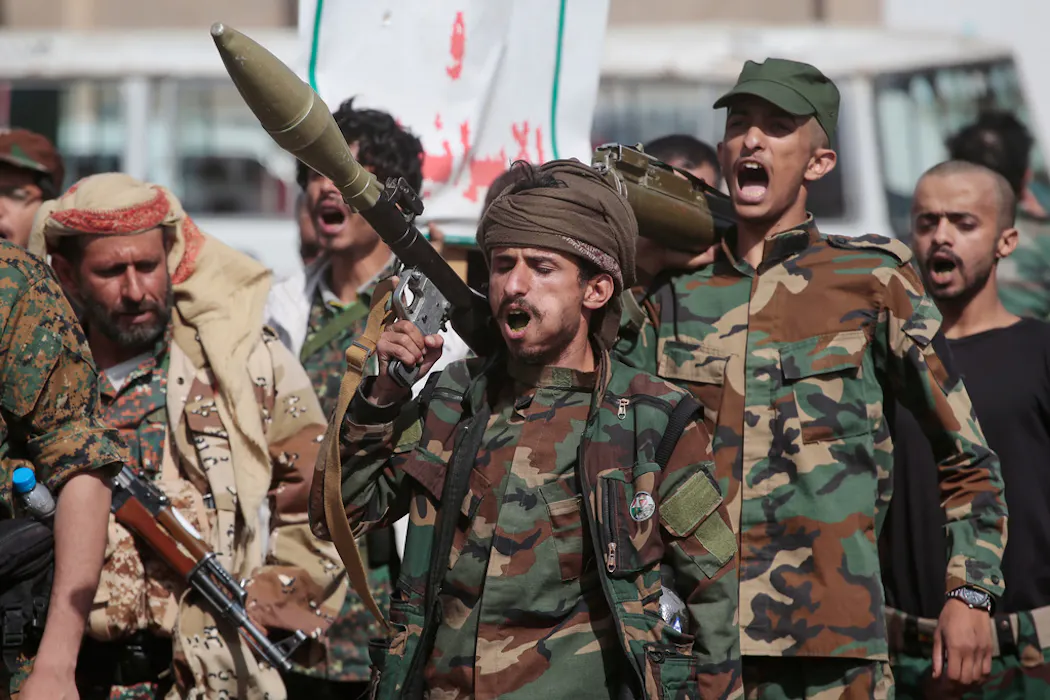
An advance by Yemen’s Houthi rebels, which has included the targeting of Saudi cities and infrastructure, has quickly complicated a widening Middle East war.
Not only has it all but unraveled a 2022 truce putting a lid on Yemen’s civil war – in which the Iran-aligned Houthis were fighting a Saudi-led coalition – but the seizure of territory next to the Red Sea has further threatened Saudi energy exports. On Sept. 13, Saudi Arabia and other Arab Gulf nations were due to take part in crucial Omani-hosted talks with Iran in a bid to reopen the Strait of Hormuz. But they were called off, seemingly over attacks by both the Houthis and Iraqi groups aligned with Tehran.
The Conversation spoke with Gulf analyst Kristian Coates Ulrichsen to help make sense of the dizzying array of intersecting news developments.
What happened with the Oman talks?
Periodically since the war in Iran began on Feb. 28, 2026, and particularly since the signing of the Iran-U.S. memorandum of understanding in mid-June, Omani and Iranian officials have been meeting to discuss how to resolve the blockage in the Strait of Hormuz.
Oman and Iran are the two coastal Gulf States through which the waterway passes, despite Iranian rhetoric about securing and maintaining control over the strait. The challenges facing the negotiators is that Oman will need to build consensus among the other Gulf States for any agreement, as well as the United States, given that one Iranian demand is for passage to be limited to civilian vessels, which would effectively bar U.S. naval ships from the Gulf, including the U.S. Navy’s 5th Fleet, which is headquartered in Bahrain.
Gulf officials – and their U.S. counterparts – would strenuously resist any Iranian attempt to convert their wartime leverage over the strait into a postwar deal that formalizes and regularizes that control.
The postponement of the planned meeting in Oman’s capital Muscat illustrates that the time is not yet right for the talks to proceed and that further dialogue is needed in order to build a consensual framework that can best enable them to succeed.
How serious are the new attacks on Saudi assets?
The uptick in attacks on Saudi energy infrastructure has put in jeopardy the viability of the work-around to Hormuz that enabled the kingdom to maintain oil exports at about half their prewar levels.
Saudi vessels have already started to avoid transiting the Bab el-Mandeb Strait and taking the far longer route through the Suez Canal into the Mediterranean and around the coast of Africa. That adds weeks and associated costs to oil exports to predominantly Asian markets.
While the damage to a pumping station that led to the temporary closure of the Saudi’s East-West Pipeline was reportedly done by a drone launched from Iraq, the kingdom faces attacks from both its northern and southern neighbors with the range, intent and capability to hit critical energy targets.
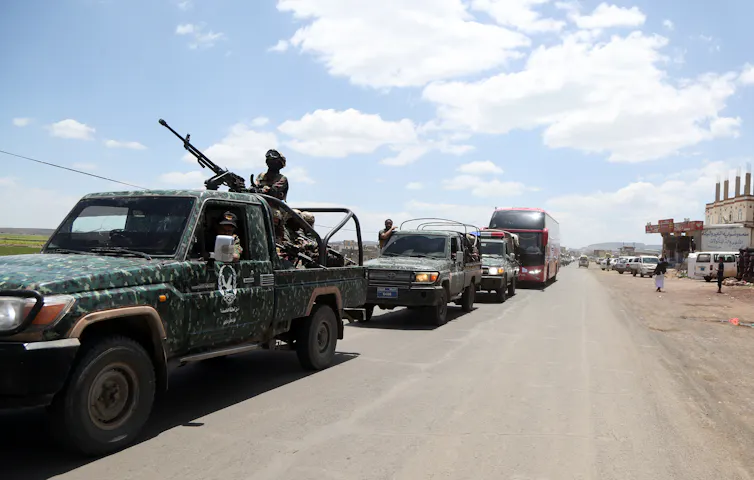
Saudi officials may respond to the latest attacks by rerouting oil back to its east coast facilities on the Persian Gulf, and there has been a steady increase in the volume of oil making its way through Hormuz in recent days and weeks. This return to using the Saudi port at Ras Tanura nevertheless makes oil transportation remain vulnerable to Iranian attacks on shipping in the strait.
Moreover, should the Saudis face a “double choke point” crisis whereby the Strait of Hormuz and the Bab al-Mandeb Strait are both effectively shut, there will be no safe and secure way to continue Saudi oil and other industrial exports, or the import of non-oil goods and commodities by ship.
What options does Saudi Arabia have to respond?
Saudi Arabia intervened militarily in Yemen in March 2015 at the head of an Arab coalition but quickly got bogged down in an unwinnable conflict. In fact, the major successes in ground operations against the Houthis and other adversaries in Yemen were achieved by the United Arab Emirates rather than Saudi forces.
There is very little appetite in Riyadh for a new military operation in Yemen, especially since the Houthis are skilled in asymmetric combat and have far more advanced drone and other technological capabilities than they possessed during the previous rounds of conflict with Saudi Arabia.
The fact that the Houthis outlasted the two-month U.S. Operation Rough Rider between March and May 2025 indicates that bombing from the air will not force the Houthis into submission. And the rapid advance made by the Houthis to take Mokha and other positions in southwestern Yemen since Sept. 3 suggest that Saudi-trained forces on the ground are insufficient.

The Saudi leadership, led by de facto ruler Crown Prince Mohammed bin Salman, is instead seeking to put together a multilateral coalition of states that may be able to contribute, in different ways, to ensuring maritime and regional security in and around the Red Sea. This will include the recent signatories Pakistan and Turkey, alongside Saudi Arabia, to the Mecca Joint Defense Agreement and may also include Egypt, which Crown Prince Mohammed visited on Sept. 15.
Egypt and Turkey may be able to contribute naval assets to assist with maritime patrols in the Red Sea, while Pakistan has long provided Saudi Arabia with soldiers to help protect the kingdom.
How could this all affect US-Saudi relations?
Saudi officials, along with counterparts in other Gulf States, urged the U.S. and Iran to reach a diplomatic resolution prior to the launch of the war on Feb. 28 and have found themselves caught in the middle of a conflict they sought to avoid.
The perception that the U.S. began the war without a “Plan B” has intersected with the feeling that the U.S. has done little to protect Saudi Arabia and the other Gulf States.
If the White House continues to struggle to make progress in negotiating an end to the war and a resumption of unrestricted passage through the Strait of Hormuz, it may be that regional states step in to make a deal of their own. The postponement of the Oman meeting suggests we are not yet at that point. Yet patience may certainly be wearing thin in Riyadh.
Kristian Coates Ulrichsen does not work for, consult, own shares in or receive funding from any company or organization that would benefit from this article, and has disclosed no relevant affiliations beyond their academic appointment.
Read These Next

AI can help with academic research but doesn’t always get it right – here are some tips to check the
AI is quickly changing. These tips from university librarians can help people keep pace with the shifts…
Missing ambassadors, inexperienced appointees – is Washington dropping the diplomatic ball?
Almost half of US ambassador jobs remain vacant. Meanwhile, political appointees are outnumbering career…

AI behaves more like a brain than a database – cognitive science’s role in its origin story helps ex
Modern AI owes its existence to both cognitive and computer science. What you envision as its origin…