Lockdown or active shooter drill? The distinction matters for children’s safety and well-being
Lockdown and active shooter simulations look and feel very different, though people often lump the two practices together.

School shooting preparedness drills have been a routine though uncomfortable part of the back-to-school experience. Since the 1999 mass shooting at Columbine High School in Jefferson County, Colorado, various kinds of preparedness drills have been mandatory in most schools.
As schools schedule and conduct these preparedness exercises, parents are likely to hear grim terms like “active shooter drill” and “lockdown drill.”
For most schools, these drills are not optional. As of 2025, 37 out of 50 states require schools to conduct active shooter or lockdown drills at least once per year. Some states, like New York, require schools to conduct lockdown drills at various points throughout the year. Texas, meanwhile, requires lockdowns and shelter-in-place drills, but it also permits active shooter threat exercises, including shooter simulations.
The nationwide controversy over school shooter preparedness drills tends to conflate hyperrealistic simulations – with fake blood and bullets – with lockdown procedures, which might involve turning off the lights and having children remain quiet.
While research is mixed on the effectiveness of both kinds of school shooter preparedness exercises, the two practices look and feel very different.

Understanding lockdown drills
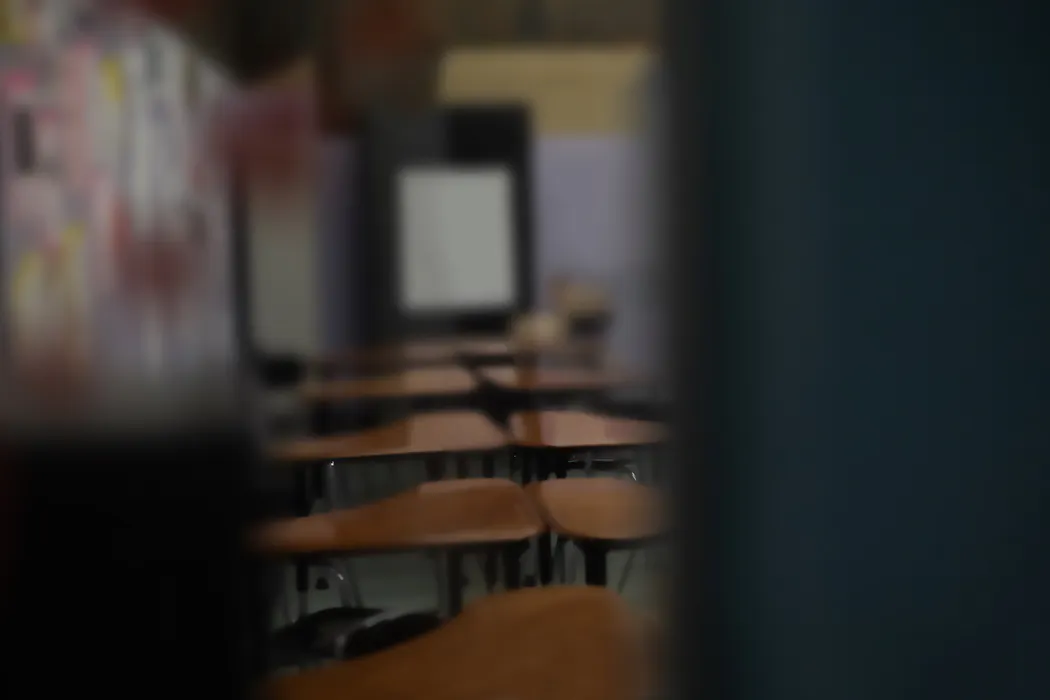
A lockdown drill typically involves three simple elements: locks, lights and moving out of sight.
Teachers and students learn to lock their classroom doors, shut off the lights and move to a safe area without sight lines until an all-clear notification from a school official or police.
Carrying out this routine can build familiarity and muscle memory that encourage a rapid and calm response in the event of an actual emergency.
Lockdowns may be initiated for any number of reasons, not necessarily related to an active shooter. A student once told me that the single lockdown she experienced in elementary school was in response to a squirrel that had invaded the building.
Other schools have been forced to implement lockdowns for graver threats: parent disputes that become physical, nearby police activity, wildlife, or, in the worst-case scenario, an armed assailant.
A more intense kind of drill
Active shooter simulation drills, meanwhile, are specific to armed assailants.
These drills may involve actors posing as shooters, as well as mock gunfire, fake blood, and even the use of nonlethal projectiles, such as BB guns or paintball guns.
Among surveyed K-12 teachers, 55% reported that the active shooter drills practiced in their schools did not include sensory elements such as fake blood. Yet around 6% of teachers had experienced drills with simulated gunfire, and 1% reported fake blood or explosions.
High-intensity simulations are restricted in some states, including New York and California.
Other states may explicitly differentiate between active shooter simulations and lockdown drills. Many states have no guidelines at all related to simulations in schools.
Still, research shows there are significant concerns about the psychological harm these simulations can have on students and teachers. Importantly, there are no existing studies that test whether they improve outcomes in real-world active shooter scenarios, because the baseline rate of these attacks is so low.
Yet these drills tend to generate the most media attention and public outcry.
Moreover, they are conflated with lockdown drills, leading to parents hearing about lockdown practices and drawing parallels to terrifying simulations with pretend shooters and gunfire.
Different exercises confused as one
When federal sources report that 95% of U.S. schools implement lockdown drills, this mostly refers to locks, lights and out-of-sight practice – not simulations and armed assailant drills.
The National Academies of Sciences, Engineering, and Medicine cited this 2023 statistic in an influential report on the mental and emotional risks of active shooter drills, but ambiguously presented that “95%” as reflecting “active shooter drills,” not lockdowns.
Unsurprisingly, this report found mixed results on the impact of active shooter drills. The report also revealed a lack of standardization across schools for drills and preparedness in general.
This has made it nearly impossible to understand what is harmful, what is helpful, and what should be common practice.
Whether lockdowns work
Professional organizations warn that high-intensity active shooter simulation drills may cause trauma for students, without making them more prepared for such a terrifying, real-life situation.
But academic studies have found some support for lockdowns.
For example, middle and high school-aged students in a large, urban central New York school district reported lower fear and better preparedness after participating in lockdown drills with the locks, lights, out-of-sight approach.
Other studies assessing various exercises, ranging from lockdowns to active shooter simulations, report mixed and negative impacts on fear and anxiety.
This indicates a fundamental problem with how we study preparedness drills: The research itself lacks the nuance required to establish clear harm or benefit to practicing for an active shooter situation.
Observational studies suggest that lockdowns can impede shooters’ movement through space, potentially mitigating harm. Research from Texas State University has found that unsecured doors were associated with more victims during active shooter incidents at schools.
A separate study suggested that lockdowns are associated with fewer casualties during mass school shootings.

Learning preparedness, without trauma
At the start of the 2026-27 school year, a parent posting on the subreddit “Daddit” shared a story about his preschool-aged child practicing staying quiet so “the bad guy” would not hear her.
This kind of scenario is simply not needed, research shows. As children age into middle and high school, lockdown practice is paired with the rationale for the drill, incorporating more sophisticated discussions about school safety, violence prevention and response, and emergency preparedness.
In early childhood and beginning elementary school, the routine can be learned without the rationale or explanation.
The American Academy of Pediatrics advises that adults running these drills use neutral phrases like “lockdown” or “safety drill,” instead of a more frightening term like “active shooter drill.”
Some schools follow this guidance, but others may not.
My preschooler has informed me of “quiet times” when he and his classmates sit in a corner and learn to stay quiet. When gently prodded for more explanation, he has no other reasoning for the behavior except that it is a time to be still and quiet.
There is cautious consensus among experts that some kind of intruder preparedness is necessary.
When conducted with the procedural simplicity of fire drills, lockdowns may be the least traumatic and most effective drills. Just as fire drills rarely simulate actual fires, lockdown drills need not introduce harmful or deceptive scenarios that explicitly recreate an emergency.
But with a lack of standardized practice, guidelines and terminology, disentangling the distinct outcomes and effects of lockdowns from the consequences of ambiguously defined “active shooter drills” is an uphill battle.
Emily Greene-Colozzi receives funding from the National Institute of Justice and the Regional Gun Violence Research Consortium.
Read These Next

Many drugs have mirror chemical structures, one helpful and the other harmful – a Nobel-winning disc
From thalidomide to resveratrol, molecules with the exact same chemical properties can have drastically…

From jargon to impact: Teaching undergraduates the art of public communication
Teaching public storytelling to students can help them communicate better in the world.

These state supreme court races could decide abortion access and trans rights
Ohio, North Carolina and Michigan have open seats on their state supreme court, and these hotly contested…