The Women’s Professional Baseball League is betting that women’s baseball has a future in the US
What will it take for the league to survive, expand and carve out its own identity in an increasingly saturated pro sports landscape?

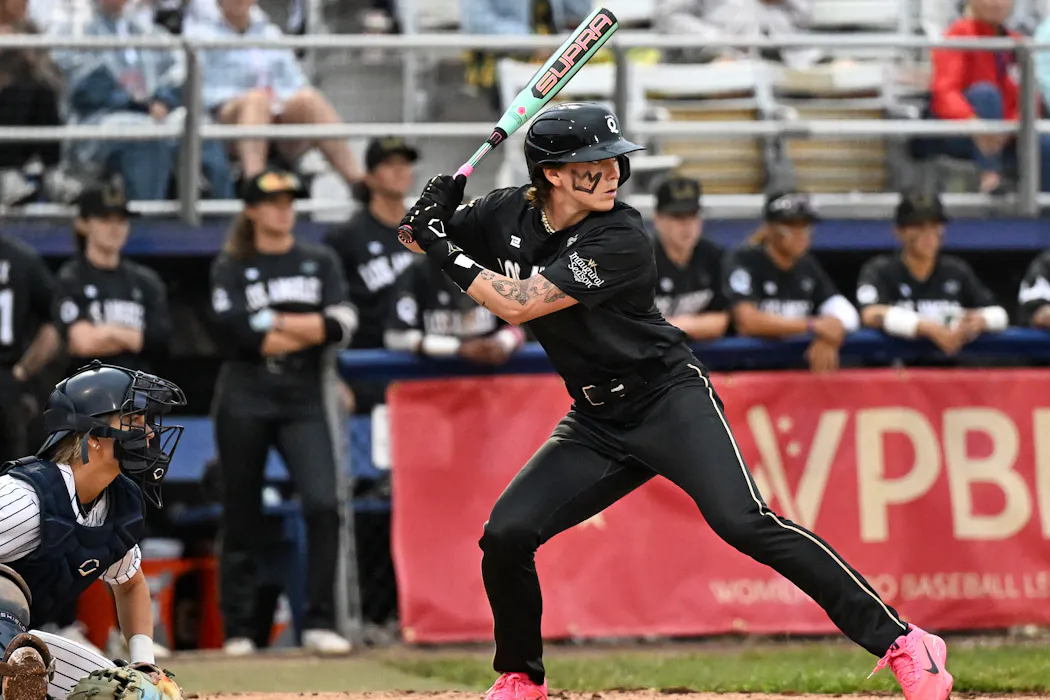
Over 70 years after the dissolution of the All-American Professional Girls’ Baseball League – and nearly 30 years since the end of the short-lived Ladies League Baseball – female baseball players have been competing in a professional league of their own.
The Women’s Professional Baseball League began its inaugural season on Aug. 1, 2026, in front of a sellout crowd at Robin Roberts Stadium in Springfield, Illinois. Since then, the league’s four teams have battled one another across 30 games, producing highlight reel moments like Kelsie Whitmore’s three-homer game and Andréanne Leblanc’s walk-off grand slam.
The San Francisco Firebells finished the regular season atop the standings. The playoffs, beginning on Sept. 9, will determine the league champion.
An opportune time
The WPBL is appearing at a time when women’s sports in the U.S. are thriving.
Established leagues such as the WNBA and National Women’s Soccer League are seeing more investment, higher team valuations, lucrative media deals and growing fanbases. Women’s sports revenue is projected to reach roughly US$3 billion in 2026 – an increase of 340% in just four years.
The WPBL certainly hopes to capitalize on this moment. But the league is also doing something culturally significant: providing a pathway for the thousands of girls and women who choose to play baseball, not softball.
In the U.S., women have been playing baseball since at least the 1860s. But stubborn stereotypes continue to cast baseball as a sport for men and softball as the acceptable equivalent for women. Following legal challenges, Little League Baseball officially allowed girls to play in 1974. However, that same year, Little League Softball was founded, which steered girls away from baseball and reinforced the gendered split of the two sports.
Since then, there have been limited opportunities and resources available to girls and women in the U.S. who want to play baseball. Those who play Little League Baseball almost always switch to softball by high school. At the collegiate level, there are a handful of women’s baseball club teams, but it is not an NCAA-sanctioned sport.
Female ballplayers in other countries also face some of these issues. But I’ve researched and written about how developmental pipelines for women’s baseball players in Japan, Canada and Australia are far more established than they are in the U.S.
Showcasing the world’s best players
So it’s no surprise that nearly half of the 65 players in the Women’s Professional Baseball League hail from other countries, including 11 from Canada, eight from Japan, five from Mexico and four from Australia.
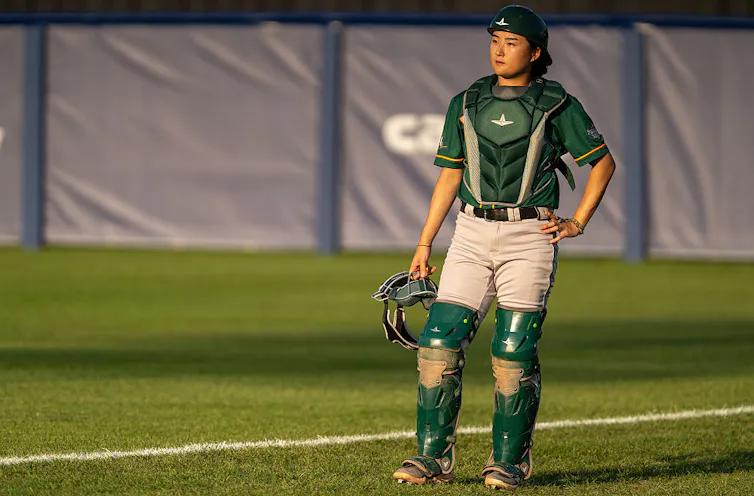
Japan’s Ayami Sato, picked second in the draft, is widely considered the best women’s baseball pitcher in the world. Thaima Maximiliana, from Curacao, was a first-round draft pick for Los Angeles, and South Korea’s Hyeonah Kim signed with Boston as the fourth overall pick.
That said, many of the American ballplayers had already made a name for themselves prior to joining the WBPL.
Kelsie Whitmore, who plays for the Savannah Bananas, a traveling team known for its entertaining style of play, was the league’s first overall pick. The Bananas play Banana Ball, a fast-paced variation of baseball with unconventional rules that puts spectacle and fan engagement at the heart of the game. Other women in Banana Ball to sign with the WPBL include Denae Benites, Val Perez, Ashton Lansdell and Mo’ne Davis, who became the first girl to pitch a shutout at the Little League World Series in 2014. Davis actually scored the WPBL’s first run.
The league also features women who play for the USA Baseball women’s national team, which recently qualified for next year’s Women’s Baseball World Cup.
Each WPBL team has a salary cap of US$95,000, so players will earn roughly $6,333 for the short, eight-week season. The league is covering housing costs and living expenses for the players, and they also receive a share of the league’s sponsorship revenue, in addition to any personal endorsement deals they might secure.
A nod to the past
Even though the teams hail from other cities, all of the games for the inaugural season have taken place in Springfield, Illinois.
The location is symbolic: Springfield is where the first ticketed baseball game between two women’s teams, the Blondes and the Brunettes, took place in 1875.

In similar spirit, the team names commemorate trailblazing women. The New York Heights are named after civil rights leader Dorothy Height. The Boston Hunters pay tribute to Harriot K. Hunt, an influential medical doctor and women’s rights activist. The San Francisco Firebells honor Lillie Hitchcock Coit, a philanthropist and patron of the city’s volunteer firefighters whose nickname was “Firebelle Lil.” And the Los Angeles Queens are named after Lizzie Murphy, known as the “Queen of Baseball.” Murphy was the first woman to play against Major League Baseball players when she faced Boston Red Sox players in an exhibition game at Fenway Park in 1922.
Meanwhile, the official league mascot is one of the most unique in professional sports: a dancing, cartwheeling version of Maybelle Blair, the 99-year-old former All-American Professional Girls’ Baseball League player.
An uncertain future
ESPN Select has been broadcasting the entire season for the U.S. market, with select games also being shown on the Scripps Sports Network. Fans outside of the U.S. must tune in via YouTube.
Even though the regular season only included 30 games, there was plenty of drama on and off the field.
The manager of the Boston Hunters, former MLB All-Star closer Keith Foulke, was fired just three games into the season. Three weeks later, the league faced scrutiny after a board member filed a civil complaint alleging misuse of funds and conflicts of interest in the board’s makeup and hiring practices.
Yet play continued and proved exciting. San Francisco claimed the league’s first walk-off win in a game that featured two grand slams. New York’s Jaida Lee emerged as a top pitcher and led the league in strikeouts and strikeout rate. Whitmore and Benites finished the season leading the league with 11 home runs apiece.

Despite the success of its inaugural season, the WPBL is ultimately a startup that faces the challenges of any new league: It needs to grow its fan base, boost its media coverage, provide quality broadcasting and remain financially solvent.
So what will it take for the WPBL to survive, expand and carve out its own identity in an increasingly saturated pro sports landscape?
It’s worth looking to other emerging sports and leagues. Flag football is growing thanks to its inclusion as an Olympic sport and promotional and financial support from the NFL. Both Women’s Elite Rugby and the Women’s Lacrosse League hope to leverage increased interest and investment to succeed. And the Athletes United Softball League is utilizing its innovative rules to engage fans.
Questions linger about the future of the WPBL. But the league certainly has one thing in its favor: the rich history of women playing baseball, both in the U.S. and around the world.
Callie Maddox does not work for, consult, own shares in or receive funding from any company or organization that would benefit from this article, and has disclosed no relevant affiliations beyond their academic appointment.
Read These Next
What colleges and universities need from donors to thrive
Philanthropy, which covers an average of 10% of college and university budgets, can help schools and…
More than 119 million Brazilians voted in the Oct. 4 election – including about 21,000 Florida resid
Brazilian voters abroad mirror the deep polarization shaping politics in their home country.
Democrats distance themselves from trans rights – close midterm races may show whether that pays off
A scholar of LGBTQ+ politics looks at how Democratic campaigns in Texas and Ohio are shifting on trans…