Refugee numbers dropped in 2025 – but aid cuts and others trends suggest little to celebrate
The drop in funding has also led donors to prioritize the trend of using aid to control the movement of people – over their needs.

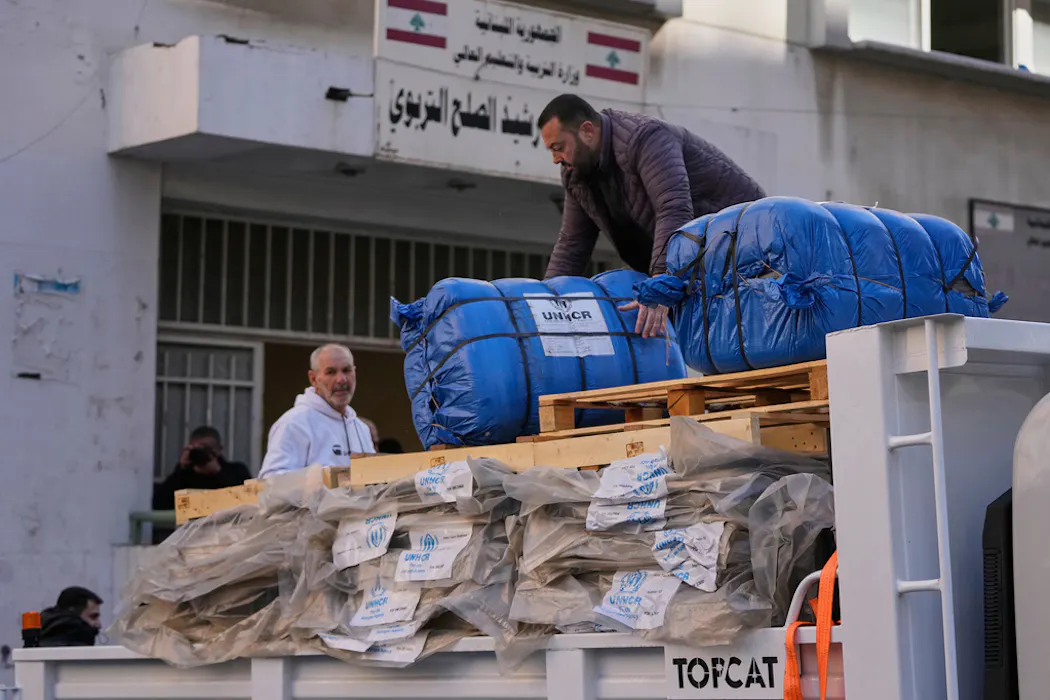
There was surprisingly good news when the United Nations refugee agency, UNHCR, released its latest report on June 10: The number of displaced people in the world fell in 2025 for the first time in a decade.
But there are some serious caveats. Many of the people who returned home in 2025 did so to countries such as Syria, still recovering from more than a decade of war, and Afghanistan, with its humanitarian emergency and repressive Taliban rule.
Conflict in the Middle East has added even more strain, with an extra 3.2 million people temporary displaced in Iran and more than 1 million forced from their homes in Lebanon at the peak of fighting. Meanwhile, in Sudan an increasingly protracted civil war forces families from their homes on a daily basis.
Moreover, as we prepare to mark World Refugee Day on June 20, there is a backdrop that is deeply worrying to experts in migration and development: As the world walks away from the way the humanitarian system has long been financed without a new structure to replace it, refugees are the ones being left in the lurch.
Nearly one year has passed since the Trump administration officially shuttered the U.S. Agency for International Development, or USAID, slashing humanitarian budgets, canceling contracts and laying off 16,000 employees. The cuts – alongside reduced funding from European governments – have thrown the humanitarian system that supports more than 100 million displaced individuals into crisis.
In parallel, the Trump administration has pressured at least 30 countries into signing new migration deals. This has seen underresourced countries accept deportees from the United States – often people who are not even the countries’ own nationals – in exchange for aid.
As experts in migration and development, we have published three books on how and why governments of Global North countries contribute humanitarian aid.
The latest cuts and tit-for-tat deals signal a shift in how the world supports refugees. We believe rich countries are now in a race to the bottom, looking for ways to reduce spending and erase their human rights commitments.
A cliff edge for aid
The closure of USAID has had the largest global reverberation: a decline in expenditures from US$8 billion in 2024 to $5.8 billion in 2025, with future obligations also falling from $9.2 billion to $3.5 billion. But this is not just a U.S. story. The United Kingdom cut $1 billion in 2021 and never restored those funds, and Germany’s humanitarian spending declined by 76% between 2022 and 2025.
The global drop in aid has acutely affected refugee-related funding. The U.S. State Department’s Migration and Refugee Assistance spending declined from $4.6 billion in the 2024 financial year to $3.2 billion the following year, and obligations fell from $5.7 billion to $2.9 billion.
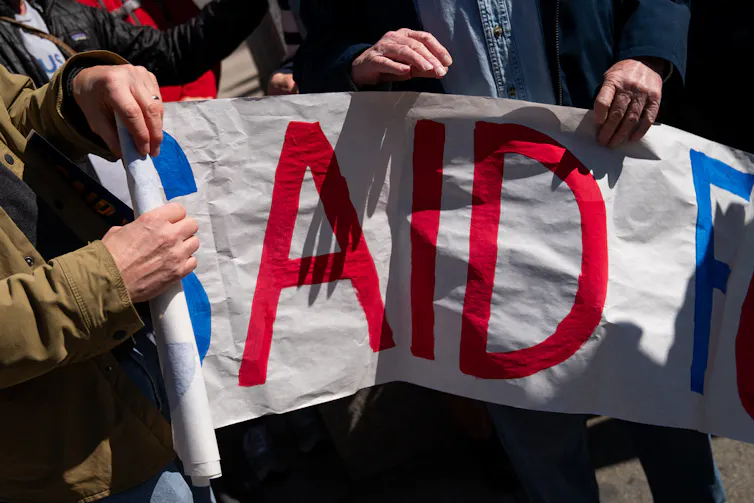
For its part, UNHCR’s 2026 budget was set at $8.5 billion, a 20% reduction compared to 2025 – largely attributable to U.S. cuts. This has led to a deliberate strategic shift in how UNHCR operates. The organization has closed, merged or downsized field offices, with 185 out of 550 offices affected and more than 5,200 UNHCR staff losing their jobs – approximately 25% of its global workforce.
For refugees, this has a very tangible impact. For example, in Lebanon – a major refugee-host country that has also experienced mass internal displacement off and on since 2023 as a result of war with Israel – about 80,000 refugees lost shelter-related financial aid in 2025, increasing risks of eviction and homelessness.
Reset and hyperprioritization
Anticipating the global plummeting of aid, the Inter-Agency Standing Committee – the U.N.’s body for coordinating global aid responses – announced a humanitarian reset in March 2025 seeking to reorganize how aid is delivered through a lighter footprint and the pooling of resources.
Once the global aid cliff became a reality, U.N. agencies in June 2025 announced a reformulated policy of hyperprioritization to identify which populations were most at risk. “We have been forced into a triage of human survival,” Tom Fletcher, the undersecretary-general for Humanitarian Affairs and Emergency Relief coordinator, said at the time.
Concretely, this meant that the U.N. aimed to support 114.4 million people with lifesaving assistance in 2025 – just 38.3% of the 298.9 million people it identified as in need of humanitarian aid.
For UNHCR and the International Organization for Migration, the humanitarian reset has also meant focusing on a “route-based approach,” which encompasses facilitating political dialogue, building capacity and providing support to countries along the entirety of a migration route.
This partly entails protection for refugees but also promotes border security and even migrant returns. Critics have argued that the approach serves the priorities of rich donor countries that prefer to stop migration earlier in a migratory route, even when the migration in question is forced rather than voluntary.
Aid as migration control
While more recent aid cuts have and will continue to hurt refugees acutely, this new approach draws on a two-decade trend of countries leveraging aid to control migration.
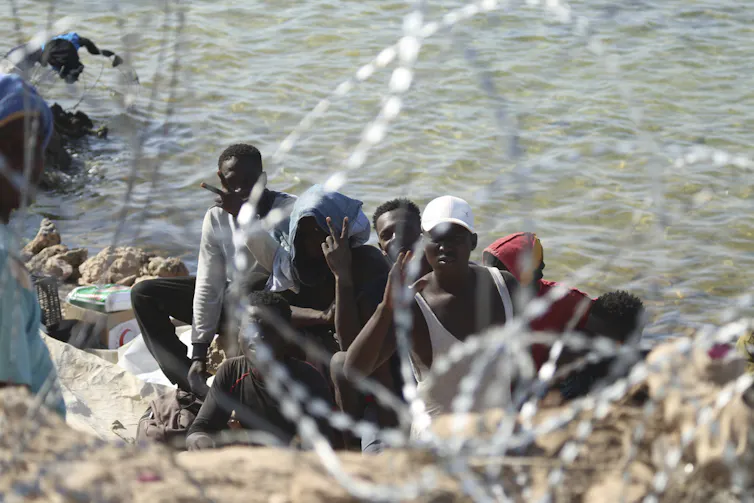
This policy of migration management aid, which includes support for refugees but also any funding used to control the movement of people, increased more than 1,000% from 2002-2022. Our estimates show that migration management aid amounted to $73 billion from 2002-22 and was often used to keep refugees and migrants in poorer countries at the periphery of the international system.
Our forthcoming book, “Aiding Autocrats,” explains how this type of aid goes toward supporting migrants and refugees in developing countries and is also spent on border control and state security that forces – rather than incentivizes – people to stay put.
This type of funding further entrenches what scholars have termed the “grand compromise,” whereby rich states pay for the aid for the majority of the world’s refugees, to be hosted in the Global South, as long as those hosting states prevent their onward movement. This unequal setup ensures that migrants and refugees remain contained in the countries least equipped to host them, which only works when aid functions as the grease that keeps the system hobbling along.
Building the capacity of governments, especially authoritarian ones, to manage migration and contain refugees is not an inherent global good. Indeed, our book shows that it leads to serious negative consequences and human rights violations. Funding that is distributed to governments or organizations working in repressive countries carries the grave risk of empowering security actors that not only impinge on the rights of refugees but also those of citizens.
Global aid will likely never return to its pre-pandemic level, but we think what is left – particularly after the aid cliff of 2025 – should be spent saving lives and responding to refugees’ needs, not preventing migration or facilitating returns.
On World Refugee Day, it’s worth recognizing that aid is a critical, lifesaving tool that helps refugees temporarily survive and, sometimes, permanently rebuild their lives. Humanitarian aid for refugees should be justified for its impact, independent of whether it prevents emigration or convinces countries to accept deportees.
The authors do not work for, consult, own shares in or receive funding from any company or organization that would benefit from this article, and have disclosed no relevant affiliations beyond their academic appointment.
Read These Next

Chiricahua is the nation’s newest national park – what does that mean?
What comes next for Chiricahua, now that is has been officially redesignated as America’s 64th national…

Offering cash for votes is quite common – but here’s why it doesn’t work
Money or other material benefits are often not enough to override a voter’s preferences and partisanship.
El Niño is threatening California’s fragile coast again – the 1982-83 El Niño opened eyes to the ser
The destructive 1982-83 El Niño, then the strongest on record, eroded cliffs, leaving homes hanging…