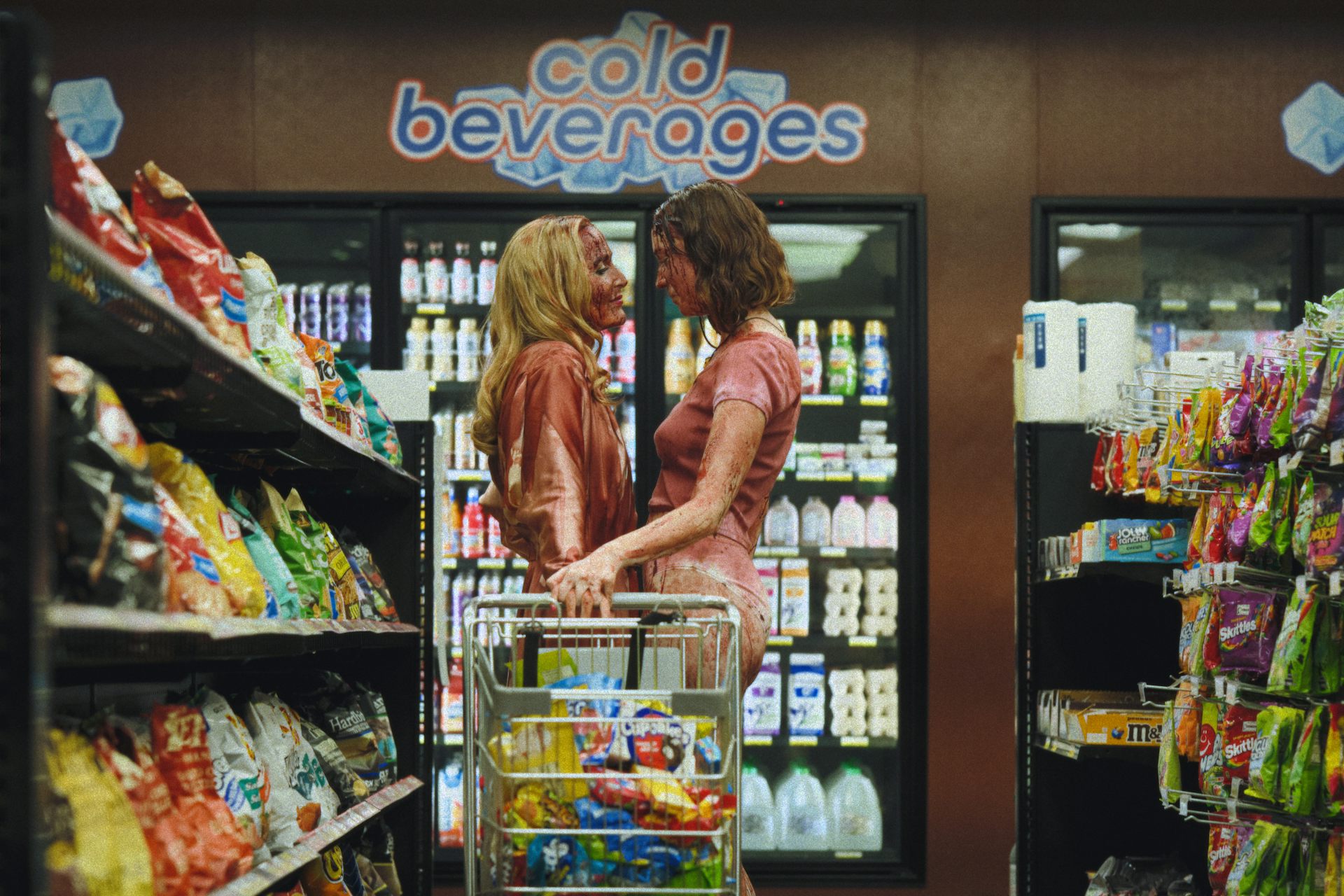
DIY zines are helping queer communities tell their own stories and craft their own culture
For decades, zinemakers have used their self-published work to forge connections and nurture political movements outside of the mainstream.

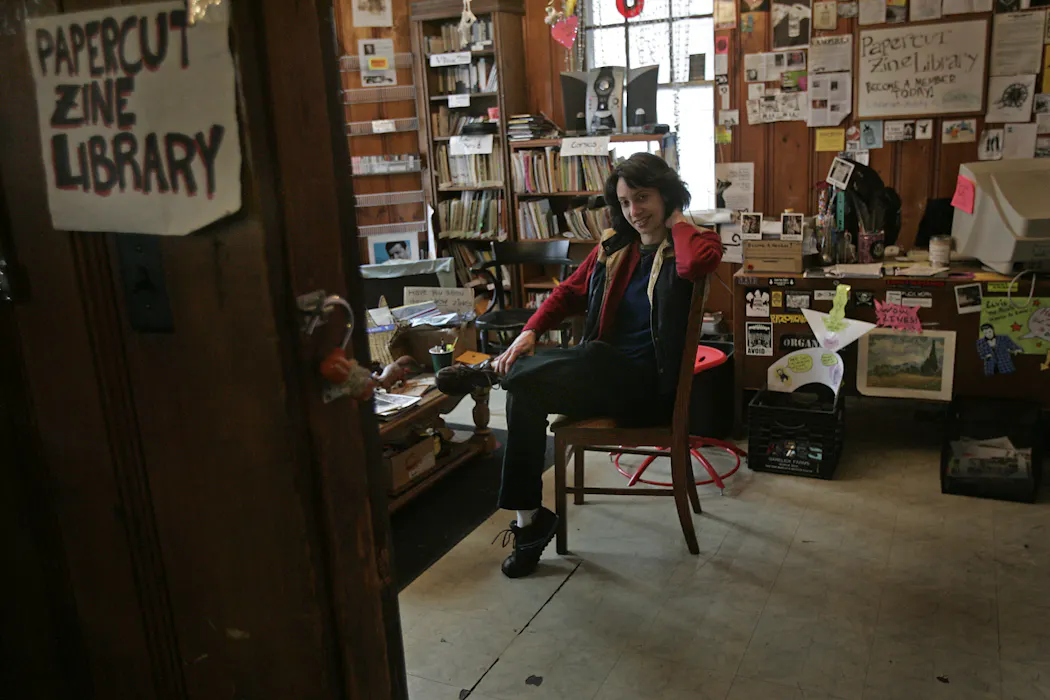
At Pride festivals held across the U.S. and beyond, among the tables offering voter registration forms or condoms, you’ll likely run into some queer zinemakers.
Zines are DIY publications circulated by their creators. They originated in science fiction fan communities in the 1930s, when enthusiasts self-published stories and critiques.
It’s hard to capture the scope of zines with one overarching definition, since they take so many forms. There are personal zines centered on memoir or essays, known as “perzines”; fanzines, which celebrate favorite celebrities or music; educational zines that cover topics like mending clothes or choosing a birth control method; and political zines, which might explain people’s rights or the web of the surveillance state.
They’re often photocopied and vary in visual style length – usually anywhere between eight and 90 pages. One zine title might be eight issues long; another might be a single issue.
I’ve been studying how zines can advance gender justice. As part of the grant my colleagues and I received in 2024 to pursue this work, we created our own zine lab and zine archive at the Missouri University of Science and Technology. We’ve also shared zines made by our students at the St. Louis Independent Comics Expo.
What makes zines so attractive today is that they provide “a graphic language of resistance,” as design scholar Teal Triggs writes.
Zines started off as subversive, created by cultural outsiders to reject the mainstream. While LGBTQ people have more rights today than they had in the 1980s, making and exchanging material zines in person is one way to rebel against an increasingly digital world. Just as important, they continue to offer a space for views and people left out of traditional media coverage.
A ‘fascination with the margins’
In his 1997 book “Notes from Underground,” sociologist Stephen Duncombe highlights one key connection among zine publishers: their “fascination with the margins.”
Zines have historically found followings within different subcultures.
In the 1970s, they were big in the punk scene. “Sniffin’ Glue … and Other Rock ’n’ Roll Habits,” first published in 1976, was followed by titles like “Truly Needy,” which included concert reviews and band interviews, while promoting anarchist politics.

Starting in the 1980s, they spread into LGBTQ communities; in the 1990s, zinemaking became popular in the riot grrrl music scene, a feminist, punk subculture that combined music with activism to address issues such as sexism and sexual violence while promoting women’s empowerment.
Because zines have historically been published and distributed outside of regular publication networks, readers discovered new zines through word of mouth, reviews or zine guides like “Factsheet Five” and “Queer Zine Explosion.”
Today, most large cities hold zine fests, some of which cater to specific groups, like New York City’s Black Zine Fair or Minneapolis’s Midwest Queer & Trans Zine Fest. There are also libraries that collect zines, like the St. Louis Public Library.
Queering zinemaking
Queer zinemakers, past and present, have used zines as a canvas for self-expression, and this is partially why the style and content of zines can vary so widely.
Whereas the anonymous writer of “Agony” used his zine to complain about the queer communities he found in Milwaukee, “Homocats” uses cat memes to address homophobia. And as Jeffrey Kennedy explains in his letter to the reader at the start of “Boysville U.S.A.,” “the work is a collection of opinions and information compiled, edited, and written by me. It has a gay slant because being gay is part of who I am.”
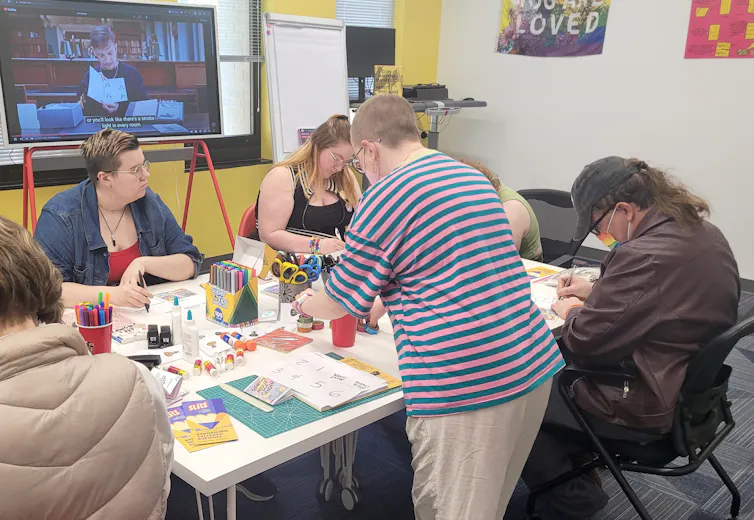
Some writers use zines for identity play, like when the creator of “Poser” declared that “identity isn’t fixed but ever-changing, depending on who we are (psyche), where we’ve been (experience), and what the world is currently throwing at us (society).”
Zines can also invite audience participation.
“Gender in a Snippet,” a zine made by St. Louis illustrator Alain McAlister, includes fill-in-the-blank spaces that ask the reader to describe and define their own gender identity.
Forging community
The range of lifestyles, opinions and narratives in zines often serves as a springboard for creating community. All it takes is a reader seeing themselves in someone’s fandom of John Waters’ films, connecting with a political manifesto or sharing the same sense of humor. Zines “create one’s own culture,” explains artist AA Bronson, who founded the NY Art Book Fair.

Riot grrrls like Kathleen Hanna and Mimi Nguyen created zines so that young women like them could write about and circulate their experiences.
Zines like “J.D.s” helped to create the queer punk scene, describing itself as a “soft core zine for hard core kids.” Others like “Bimbox” explicitly define themselves as outside of normal culture, summoning readers into “a secret network of lesbians and gays across the globe.” The Metro Trans Umbrella Group’s “FACES Magazine” includes a list of support groups for transgender people in St. Louis, while another zine includes stories of “dating while Black and trans,” told through comics.
Queers for Palestine
Zines still fill a void for voices and ideas relegated to the margins of the mainstream. In recent years, a number of queer zines have been published that explicitly advocate for Palestinian solidarity.
“Loud and Queer: Queers for Palestine” is a collection of art and poetry submissions about the Palestinian struggle for self-determination. The introduction to the zine states that “the queer community stands in solidarity with all oppressed groups.”

While not all the contributors have a direct connection to this strugglet, they all explain how their own specific backgrounds as nonbinary, mixed race or Indigenous allow them to connect to the experiences of Palestinians.
“We Remind You: HIV and Palestine” approaches its advocacy through “an invitation to recognize oneself and one another as people impacted by HIV and Palestine in the past, present and future.” One article compares HIV rates among Native Americans with rising deaths from HIV/AIDS in the Palestinian territories. It then includes exercises for the reader to consider what information may be missing from the article and provides sources to learn more about these issues.
Other zines focus on centering queer Palestinian voices. “Queer Voices for the Fight for Palestinian Liberation” is a zine that starts with a manifesto calling for queer solidarity with the Palestinian people. But it also shares anonymous submissions from the digital project Queering the Map that describe Palestinian stories of loss and determination: “I am trans, and I am Palestinian. I will not choose between my country and my queerness and I will not let colonisers erase one half of me so the other can be free.” It refers to the Palestinian territories as “the most queer” because it is “the epitome of placelessness.”
There’s been more tolerance of pro-Palestinian, queer and anti-capitalist voices in the public sphere. Yet the seeds of these voices and ideas are nurtured in queer zines, which continue to offer a unique space for solidarity, political advocacy and radical visions for the future.
Rachel Schneider received funding from The Public Interest Technology University Network and is the Vice President of Abide in Love, a nonprofit that supports immigrants in Phelps County, Missouri.
Read These Next
Indian Gen Z ‘cockroach’ protesters aim to upend assumptions about democracy – and populism – in Mod
The protests challenge the government’s view of who “the people” are, what democracy means, and…

Chiricahua is the nation’s newest national park – what does that mean?
What comes next for Chiricahua, now that is has been officially redesignated as America’s 64th national…

An AI model’s false tip to Philadelphia police reveals how digital agents can do as they’re told and
An expert on AI governance explains why these rare mistakes may soon be common, and with much higher…