US territories have a voice in Congress but no vote – here’s why
125 years ago, the Supreme Court ruled that some territories belonged to the US but weren’t part of it. The reasoning was openly racist – and it still shapes how millions are represented in Congress.

As the U.S. celebrates its 250th anniversary, millions of Americans who live outside the 50 states are excluded from full participation in its democracy.
Roughly 3.6 million residents of U.S. territories – including Puerto Rico, Guam, American Samoa, the Northern Mariana Islands and the U.S. Virgin Islands – have no senators and only nonvoting representation in the House. These Americans, who can vote in presidential primaries but not the general election, are excluded because of where they live.
This year marks the 125th anniversary of the Insular Cases, a notorious series of Supreme Court decisions beginning in May 1901 that indelibly shaped the nation’s democracy. In these cases, the court decided that some territories were not, and would never be, an equal part of the U.S.
As political scientists who study the history of Congress, we’ve researched how lawmakers wrestled with the question of what rights to extend to the residents of overseas territories. Their answer shapes American democracy today.
The Insular Cases
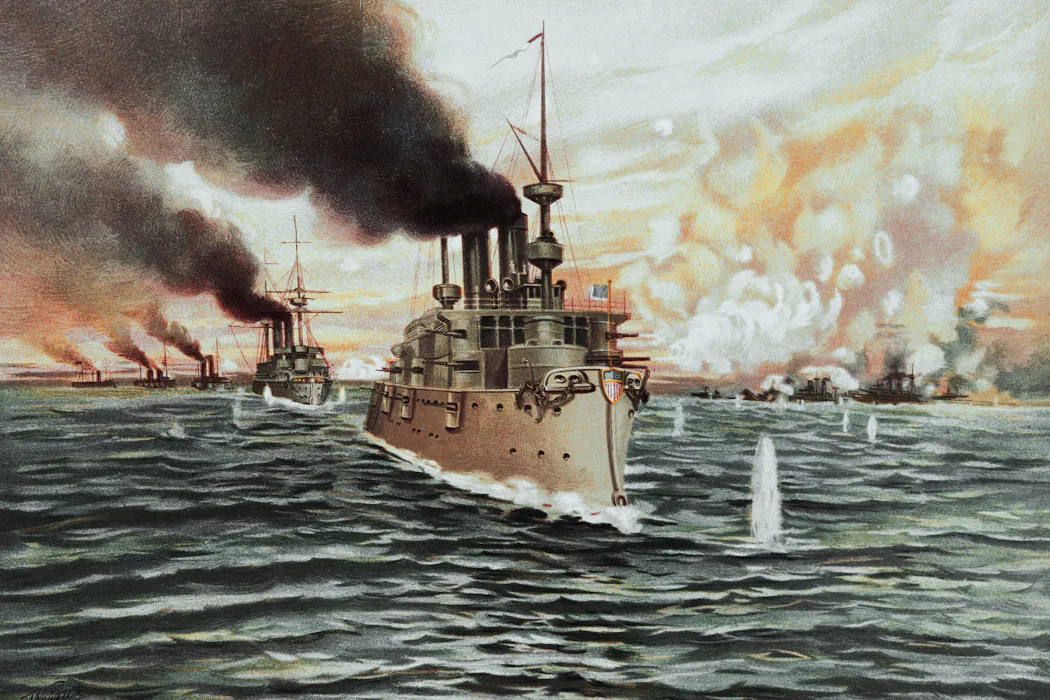
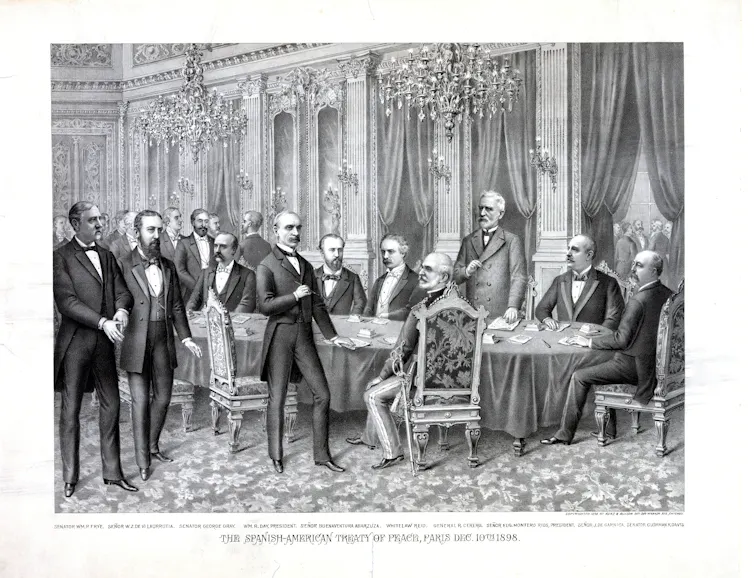
After the Spanish-American War, fought over four months in 1898, the U.S. acquired vast new territories from Spain – including Guam, Puerto Rico and the Philippines – increasing its population by some 8 million people overnight with new residents thousands of miles from the mainland. Suddenly, the country was faced with a constitutional conundrum: What political status should these new residents have? Should they be fully integrated into American democracy – or should they be governed as colonial subjects, with no elected representation in the halls of Congress?
In a series of cases, the Supreme Court distinguished between “incorporated” U.S. territories destined for eventual statehood and “unincorporated” territories not destined for statehood, like Puerto Rico and Guam. Part of the impetus was economics: Congress had applied tariffs to Puerto Rican goods, despite knowing that this would be unconstitutional if Puerto Rico was indeed part of the U.S. It then tasked the Supreme Court with sorting out the rest.
In turn, the Supreme Court decided these new territories belonged to the U.S. but were not part of it. This meant that 8 million new residents – a contingent nearly equal in size to the Black American population at the time – would exist outside the Constitution. Chief Justice Melville Fuller, dissenting, warned they would exist “like a disembodied shade, in an intermediate state of ambiguous existence for an indefinite period.”
The exclusion of the territories was explicitly tied to race. Justice Henry Billings Brown, in the opinion of the court, wrote that “if those possessions are inhabited by alien races, differing from us in religion, customs, laws, methods of taxation, and modes of thought, the administration of government and justice according to Anglo-Saxon principles may for a time be impossible.”
Unequal representation
Since 1794, Congress had included nonvoting delegates, generally tasked with representing territories en route to statehood. That changed in 1898. Members of Congress overwhelmingly opposed statehood for these newly acquired places, in part because the largely nonwhite populations of Puerto Ricans and Filipinos were considered racially and culturally inferior and incapable of fully participating in a democracy. Representative John Dalzell, a Republican from Pennsylvania, articulated this argument in 1900 on the floor of the House, said “the methods of government prescribed by the principles of Anglican liberty as practiced in the United States would be grotesque in the Philippine Islands and would bring to their people no advantage.”
For territories that would never achieve statehood, Congress designed a new position: the resident commissioner to the United States. At first, the position was more like an ambassador than a member of Congress. The resident commissioner, for example, was not allowed to access the House floor, much less speak on it. Eventually, the position became almost indistinguishable from that of a territorial delegate, gaining the right to debate but never to vote. Resident commissioners would go on to represent Puerto Rico and the Philippines in Congress.
Today, the resident commissioner is a second-class lawmaker. Like the delegates from the other territories and Washington, the resident commissioner may introduce legislation, serve and vote on committees and speak on the House floor – but they cannot vote on whether a bill becomes law. Even though Puerto Rico is more populous than over a dozen states, it has just one lawmaker, the resident commissioner.
125 years later
The Insular Cases have faced increasing public criticism in recent years, including from Supreme Court Justice Neil M. Gorsuch, who wrote that they “have no foundation in the Constitution and rest instead on racial stereotypes. They deserve no place in our law.”
A growing body of legal scholarship and activism has echoed Gorsuch and urged the Supreme Court to overrule the Insular Cases, to no avail.
Less attention, however, has been paid to the legacy of post-1898 territorial expansion in the halls of Congress. Puerto Rico is still represented by a resident commissioner, serving the only four-year term in Congress – as compared with the two-year terms for representatives and delegates.
The resident commissioner – alongside delegates who represent Guam, the U.S. Virgin Islands, American Samoa, the Northern Mariana Islands and Washington – serves with a voice but not a vote.
The authors do not work for, consult, own shares in or receive funding from any company or organization that would benefit from this article, and have disclosed no relevant affiliations beyond their academic appointment.
Read These Next

These state supreme court races could decide abortion access and trans rights
Ohio, North Carolina and Michigan have open seats on their state supreme court, and these hotly contested…
Armed poll watchers: New Jersey’s 1981 racist voter intimidation campaign is a cautionary tale ahead
An armed voter suppression campaign in New Jersey in 1981 finds echoes today in the Trump administration’s…
Missing ambassadors, inexperienced appointees – is Washington dropping the diplomatic ball?
Almost half of US ambassador jobs remain vacant. Meanwhile, political appointees are outnumbering career…