The war in Iran – again – points to the strategic shortcomings of assassination as policy of foreign
Targeted killings can disrupt an adversary, but they rarely lead to collapse — especially when the target is a nation-state like Iran.

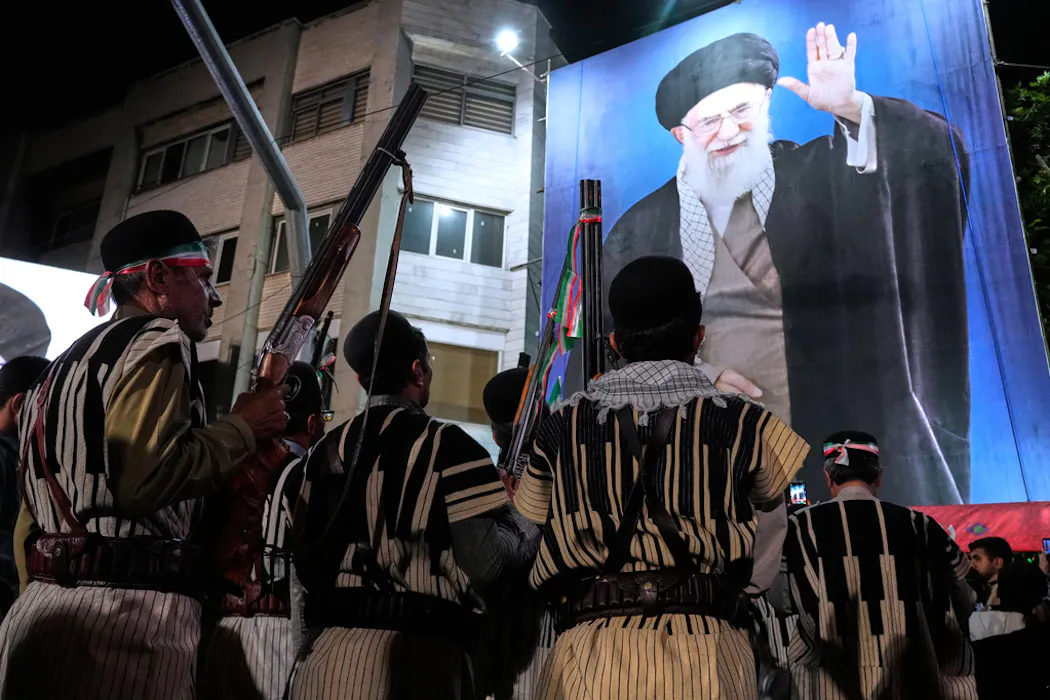
The coordinated U.S.-Israeli strikes at the outset of the war in Iran killed Supreme Leader Ali Khamenei, along with other key regime figures. In doing so, the United States and Israel crossed what The New York Times and others described as “a new Rubicon”: the deliberate, overt killing of a head of state.
President Donald Trump and Israeli Prime Minister Benjamin Netanyahu framed their war not simply as retaliation or coercion, but as an opening for political collapse. Remove enough of the leadership, the logic ran, and the structure beneath it either breaks apart or becomes vulnerable enough for a public uprising to finish the job.
Yet as a former senior U.S. intelligence officer who held leadership roles at the CIA and National Counterterrorism Center, I believe such triumphalist logic masks the strategic shortcoming of such targeted killings.
Disruption is not the same as collapse
Most scholars, too, have concluded that targeted killings or assassinations, often referred to as leadership decapitation, can disrupt operations and degrade organizational effectiveness. Under some conditions, they can even force the targeted side to capitulate. But they rarely lead to collapse.
The work of Jenna Jordan, a scholar of international relations at Georgia Tech, remains one of the clearest warnings against inflated expectations about anticipated effect of such strikes. Across a large body of cases of targeting killings of non-state militant groups, she found that older, larger, more institutionalized organizations are harder to break down through leadership removal than small, young, weakly structured ones.
Patrick Johnston, a former director of the Counterterrorism Center at West Point who has studied counterinsurgency campaigns, found more evidence that decapitation can help end conflicts than Jordan did. Other research has backed-up Johnston’s conclusion that some terrorist groups are vulnerable to leadership targeting.
But even these more favorable studies point to only conditional gains; they do not treat decapitation as a path to automatic political success or as a substitute for broader strategy.
Targeting heads of state is even more fraught
In counterterrorism efforts, disruption may be a good enough outcome for policymakers. Indeed, if the objective is to delay attacks or degrade operational effectiveness, leadership removal can have value. That was how the U.S. campaign against al-Qaeda was generally understood by American policymakers. Even Osama bin Laden’s death and repeated strikes against senior deputies were treated as major blows, not as proof that the organization had ceased to exist or no longer mattered as an operational threat.
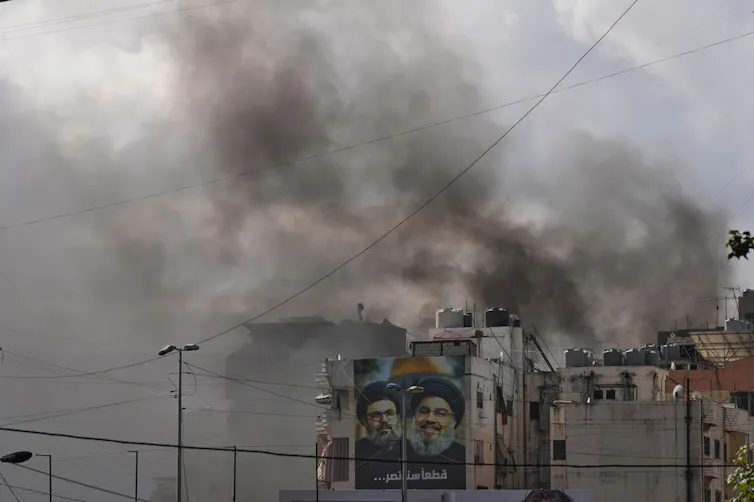
Yet when the target is a state, the political bar is even higher. Tactical disruption is, again, not the same as political collapse. It is also not the same as creating a more favorable bargaining environment for the country relying on assassinations.
That distinction matters because recent scholarship has found that killing or capturing leaders may weaken an adversary on the battlefield but does not necessarily tell us how an adversary will respond politically — whether it becomes more willing to bargain, less able to negotiate, or more determined to keep fighting.
Removing another country’s leaders may weaken it in the short term, while changing who is left to negotiate, compromise or escalate. A strike could therefore succeed operationally while narrowing the political options that follow.
Iran’s response to the initial killing of senior leaders in the opening days of the current conflict illustrates the point. Khamenei’s death staggered the government, but it did not break it. Within little more than a week, Iran’s Assembly of Experts appointed Mojtaba Khamenei, his son, as supreme leader.
The government redistributed authority through institutions built to survive political shock: the clerical establishment, the Islamic Revolutionary Guard Corps, and the broader security bureaucracy.
The assassinations did not create a pathway for coercion, negotiation, or popular uprising. Indeed, as the ongoing lack of a long-term resolution to the conflict shows, the Trump administration is not now dealing with a more pliable Iran. Rather, it is facing a state steered by a successor leadership with an agenda even more hostile to U.S. policy in the Middle East, stronger incentives to prolong the conflict and a demonstrated willingness to absorb the pain of defiance.
Israel has long used targeted killing to disrupt adversaries — most visibly in its recent campaigns against Hamas and Hezbollah — but the Iran case shows the danger of turning the tool into a theory of political transformation.
A broader phenomenon
That same gap between tactical achievement and strategic effect appears in other settings as well.
Recent scholary work on criminal organizations in Latin America finds that state decapitation campaigns are often associated with short-term increases in violence, including clashes with state forces, even when they damage the targeted organization.
For example, in February 2026, Mexican forces killed Nemesio Oseguera Cervantes, better known as El Mencho, the head of the Jalisco New Generation Cartel. Yet, according to reporting, the organization continues to operate, with its core operations and networks largely intact. Meanwhile, reprisals followed quickly: 25 members of Mexico’s National Guard were killed and blockades and arson was seen across several states.

Leadership removal imposed a tactical cost, but it did not translate neatly into strategic collapse.
And yet the appeal persists
So why does decapitation remain so attractive? James Walsh, a scholar of political violence, intelligence and armed conflict at the University of North Carolina in Charlotte, suggests targeted killing gives policymakers a means to measure progress in a conflict where success is otherwise difficult to define. It produces a name and a result — often a photo and, in some cases, footage of the strike that can be shown at a press conference. It may not be less complex than diplomacy in operational terms, but it is often easier to explain politically: a strike can be presented as action, while negotiations require patience, trade-offs and the risk of appearing to compromise with an enemy.
In the case of El Mencho, his death gave Mexican President Claudia Sheinbaum a political trophy as well as a tactical victory. It allowed her to show action against cartel power at a moment of domestic strain over cartel violence and sustained U.S. pressure for Mexico to take a harder line. A named target and a confirmed death are easier to present as progress.
A similar dynamic may be present in the Ukraine-Russian war. Russian President Vladimir Putin is reportedly hunkered down in fear of an assassination attempt, most plausibly from Ukraine. But Putin’s death would not, by itself, end Russia’s war or dissolve the Russian state.
A successful strike against the man most identified with the invasion would, though, have an immeasurable rallying effect for Ukrainians after years of sacrifice. The reverse would also be true if a Russian operation killed Ukrainian President Volodymyr Zelenskyy. The political and symbolic shock would be enormous, but neither country’s war effort would necessarily crumble.
High-level decapitations can impose costs, degrade an organization or state’s capacity and force adversaries to operate under sustained pressure. But they cannot, according to the evidence, translate tactical achievement into the political outcomes that leaders invoke to justify such targeted killings.
That is, I believe, the lesson the war in Iran should have reinforced. Whatever the arguments for or against assassination as a matter of state policy, decapitation is a tool of disruption not of transformation. It becomes a strategic error when leaders treat it as the latter.
Brian O'Neill does not work for, consult, own shares in or receive funding from any company or organization that would benefit from this article, and has disclosed no relevant affiliations beyond their academic appointment.
Read These Next
Offering cash for votes is quite common – but here’s why it doesn’t work
Money or other material benefits are often not enough to override a voter’s preferences and partisanship.

El Niño is threatening California’s fragile coast again – the 1982-83 El Niño opened eyes to the ser
The destructive 1982-83 El Niño, then the strongest on record, eroded cliffs, leaving homes hanging…

Human rights could improve – or worsen – based on how nations use the UN treaty against cybercrime
If the treaty enters into force, responsible nations will have to carefully monitor how other countries…