The US has long used economic coercion to achieve foreign policy goals — the war in Iran shows how t
US sanctions on foreign nations have lost some of their power to influence the behavior of other nations – with increasing costs for the US to boot.

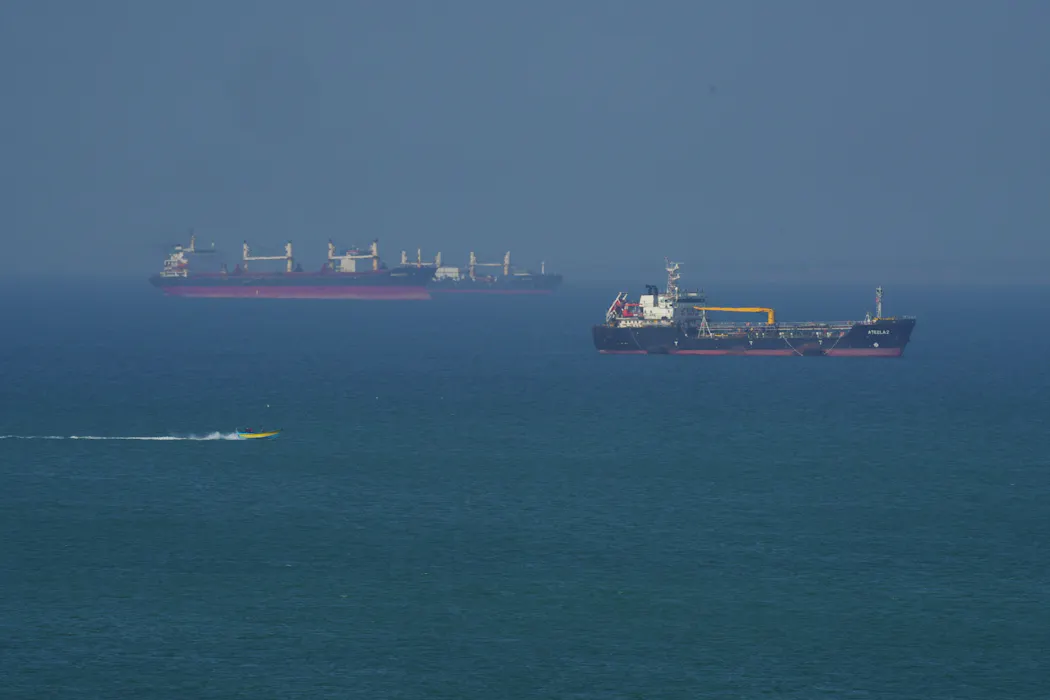
Two months after the United States, along with Israel, launched a war against Iran, that conflict appears far from a lasting resolution.
Much commentary on the protracted nature of the conflict has centered on the limits of both the military and diplomatic approaches to the war. But the conflict has also exposed another key reality: the limits of U.S. sanctions.
The U.S. has been the world’s preeminent economic and military power for decades, certainly since the end of the Cold War. It is at the center of much global financial activity and has a military budget well beyond China, the closest competitor.
Leveraging that power, the U.S. has long used economic coercion to achieve its foreign policy goals, whether against North Korea under the Kim regime, Russia over its invasion of Ukraine or Iran since the 1979 revolution that overthrew the U.S.-allied shah.
But as U.S. power in the world has slowly declined amid the rise of China and an increasingly multipolar world, the country has likewise lost some of its ability to effectively use economics as a weapon. Indeed, as scholars of economic sanctions and statecraft, we believe that the conflict against Iran has made clear the diminishing returns of U.S. economic sanctions.
The limits of sanctions on Iran
Since 1979, relations between Washington and Iran have been antagonistic. U.S. policy has been largely to punish, contain or isolate Iran, and successive administrations have done so in part through a mix of primary, secondary and targeted financial economic sanctions.
U.S. economic coercion has been applied on Iran for a variety of reasons, including its alleged state sponsorship of terrorism throughout the region and its nuclear program.
The emergence of that nuclear program in 2003, which later resulted in United Nations sanctions against Iran, saw U.S. and European Union interests around Iran converge.
This convergence led to the U.S. and EU cooperating on economic sanctions against Iran, which limited Iranian access to the European banking system. The combined coordinated efforts proved onerous for the Iranian economy, which, as political scientist Adam Tarock notes, meant Iran was “winning a little, losing a lot.”
The Joint Comprehensive Plan of Action (JCPOA), negotiated between the U.S., Iran, members of the EU, Russia and China in 2015, placed limits on Iran’s nuclear program in exchange for sanctions relief. At the time, the Iranian economy was suffering crushing inflation and rampant food prices. The agreement would provide relief from decades of economic punishment and the removal of EU, UN and U.S. economic sanctions.
However, the U.S. withdrew from the agreement in 2018 under the first Trump administration and later reimposed sanctions on Iran. The return of economic sanctions as part of the first Trump administration’s maximum pressure campaign – even if not supported by other nations – saw most global firms refrain from doing business with Iran out of risk aversion.
Additionally, despite the EU’s efforts to preserve the JCPOA, Iran restarted its nuclear enrichment program in 2019, one year after the U.S. withdrawal. The Biden administration’s subsequent expressed intention to reenter the deal never came to fruition.
Believing sanctions relief was not a realistic outcome after the agreement’s failure, Iran – though battered by losing access to the global financial system – has found increasingly creative workarounds. Those have included utilizing so-called shadow fleets shipping illicit Iranian goods, creating successful homemade military products like cheaply made drones and ramping up trade with partners outside the Western orbit.
Indeed, since the nuclear agreement’s collapse, Iran has pursued much closer ties with China and Russia at the expense of prior robust economic relations with Europe. As Iran reorients its trade and economic relations, the U.S. and the West have lost economic coercive leverage.
Separated from a diplomatic endgame, U.S. sanctions – and the current blockade of Iranian-linked ships – appear to be only hardening Iranian resolve. Even if a deal were reached to reopen the Strait of Hormuz, Iran has said it plans to push for commercial ships to pay a toll going forward – something that didn’t exist before the war.
In effect, Iran’s ongoing de facto closure of the strait has redirected U.S. economic coercion back at the Trump administration.
Blowback in the energy markets
The biggest costs of that ongoing closure for the U.S. has been in energy.
The U.S. today is one of the largest exporters of crude and refined petroleum globally, making it particularly exposed to oil price volatility. At the same time, some Americans see the development of fossil fuel resources as a key policy priority. As the U.S. becomes more embedded in the export energy sector, it is increasingly experiencing collateral damage – namely, higher oil and gasoline prices – when its foreign policy decisions disrupt oil-related trade.

One way that collateral damage manifests is the affordability problem for many Americans as gas prices rise, which is likely to also create political costs for the Trump administration.
While the U.S. has taken steps to ease the economic disruptions to American consumers by relaxing oil sanctions on Russia and Iran – thus undermining its own sanctions policy – these policy shifts have done little to nothing to offset rising fuel prices. They will likewise fail to ameliorate the potential for economic damage caused by the ongoing disruptions to commerce due to the Strait of Hormuz dangers and uncertainties.
Famed economist Albert O. Hirschman once noted that countries use their strategic position to shift others’ cost–benefit calculations, especially through trade disruptions. And for decades, the U.S. used its privileged position in the global financial system to pressure both rising countries and those not explicitly part of the U.S. alliance.
But as the U.S. becomes more exposed to the consequences of its own decisions, its ability to lead and coerce has stalled under costs it cannot easily absorb.
No longer leading by example
Historically, U.S. economic power was made possible not only by the country’s unilateral strengths but its willingness to pool resources and work multilaterally with other nations.
The Trump White House’s inability to put together a multinational coalition to address the political and economic challenges caused by U.S.-Israeli attacks on Iran is not surprising. But they further reflect the evaporation of goodwill the U.S. previously enjoyed with allies in and outside the region.
As the U.S. abandons a playbook that has buttressed its power for decades, Russia has grown bolder, China is edging ahead of the West and middle powers like Iran are able to hold out against American economic and military strength.
None of this means the U.S. no longer holds significant global power. But its turn toward a sanction-first, ask-questions-later approach has, we believe, eroded its ability to shape the behavior of other nations. And it has done so while imposing increasingly tangible costs on both American strategy and the well-being of its own citizens.
The authors do not work for, consult, own shares in or receive funding from any company or organization that would benefit from this article, and have disclosed no relevant affiliations beyond their academic appointment.
Read These Next
Offering cash for votes is quite common – but here’s why it doesn’t work
Money or other material benefits are often not enough to override a voter’s preferences and partisanship.
El Niño is threatening California’s fragile coast again – the 1982-83 El Niño opened eyes to the ser
The destructive 1982-83 El Niño, then the strongest on record, eroded cliffs, leaving homes hanging…

Human rights could improve – or worsen – based on how nations use the UN treaty against cybercrime
If the treaty enters into force, responsible nations will have to carefully monitor how other countries…