Trauma patients recover faster when medical teams know each other well, new study finds
A new study from a Pittsburgh hospital finds that trauma patients recover faster when emergency medical teams have shared experience working together.

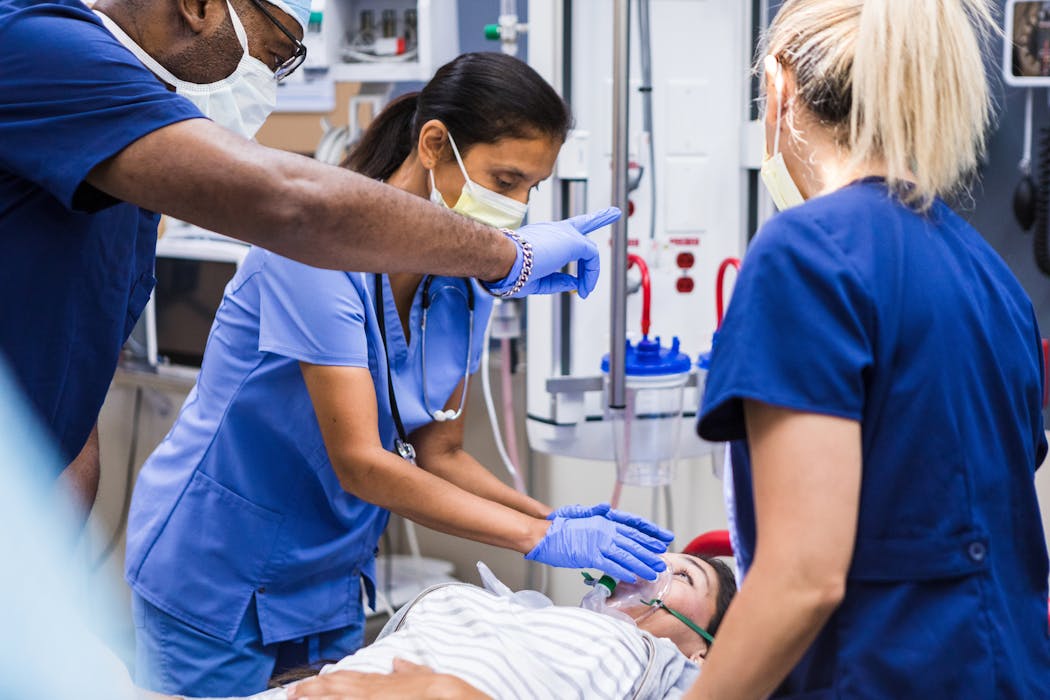
When a trauma patient enters the emergency department, their potential for survival often depends on what happens within the first minutes after their arrival. After studying trauma resuscitation teams at UPMC Presbyterian in Pittsburgh, the largest major trauma center in Pennsylvania, it’s clear that trauma teams aren’t organized ahead of time – they’re formed on the fly. Some team members may have worked together many times before, while others may be meeting for the first time.
Those minutes can be chaotic, fast-paced and high-stakes. The patient is usually rolled in on a stretcher, bleeding, barely breathing and surrounded by alarms and shouting. At the bedside are emergency physicians, anesthesiologists, surgeons, nurses and respiratory therapists – a large team of dedicated health care providers. Everyone has a job. Everyone is moving fast. When it works well, it looks almost effortless. When it doesn’t, small delays can have big consequences.
Medical professionals often say that “teamwork matters” in health care. But only a few studies show how teamwork affects patient outcomes or point to concrete, practical ways to make teams work better together.
This knowledge gap motivated us to get together to study this issue. One of us is an intensive care unit physician and the other is an organizational scientist who studies teams in a variety of settings. We based our approach on a classic concept from behavioral science called transactive memory systems.
Traumatic injuries, such as car crashes, falls and gunshot wounds, are the leading cause of death for young people worldwide. Across all ages, trauma is one of the top killers. Because trauma is widespread, even small adjustments to how emergency teams coordinate can help save lives and shorten recovery periods for patients.

This is where transactive memory systems, TMS, come in. TMS are a shared understanding within a team of who knows what and who is good at what. A team doesn’t succeed because everyone knows everything, but because people rely on one another’s expertise. The team works best when each person knows what they are responsible for, what other team members are experts in, and whom to turn to when a specific problem comes up.
Team familiarity shapes outcomes
Think of a group of friends playing basketball. The best basketball teams aren’t the ones where everyone has the same skills. They’re the ones where one person is great at rebounding, one person can shoot from a long distance, and another is good at dribbling the ball up the floor. Importantly, everyone knows each other’s skills, so when a certain skill is needed, they know whom to go to.
In trauma care, this kind of knowledge could save lives. When seconds matter, the team needs to instantly know who would be best at placing a breathing tube and who would be best at reading the ultrasound. Strong TMS means fewer questions, less hesitation and smoother coordination.

For each trauma patient, we measured three things: shared team experience, transactive memory systems and patient outcomes, based on how long patients stayed in the ICU and in the hospital overall. We were looking for teamwork that showed good coordination, trust in expertise and clear division of responsibility.
The science behind ‘who knows what’
Our results were striking. First, teams with more shared experience had stronger transactive memory systems. The more often people had worked together before, the better they seemed to know each other’s skills and coordinate their tasks. If you add up how many times two team members had worked together on a previous resuscitation and divide by the number of dyads, or pairs, on the team, the average in our study was 10 times. As that number increased, transactive memory systems became stronger.
Second, stronger transactive memory systems were linked to better patient outcomes. These improvements were substantial: Patients cared for by teams that were well above average in their transactive memory systems stayed in the hospital about three fewer days and spent nearly two fewer days in the ICU.
Third, TMS explained why shared experience mattered. It wasn’t just that experienced teams were better, but that shared experience helped teams build a clearer mental “map” of each other’s expertise. That map is what helped patients get better faster.
Trauma care is unpredictable – you can’t always control who is on a team or how often people work together. But it may be possible to design training procedures and work schedules that help teams build transactive memory faster.
More broadly, our study suggests that improving health care isn’t just about developing new technology or training better doctors. It’s about leveraging the power of teams, helping people quickly understand and trust each other’s strengths when it matters most. For us, one coming from the bedside and the other from organizational science, that’s the exciting next step: turning the science of teamwork into practical tools that help trauma teams save lives.
I have received funding for related projects from the National Science Foundation and the Army Research Office.
Jeremy Kahn receives funding from the United States National Institutes of Health.
Read These Next
An AI model’s false tip to Philadelphia police reveals how digital agents can do as they’re told and
An expert on AI governance explains why these rare mistakes may soon be common, and with much higher…
Offering cash for votes is quite common – but here’s why it doesn’t work
Money or other material benefits are often not enough to override a voter’s preferences and partisanship.
Human rights could improve – or worsen – based on how nations use the UN treaty against cybercrime
If the treaty enters into force, responsible nations will have to carefully monitor how other countries…