After a 32-hour shift in Pittsburgh, I realized EMTs should be napping on the job
A paramedic and university professor shares data about how strategic napping could help his own health while saving the lives of others.

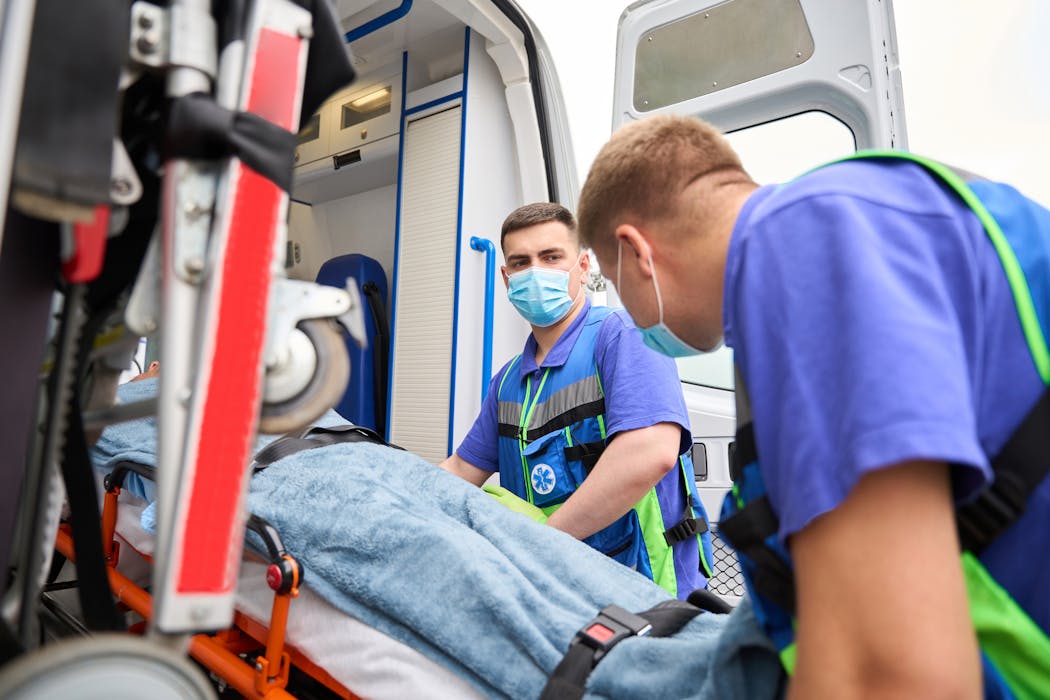
At 7 a.m., roughly an hour before the end of my shift as a paramedic in Pittsburgh, my colleague and I were dispatched to a patient who was violently vomiting and not alert. We arrived within 10 minutes, grabbed our gear and approached the front door.
While walking up the front steps, I couldn’t help but notice my legs ached and my head hurt − more pressure than pain. I knew this pressure because I’d felt it many times on this job. It’s exhaustion due to lack of sleep − inevitable with this type of work, just part of the job.
This was my 15th or 16th dispatch in the past 32 hours. I’d had little time to rest or sleep. I had been steadily working the entire time.
As a nationally registered paramedic and a professor of emergency health care worker safety at the University of Pittsburgh, I have seen firsthand how the gap between our physical limits and our professional obligations can dangerously impact our cognitive performance.
Some emergency medical service clinicians – a category that includes EMTs, paramedics and dispatchers – in the Pittsburgh area work a lot of overtime. Much of that overtime is not voluntary.
An audit in 2023 found that many Pittsburgh-area EMS clinicians routinely work 18-hour shifts – or longer – increasing the risk of fatigue. Research shows that greater than 80% of paramedics and EMTs report fatigue.
Exhaustion under pressure
When my partner and I found our patient, an older gentleman, in an upstairs bedroom, my initial impression was that it could be gastro-related. However, he began to shake violently. I started to obtain vital signs. Soon, his wife returned with a stack of documents, the police arrived and the room got crowded quickly. The scene was turning chaotic, and I was easily distracted. My thoughts were slow due to my exhaustion.
After 15 to 20 minutes, we determined the patient was suffering from a third-degree heart block and bradycardia – a slow heart rate. We treated him and then rapidly transported him to the hospital emergency department.
As we left the emergency department, I reflected on that 15-minute delay. My exhaustion and the distractions prevented me from immediately noticing the primary problem. Had I recognized it earlier, we could have initiated treatment sooner.

Long-term health risks
For EMS workers, sleep loss and fatigue could be considered a rite of passage or part of our “war stories” that often involve chaotic scenes and medically complex patients.
But there is a longer-term impact of sleep loss on our health, safety, performance and home life. One study shows that getting four to six hours of sleep per night leads to a dramatic decrease in vigilant attention over a span of 14 days. Sleep loss and fatigue associated with EMS shift work can lead to greater odds of injury or medical error. This obviously raises questions for EMS clinicians, as half of all of us get less than six hours of sleep prior to shift work.

Research also shows that relative to traditional day work, night shift workers, including paramedics and EMTs, face a greater risk of cardiovascular disease and heart attack.
Napping as medical intervention
There are solutions and strategies to address this problem. On-shift napping and scheduled rest, even as short as 30 minutes, can be restorative and may help mitigate risks. My colleagues’ and my own research show the health and performance benefits of napping during night shift work. Leading experts in sleep medicine, such as the American Academy of Sleep Medicine, and numerous public safety professional groups, such as the National Association of EMS Physicians, support napping on duty.
Despite the data and despite support from numerous professional organizations, many employers and members of the public have a negative view of “sleeping while at work.” This can create barriers for EMS employers to create an official policy on napping. One of our recent studies found that the majority of EMS employers are open to adopting napping policies. However, many are concerned about potential costs and possible disruption to the way things have always been done.
Answers to specific nap-related questions are hard to come by. For example, if an EMS employer asked, “What is the ideal nap duration?” there is no clear answer to this question. Few studies have tested nap duration time or napping strategies tailored to the unique demands of different occupations.
Many EMS organizations already allow napping but don’t have a formal policy. Codifying what crew members already do into official policy would show EMS clinicians that employers care and could reduce confusion by standardizing how the nap strategy is implemented.
Other policies my colleagues and I have outlined include allowing secondary response crews to briefly take over for the primary crew, or allowing a crew member to nap in the passenger seat while a second crew member operates the ambulance. Another strategy is the “caffeine-nap.” This is when a crew member consumes a caffeinated beverage immediately before a short nap. Doing this takes advantage of the brief period of time before caffeine is metabolized in the body and then contributes to increased alertness.
Napping on duty is an effective strategy supported by the current best available evidence. How it is adopted, implemented and maintained will depend on numerous factors, but the evidence strongly supports napping is better than not napping.
P. Daniel Patterson receives funding from the National Institutes of Health, National Institute for Defense Health Cooperation, National Association of EMS Physicians, and Pittsburgh Emergency Medicine Foundation.
Read These Next

El Niño is threatening California’s fragile coast again – the 1982-83 El Niño opened eyes to the ser
The destructive 1982-83 El Niño, then the strongest on record, eroded cliffs, leaving homes hanging…
What the failed attack on an Illinois temple reveals about anti-Hindu hate in the United States
Hostility toward Hindu worship practices draws on a long history of prejudice portraying the faith’s…

Palestinian citizens face a painful choice in Israel’s election: To vote or not
More than a third of Israel’s Palestinian citizens are expected to sit out the election.