Ukraine is under pressure to trade land for peace − if it does, history shows it might not ever get
Ukraine may need a major, system-level change or crisis in Russia to regain any lost territories.

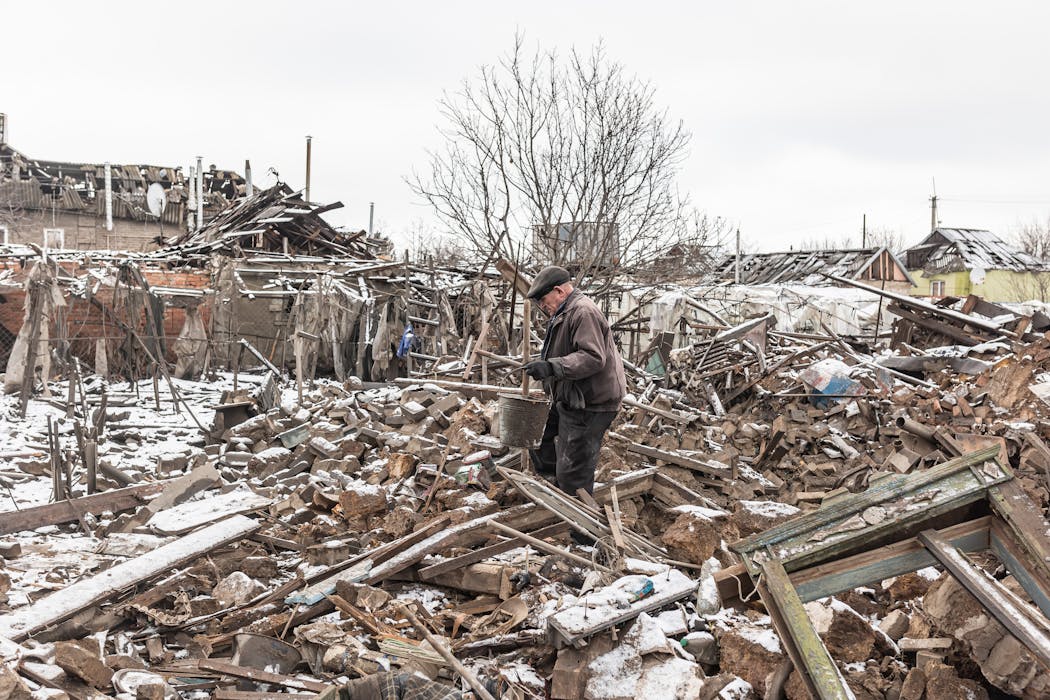
Asked in December 2025 what the biggest sticking point was in negotiating peace in Ukraine, U.S. President Donald Trump got straight to the point: land. “Some of that land has been taken. Some of that land is maybe up for grabs,” he added.
From the very beginning of the full-scale war, Ukrainian President Volodymyr Zelenskyy has ruled out ceding territory to the invading Russians.
Yet, when the war in Ukraine finally grinds to a halt, it seems likely that Russia will, indeed, control vast portions of Ukrainian land in the south and the east – about 20% of Ukraine’s pre-2014 landmass, if today’s line of actual control is any guide.
Ukrainians have spent years trying to eject Russian forces from occupied areas in the Luhansk, Donetsk, Zaporizhzhia and Kherson administrative regions. Captured and fortified by Russia in 2014, Crimea has been mostly out of reach. But despite Kyiv’s best efforts, Russia is now poised to seize even more Ukrainian territory if the war does not end soon.
The pressure on Zelenskyy to accept some sort of territorial loss only increases with each new peace plan presented – all of which include some degree of map redrawing in Russia’s favor. And although a majority of the Ukrainian public is against the idea of exchanging land for peace, pragmatists in the West, and even some within Ukraine, accept that this will almost certainly be part of any peace deal.
But then what? If Ukraine accepts the de facto loss of its eastern oblasts as the price of peace, should this be understood by Ukrainians as a permanent or a temporary concession? If the latter, what measures – if any – exist for Ukraine to eventually restore its territorial integrity?
As an international security expert, I would argue that it’s essential that Ukrainians and their international backers have clear-eyed answers to these questions now, before a peace agreement is put in place.
Land lost forever?
History can provide a useful, if imperfect, guide to what happens when states are forced to cede territory to invaders.
Past precedent suggests Ukraine must be prepared for the worst: Occupied territories, once lost, often remain so indefinitely. This is what happened when the Soviet Union conquered the province of Karelia from Finland following the Winter War in 1939-1940. Finland tried to reclaim Karelia from Moscow via military means in the Continuation War of 1941-1944. But Finnish forces were ultimately beaten back.
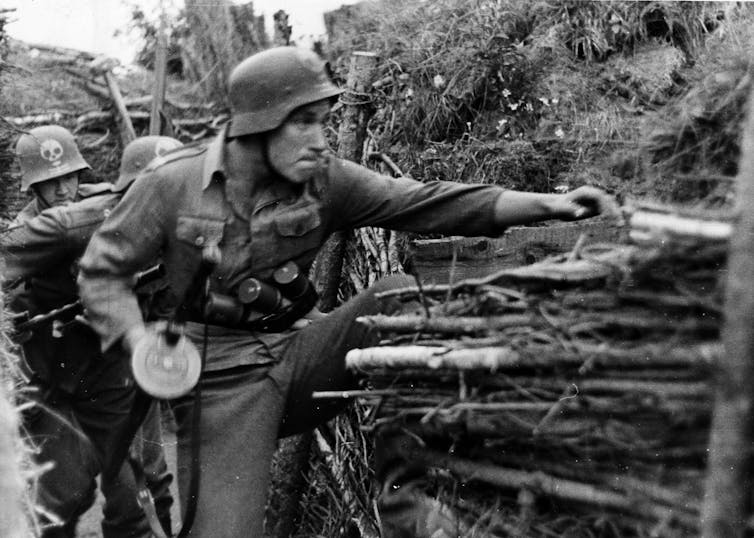
In the aftermath, Moscow ordered the mass expulsion of ethnic Finns and implemented a program of political and cultural assimilation. Today, ethnic Russians make up more than 80% of Karelia’s population.
Support for reabsorbing Karelia into Finland is low. When surveyed about the idea 20 years ago, most Finns balked at the cost of integrating poor, Russian-speaking communities into their thriving nation-state.
The same could happen to the occupied territories in eastern Ukraine. Over time, Russian-controlled areas might become “Russified” to the point of no longer being recognizably Ukrainian. In Crimea since 2014, for example, Russia is thought to have moved more than 200,000 Russian citizens into the territory, in addition to expelling ethnic Ukrainians.
Even if they are not forcibly expelled, civilians in the occupied areas who are loyal to Kyiv might choose to leave, and already millions have. But doing so means abandoning property to ethnic Russians – and once property is ceded, it makes the chances of a permanent return that much harder. Ukrainians who remain will face almost certain repression.
As occupation wears on, the social and economic differences between the ceded territories and the free areas of Ukraine will likely become ever starker. And this will be especially true if Ukraine joins the European Union – something that Kyiv has long coveted and could be a sweetener to any peace deal involving land loss.
With fewer pro-European Ukrainians living there and a wider cultural divide, the prospect of reclaiming the Russian-controlled oblasts could become markedly less attractive to Ukrainians than it appears today.
Diplomacy and war: Dead ends
Still, Ukrainians might hope that they can avoid this outcome by moving swiftly to undo the occupation before it becomes irreversible. In theory, they could accomplish this one of two ways: through deal-making or through fighting. But in practice, neither is likely to work.
Examples of a negotiated, voluntary return of land are few and far between. In 1979, Egypt managed to negotiate the return of its Sinai Peninsula, which Israel had captured during the Six-Day War in 1967. Although some in Israel wanted to keep hold of the Sinai for security reasons, Israeli leaders instead decided to swap the territory in exchange for a durable peace with Egypt, a leading Arab nation, in the hope that others would follow.
The problem for Ukraine is that Kyiv has very little to offer Russia in exchange for its lost territories. If and when the present war ends, it will likely be on terms favorable to Moscow, which is why territorial concessions are on the table to begin with.
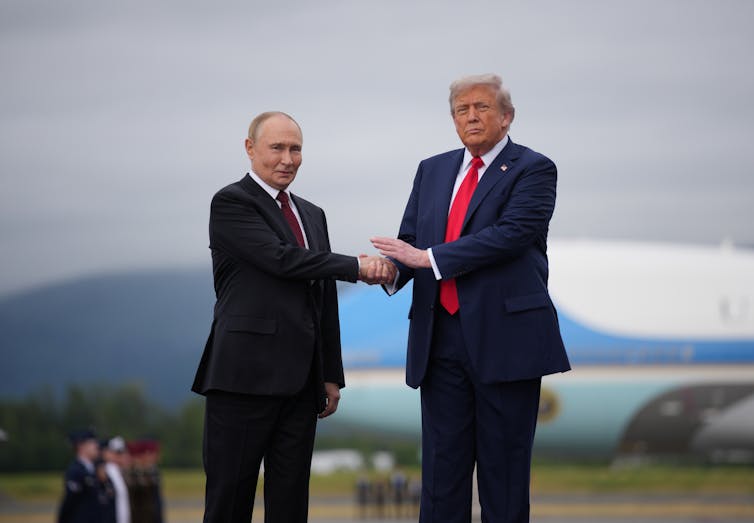
If Ukraine cannot negotiate the return of the occupied territories as part of a peace arrangement, it probably means that it will not be able to negotiate their return in the post-peace phase, either.
What about the potential to regain the occupied territories by force? Finland tried that in Karelia and failed. But other countries have been more fortunate: France regained Alsace-Lorraine from Germany after World War I, for example. But it was a reversal that took nearly 50 years to bring about – Germany had annexed the territory in the Franco-Prussian War of 1871.
Given the massive disparity in size, population and troop numbers between Russia and Ukraine, it is highly unlikely that Ukraine could reclaim the territories through war – not least of all because its international backers would very likely refuse to support Kyiv in a war of choice against nuclear-armed Russia. The task would be made harder still should Russia succeed in getting some form of Ukrainian disarmament, or a downsizing of its military, into any peace deal.
A black swan event
There is only one other set of circumstances under which territorial conquests tend to be undone in world politics: When the international system is convulsed by a major, system-level change or crisis. This might include a regional or world war, or the implosion of a great power – in this case, Russia.
This is how Czechoslovakia reclaimed the Sudetenland from Germany in 1945, China restored its control over Manchuria from Japan at the end of World War II, and the Baltic states regained their independence from the Soviet Union in 1990-1991 – not because they fought and won a narrow war of reconquest, but because their occupiers collapsed under the pressure of an external or internal crisis.
Could Russia collapse from within in the event of the death or ouster of Putin, an economic catastrophe, or some other critical development in the decades to come?
It is impossible to predict. But in the final analysis, should Ukraine be forced to accept land loss as part of any peace deal, it may require a seismic event in Russia for the territorial changes to be reversed.
Peter Harris is a Non-Resident Fellow with Defense Priorities.
Read These Next
Why the assault weapons debate is a culture debate
The Supreme Court’s decision to hear two assault weapons cases caps a multi-decade dispute over restricting…
Meet the ‘independent voters’ who will likely decide which party triumphs in the 2026 midterm electi
Republicans and Democrats need to make inroads with independent voters. But the themes that motivate…

‘Make this face look gay’: AI models alter faces to give people stereotypical ‘gay,’ ‘straight’ or ‘
AI models will refuse to say whether a person’s face looks gay or straight, but they will alter images…