Cuba’s leaders just lost an ally in Maduro − if starved of Venezuelan oil, they may also lose what r
Conditions on the ground in Cuba are so grim that the Trump administration thinks Havana could fall without any US intervention.

Footage of a handcuffed Nicolás Maduro being escorted to a Brooklyn detention center will come as uncomfortable viewing for political leaders in Havana.
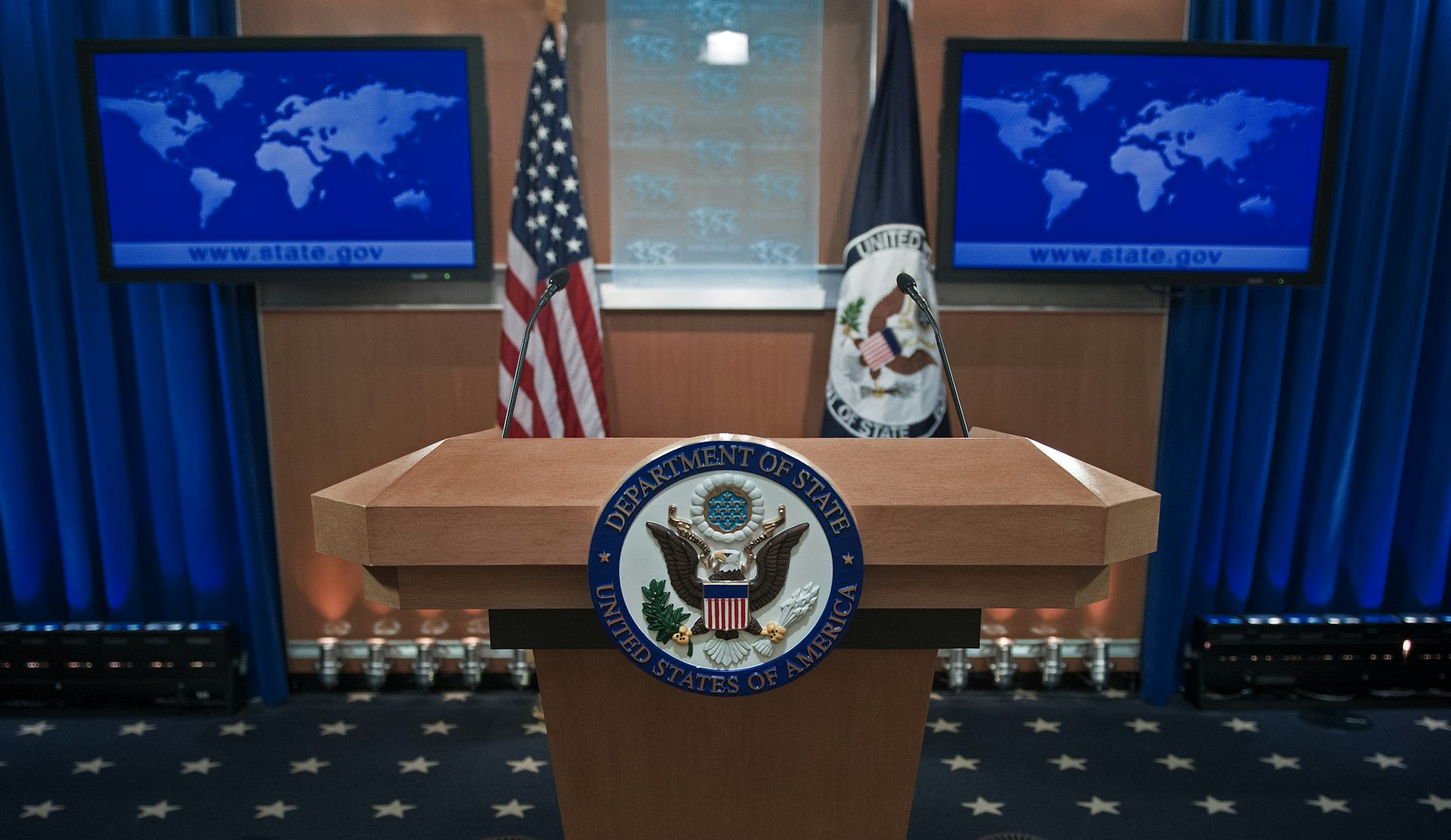
“Cuba is going to be something we’ll end up talking about,” said President Donald Trump just hours after the Jan. 3, 2026, operation to seize the Venezuelan president. Secretary of State Marco Rubio echoed Trump’s warning: “If I lived in Havana and I was in the government, I’d be concerned.”
As a historian of the United States and Cuba, I believe that Washington’s relations with Havana have entered a new phase under the Trump administration. Gone is Barack Obama’s “Cuban Thaw” and Joe Biden’s less-restrictive sanctions. In their places, the Trump administration has apparently adopted a policy of regime change through maximum pressure.
If the administration has its way, 2026 will be the final year of communist rule in Cuba – and it intends to achieve this without intervention by U.S. armed forces.
“I don’t think we need (to take) any action,” Trump said on Jan. 4, adding: “Cuba looks like it’s ready to fall.”
Cuba’s friend with benefits
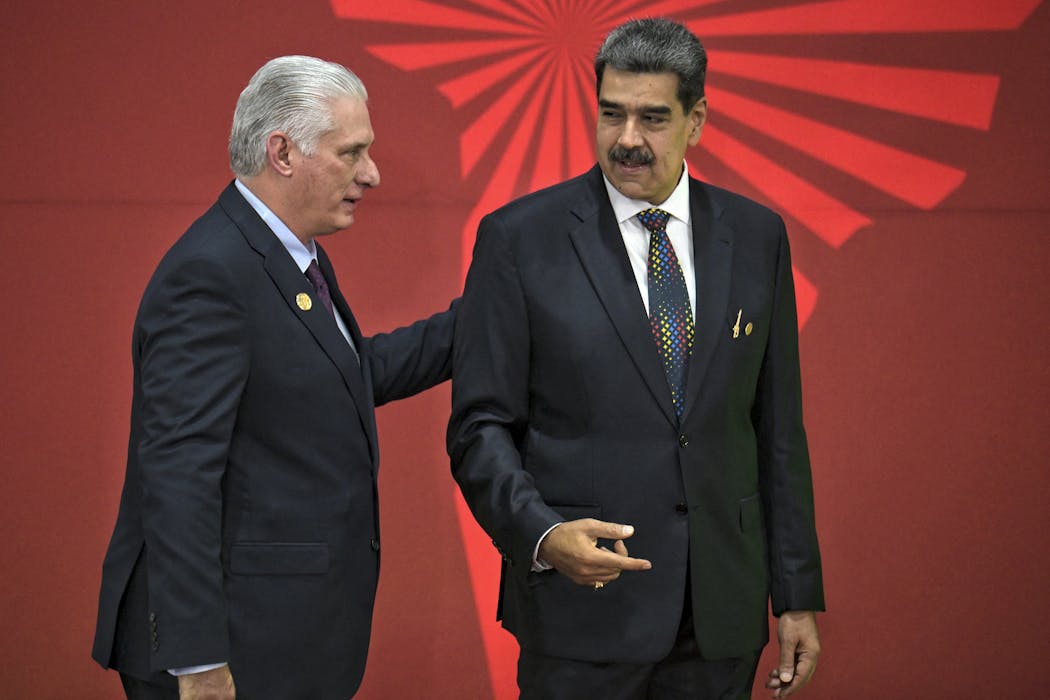
Trump may have a point. Maduro’s capture has effectively taken away Cuba’s closest ally.
Maduro’s predecessor and mentor, Hugo Chávez, was an avowed admirer of Cuban revolutionary leader Fidel Castro.
Shortly after assuming power in 1999, Chávez’s government began supplying oil on favorable terms to Cuba in exchange for doctors and, eventually, the training of Venezuela’s security forces. It was no coincidence that 32 of the security officers killed as they defended Maduro from approaching American forces were Cuban.
Maduro succeeded Chavez as president in 2013 and continued the country’s support for Cuba. In 2022, a member of the Venezuelan opposition claimed that Caracas contributed US$60 billion to the Cuban economy between 2002 and 2022.
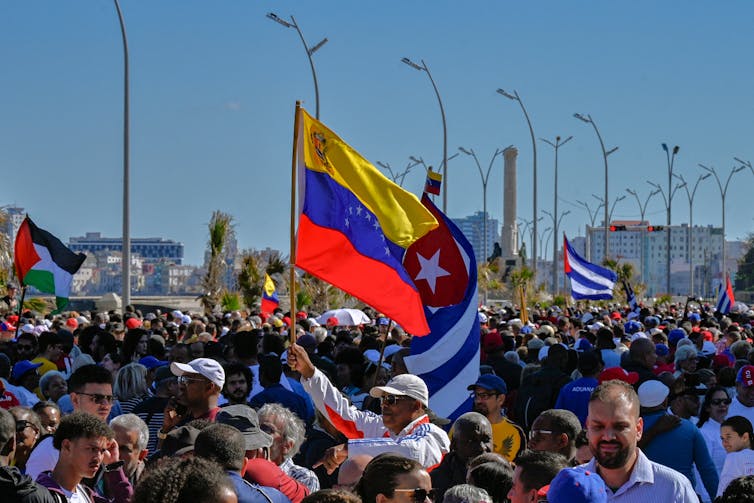
Maduro’s largesse proved unsustainable. Beginning in the early 2010s, Venezuela entered a severe economic crisis provoked by economic mismanagement, an overreliance on petroleum and U.S. sanctions.
Venezuela’s support of Cuba slowed to a trickle by 2016. Maduro’s government has nevertheless continued to supply Cuba with oil in secret, while evading U.S. sanctions, at amounts far below Cuba’s needs.
Hard times in Cuba
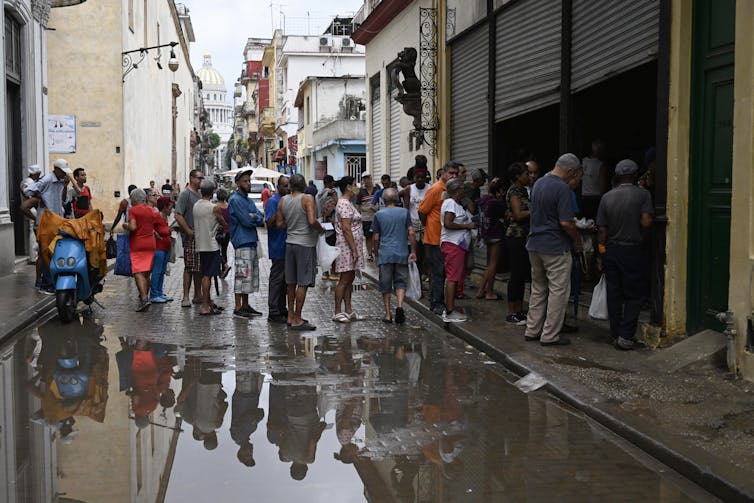
Venezuela’s penury and U.S. pressure mean Cubans are now experiencing deprivation on a level not seen since the country’s “special period” of economic crisis from 1991 to 1995, brought about by the collapse of the Soviet Union and the end of the bloc’s generous subsidies.
Since 2020, Cuba’s GDP has shrunk by 11%, while the value of the Cuban peso continues to fall.
Cubans no longer have reliable electricity or access to water. Mosquito-borne illnesses, once rare, are now rampant because the government cannot afford to spray pesticides.
The medical system provides only the most rudimentary care, and hospitals have little to no medicine.
Meanwhile, industrial and agricultural production have sharply declined, as have food imports.
And while famine has not yet emerged, food insecurity has increased, with most Cubans eating a limited diet and skipping meals. Street crime has also become common on Cuba’s once-safe streets.
Since seizing Maduro, the U.S. administration has outlined policies that appear aimed at increasing economic pressure on Cuba’s economy and provoking regime change. For example, the U.S. has made it clear it will no longer permit Venezuela to supply oil to Cuba.
Apparently, the administration hopes that without oil, the Cuban government will simply collapse. Or perhaps Trump expects that Cubans, as frustrated as they are, will overthrow their communist masters without help from the U.S.
A regime without popular support
Either way, there is a potential flaw with the administration’s reasoning: Cuba’s communists have survived crises such as these for more than 60 years. Yet, there is evidence that as Cuba’s economy declines, so too does support for the regime.
Since 2020, more than 1 million Cubans have left the country, principally for the U.S. and Spanish-speaking countries. A Cuban colleague of mine with access to government research recently told me the number is closer to 2 million.
Those who stayed are no more satisfied.
In a 2024 public opinion poll, an overwhelming majority of Cubans expressed profound dissatisfaction with the Cuban Communist Party and the leadership of President Miguel Díaz-Canel.
Cubans have also taken their complaints to the streets. In July 2021, protests erupted across Cuba, demanding more freedom and a better standard of living. The government quickly jailed protesters and sentenced them to long prison terms.
Sporadic protests have continued nevertheless, often quickly and without warning, drawing harsh repression. In particular, the San Isidro movement, formed in 2018 to protest restrictions on artistic expression, has strong support among younger Cubans.
Changing attitudes toward America
As Cubans have turned against their government, they have become more receptive to the U.S.
During my first visit in 1996, Cubans blamed the U.S. embargo in place since the early 1960s for the privations they suffered during the Special Period.
In the past decade, however, I have heard Cubans – at least those under 50 – express more anger with their government than with the U.S. embargo.
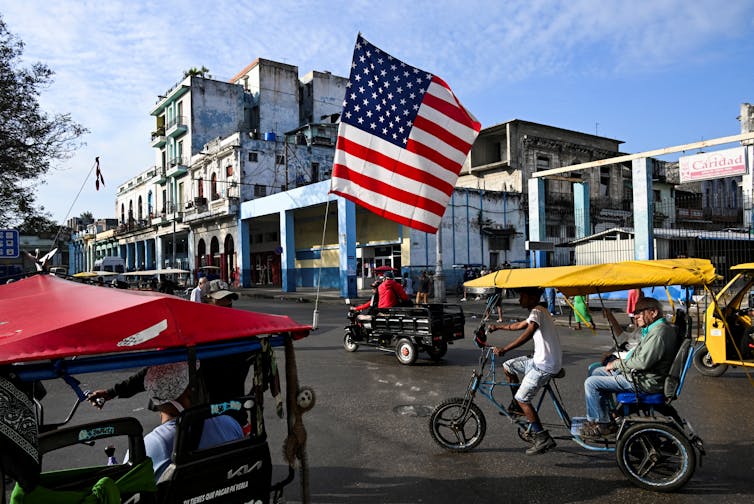
Make no mistake: Cubans want the U.S. embargo to end. But they no longer believe their government’s attempt to blame Washington for all of Cuba’s economic and political problems.
Part of this change is due to the extraordinary emigration of Cubans: Every Cuban I know has a family member or a friend in the U.S. The internet has also helped; Cubans can now read foreign news sources on their smartphones.
Welcome liberators?
Since Maduro’s capture, I have messaged friends in Cuba to gauge sentiment. All but one of the six Cuban friends I managed to reach told me they were receptive to U.S. intervention in Cuba, provided that it removed the regime making their lives miserable.
One friend said: “If the Yankees showed up today, most of us would probably greet them as liberators.”
Admittedly, my sample size is small. But such reactions, coming from comparatively elite Cubans working in both the private and public sectors, cannot be good news for what remains of the Castro regime.
Joseph J. Gonzalez does not work for, consult, own shares in or receive funding from any company or organization that would benefit from this article, and has disclosed no relevant affiliations beyond their academic appointment.
Read These Next
Meet the ‘independent voters’ who will likely decide which party triumphs in the 2026 midterm electi
Republicans and Democrats need to make inroads with independent voters. But the themes that motivate…
AI is changing pilgrims’ journeys, but sacred journeys have always adapted to new technology
From the printing press to smartphone apps, technology has continually transformed the experience of…
IceCube is built on decades of research into tiny ‘ghost particles’ – but it was the first to find n
IceCube looks for high energy neutrinos from space. It joins the ranks of complementary experiments…