‘Neither Gaza nor Lebanon!’ Iranian unrest is about more than the economy − protesters reject the Is
Angered not just by social crises, Iranians are asking fundamental questions about the costs and sacrifices demanded by the Islamic Republic’s ruling ideology.

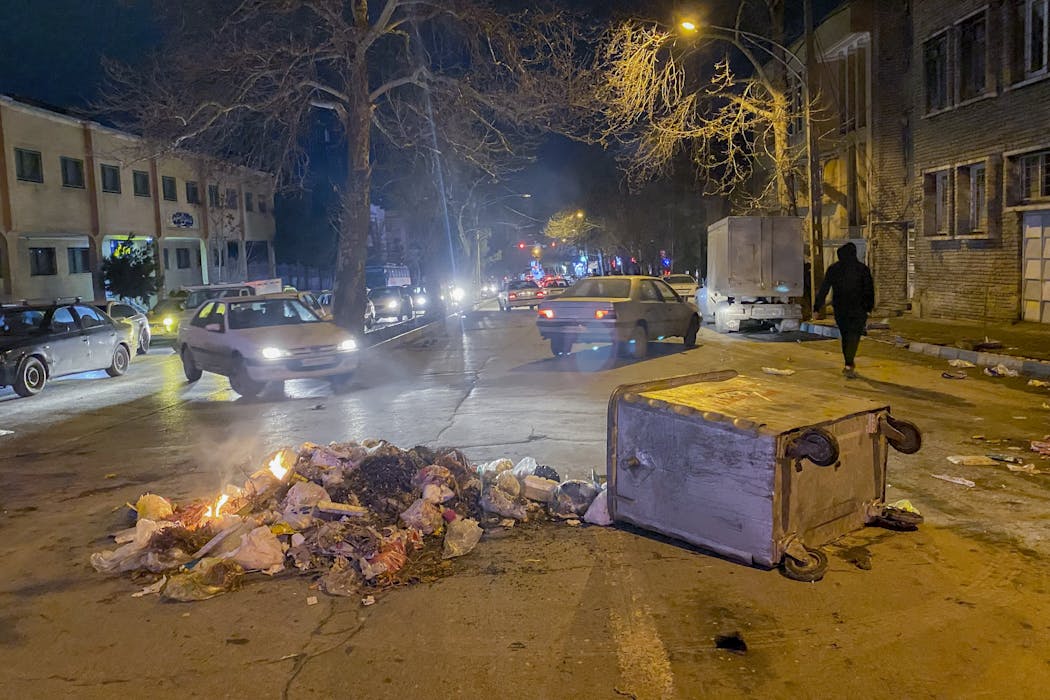
A familiar slogan has echoed through the streets of various Iranian cities in recent days: “Neither Gaza nor Lebanon, I sacrifice my life for Iran.”
That phrase has been chanted at protests that have sprung up around Iran since Dec. 28, 2025. The spark of the uprising and bazaar strikes has been economic hardship and government mismanagement.
But as an expert of Iranian history and culture, I believe the slogan’s presence signals that protests go deeper than economic frustration alone. When people in Iran chant “Neither Gaza nor Lebanon,” they are, I believe, rejecting the theocratic system in Iran entirely. In other words, the current crisis isn’t just about bread and jobs, it’s about who decides what Iran stands for.
The origins of the slogan
The phrase “Neither Gaza nor Lebanon, I sacrifice my life for Iran” first gained prominence during the 2009 Green Movement, when hundreds of thousands of people protested a disputed presidential election in Iran.
It has since appeared in successive major demonstrations, from the 2017-18 economic protests to the 2019 fuel price uprising. It was also prominent during the 2022 “Women, Life, Freedom” movement, sparked by the death of an Iranian-Kurdish woman, Mahsa Amini, following her detention by Iran’s morality police for not wearing a “proper” hijab.
The phrase ties together two key aspects of successive Iranian protest movements: domestic economic, political or social grievances and an explicit rejection of the government’s justification for that hardship – namely, that sacrifice at home is necessary to fulfill ideological goals of “resistance” abroad.
In particular, the slogan targets the Islamic Republic’s decades-long support for Hezbollah in Lebanon and Hamas in Gaza.
Estimates suggest that the regime has channeled between US$700 million and $1 billion annually to regional allies since the 1980s – funds that many Iranians argue should instead address domestic infrastructure, health care and education.
From alliance to resentment
Understanding the full meaning of the slogan requires historical context. Under the U.S.-aligned Pahlavi monarchy, which ruled from 1925 to 1979, Iran maintained diplomatic and economic ties with Israel while pursuing modernization.
The Shah’s opponents, particularly leftist groups, exploited these connections, using slogans like “Iran’s become Palestine, why sit still, O people?” to mobilize against the monarchy.
Indeed, many of the Islamic revolutionary leaders that ousted the Shah in 1979 had ties with Palestinian groups.
After the revolution, the Islamic Republic inverted both its ties to the U.S. and Iran’s relationship with Israel, making anti-Israel rhetoric and support for Palestinian causes central to its identity.
Ruhollah Khomeini, the leader of the Islamic Revolution, declared solidarity with oppressed Muslims worldwide, positioning Iran as the vanguard of resistance against what he called “Western imperialism and Zionism.”
But this ideological commitment came with substantial costs for Iranians.
Iran’s support for Hezbollah during Lebanon’s civil war, its backing of Hamas in the Palestinian group’s fight against Israel, and its involvement in Syrian and Iraqi conflicts have contributed to international sanctions, diplomatic isolation and economic pressure on Iran. And these burdens have fallen disproportionately on ordinary citizens rather than the ruling elite.
Economic crisis and political defiance
“Down with the Islamic Republic” is also chanted alongside “Neither Gaza nor Lebanon” in the current uprising – the most serious that the Iranian government has faced in years.
But neither lethal force – at least 1,203 arrests and more than two dozen deaths thus far – nor supreme leader Ali Khamenei’s Jan. 3 order for a harsher crackdown has quelled the unrest.
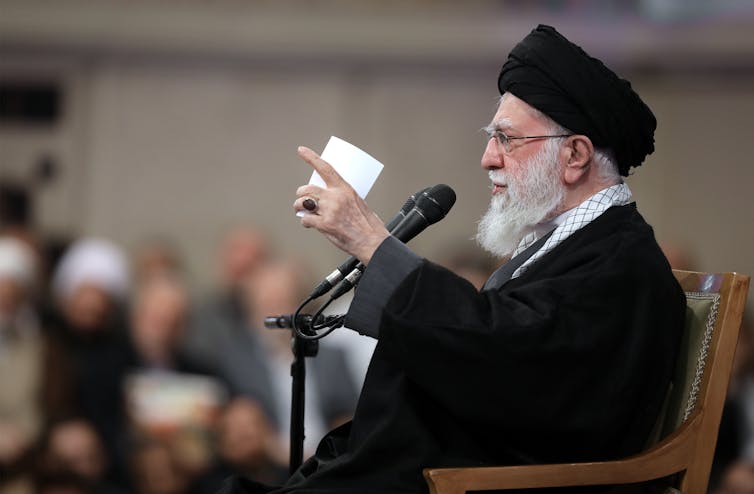
Instead, protests have expanded to 110 cities and villages.
The demonstrations illustrate how economic and political grievances intersect in Iran. When demonstrators chant “Neither Gaza nor Lebanon” while protesting bread prices and unemployment, they are not compartmentalizing issues – they are drawing a direct line between foreign policy choices and domestic suffering.
The slogan makes three simultaneous arguments.
First, it rejects imposed solidarity. Many Iranians, including those sympathetic to Palestinian rights, resent being conscripted into conflicts that are not their own. And the government’s insistence that Iranians must make sacrifices for distant causes breeds resentment rather than unity. Take the government’s effort to portray the 12-day war with Israel in June 2025 as a moment of national resistance. Rather, many Iranians instead blamed the leadership for either provoking the conflict or failing to meaningfully defend the country from Israeli – or American – bombs.
The slogan also demands accountability for resource allocation. When state media broadcasts funerals for fighters killed in Syria or Yemen while Iran’s hospitals lack basic supplies, the disconnect between rhetoric and reality becomes glaring.
And finally, the protest message reclaims political belonging rooted in Iranian national history – and not just the ideological concerns of the Islamic Republic. By invoking Iran specifically, “I sacrifice my life for Iran,” protesters assert that their primary allegiance is to their own country, not to transnational ideological movements, regional proxies or the ruling government’s ideology.
The limits of solidarity
For all its longevity, however, the slogan has proven divisive. While some see it as a necessary assertion of self-determination after decades of enforced sacrifice, others – including some Iranian leftist intellectuals and activists – view it as abandoning solidarity with oppressed peoples.
But it doesn’t need to be an either/or. Many protesters risking bullets to demand “Iran first” are not expressing indifference to the suffering of Palestinians. Rather, they are insisting that effective solidarity requires a functioning state capable of supporting its own citizens, and that genuine liberation begins at home.
Regardless, the Islamic Republic’s response has been to frame criticism as betrayal, suggesting that those who question support for Gaza or Lebanon are complicit with imperialism – a narrative enforced through a mix of rhetoric and coercion.
But this framing increasingly fails to persuade a population that has watched living standards decline while billions of dollars flow to foreign conflicts. The effects of sanctions and shrinking foreign-currency revenues have pushed the Iranian state to raise taxes on households while shielding military and ideological spending. Meanwhile, the dollar’s daily surge and the rial’s rapid collapse have accelerated inflation and eroded purchasing power.
Authoring one’s own story
Undoubtedly, economic grievances underpin the current protests in Iran. However, the slogans used in Iranian protests – be they over election disputes, economic crises or women’s rights – indicate a broader critique of the Islamic Republic’s governing philosophy.
In the current wave of protests, demonstrators articulate through slogans both what they reject – “Down with the Islamic Republic” – and what many now seek to happen: “This is the final battle; Pahlavi will return,” a reference to the exiled Crown Prince Reza Pahlavi.
The “Neither Gaza nor Lebanon” chant asks: What does it mean for a government to prioritize foreign conflicts over domestic welfare? How long can imposed solidarity substitute for actual prosperity? And who has the right to determine which causes are worth sacrifice?
Such questions extend beyond Iran. They challenge assumptions about how governments invoke international causes to justify domestic policies and when citizens have the right to say, “Our story comes first.”
As such, the chant “Neither Gaza nor Lebanon, I sacrifice my life for Iran” is, I believe, both protest and reclamation. It rejects the Iranian state’s narrative of mandatory sacrifice while asserting the right of people to author a national story focused on Iran’s own needs, challenges and aspirations.
Kamran Talattof does not work for, consult, own shares in or receive funding from any company or organization that would benefit from this article, and has disclosed no relevant affiliations beyond their academic appointment.
Read These Next

Meet the ‘independent voters’ who will likely decide which party triumphs in the 2026 midterm electi
Republicans and Democrats need to make inroads with independent voters. But the themes that motivate…
Columbus’ own writings reveal how tightly religion and conquest were intertwined from the start
The ‘Book of Prophecies’ shows how Columbus recast brutal colonization as a divine mission.
Why people keep looking for Noah’s Ark in a natural rock formation in Turkey: A scholar of early Chr
A formation known as Durupınar, just a few miles from the Iranian border in Turkey, has been associated…