
2 superpowers, 1 playbook: Why Chinese and US bureaucrats think and act alike
The men and women tasked with implementing policy are governed by the same incentives and constraints − whether in Beijing or Washington.

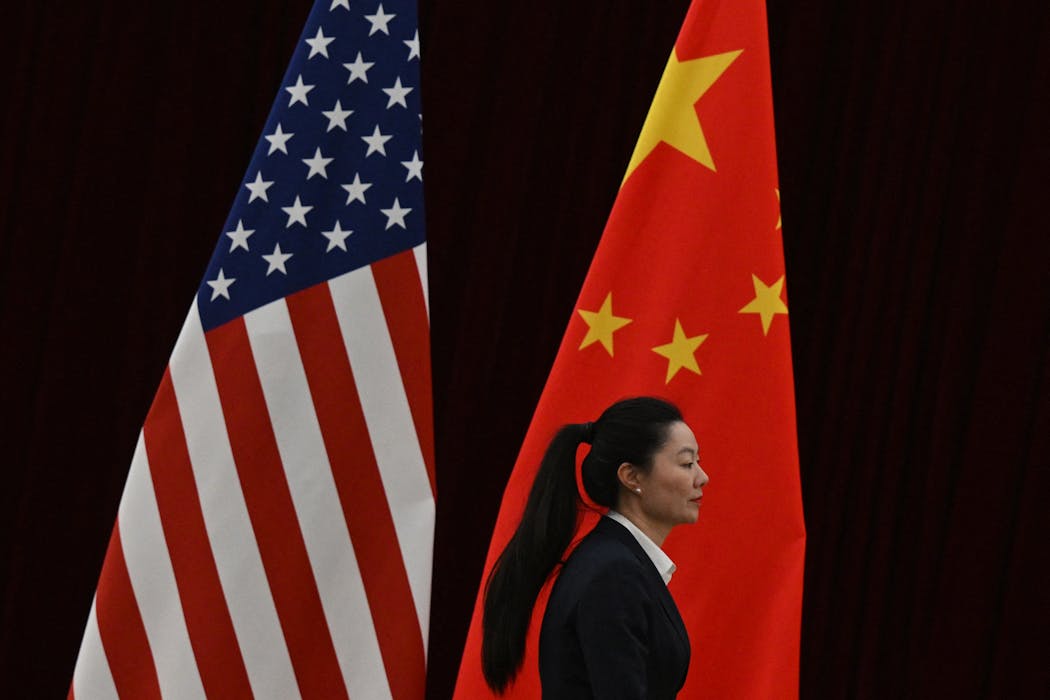
The year 2025 has not been a great one for U.S.-Chinese relations. Tit-for-tat tariffs and the scramble over rare earth elements has dampened economic relations between the world’s two leading economies. Meanwhile, territorial disputes between China and American allies in the Indo-Pacific region have further deepened the intensifying military rivalry.
This rift has often been portrayed as a clash of opposing ideological systems: democracy versus autocracy; economic liberalism versus state-led growth; and individualism versus collectivism.
But such framing relies on a top-down look at the two countries premised on statements and claims of powerful leaders. What it obscures is that both superpowers are administered by the same kind of professionals: career bureaucrats.
We are an international team of researchers investigating bureaucratic preferences and behavior. Earlier this year, we hosted a two-day workshop with participants from China, the United States and other countries to compare bureaucratic agencies’ responses to global challenges.
Our research and that of others shows that, despite the ideological standoff at the leadership level, officials in China and the U.S. are shaped by comparable incentives and dynamics that lead them to act in surprisingly similar ways. In other words, when it comes to the women and men who carry out the actual work of government – from drafting regulation to enforcing compliance – China and the U.S. aren’t really that different.
Separated by politics, not practice
That’s not to suggest there aren’t differences in aspects of China’s and the U.S.’s bureaucratic base.
China’s system is more centralized, with a larger civil service of around 8 million employees as of 2024. The U.S. bureaucracy is more decentralized across federal, state and local levels and employs fewer bureaucrats, with around 3 million federal employees in 2024.
Still, comparative research on bureaucracies around the world shows that civil servants act similarly when confronted with complex problems, regardless of political system or policy field.
Whether they are municipal bureaucrats in Brazil, foreign aid officials in Germany, Norway and South Korea, or international civil servants at the United Nations, they all operate within the constraints of politically embedded organizations while pursuing their individual careers. In other words, they want to get ahead in their jobs while navigating constantly changing political winds.
Bureaucrats in the U.S. and China also navigate changing demands from their political leaders while seeking to gain expertise and progress in their careers.
Managing public expectations
Foreign aid, environmental management and pandemic governance in the U.S. and China provide telling examples of these parallels.
At first glance, the approaches of China and the U.S. to the use of foreign aid may appear as complete opposites. The former established the China International Development Cooperation Agency in 2018. Since then it has expanded and evolved its engagement abroad.
By contrast, the U.S. abolished USAID earlier in 2025, slashed its foreign aid budget, and moved remaining staff members into the State Department.
It would therefore seem that the U.S. and China are on opposing trajectories. Yet, the current moment obscures similarities between foreign aid bureaucrats in the two countries. Their tasks entail satisfying political objectives, overseeing taxpayer-funded projects abroad, and managing domestic public expectations.
The expertise required of these bureaucrats is to increase their country’s “soft power” while avoiding the appearance of wasting scarce funds abroad amid looming domestic needs.
With foreign aid admonished by the Trump administration as wasteful politics, officials in Washington are under unprecedented pressure to pursue financial diplomacy that recognizably serves U.S. interests while supporting foreign leaders whom the president considers allies. This agenda shift moves the U.S. closer to the Chinese foreign aid principle of seeking mutual benefits.
Meanwhile, Chinese aid officials are pivoting away from prioritizing large-scale infrastructure projects and toward a purported “small but beautiful projects” approach that centers on the well-being of beneficiaries. This pivot aligns their thinking with “softer” topics emblematic of U.S. foreign aid until 2024.
The logic of blame avoidance
The case of bureaucratic responses to environmental pollution scandals is equally instructive. Again, one might expect bureaucrats in the U.S. and China, operating within different governance systems, to approach the problem differently.
In practice, however, bureaucrats in both countries are often motivated by an urge to avoid blame.
Rather than building on policy success stories, they tend to seek to deflect criticism for policy failures onto others. The underlying reason is so-called asymmetric payoffs: Success stories may lead to short-term public acclaim; policy failures jeopardize entire careers.
In China, the anti-air pollution measures introduced in Hebei province, which borders the capital Beijing, provide a prime example of the logic of blame avoidance. When the central government in 2017 urged provincial officials to reduce air pollution by banning coal heating, the officials’ overzealous implementation was motivated by a desire to shield themselves from potential blame from national leadership.
As a result, the needs of Hebei residents were ignored, with schoolchildren shivering in unheated classrooms. Rather than assuming the blame, both national and local officials shifted the focus onto middle-class Beijing residents, who were pilloried in the media for prioritizing clean air over the well-being of others.
Meanwhile in the U.S., the city of Flint, Michigan, had been reeling from decades of industrial decay and financial distress. The state government appointed an emergency manager who implemented cost-cutting measures, including switching the city’s water source from Lake Huron to the Flint River. This change resulted in lead contamination and widespread health impacts, escalating into a national scandal. As in Hebei, all parties – from state regulators to local officials and environmental agencies – blamed each other in an attempt to avoid responsibility.
Careerism as constraint
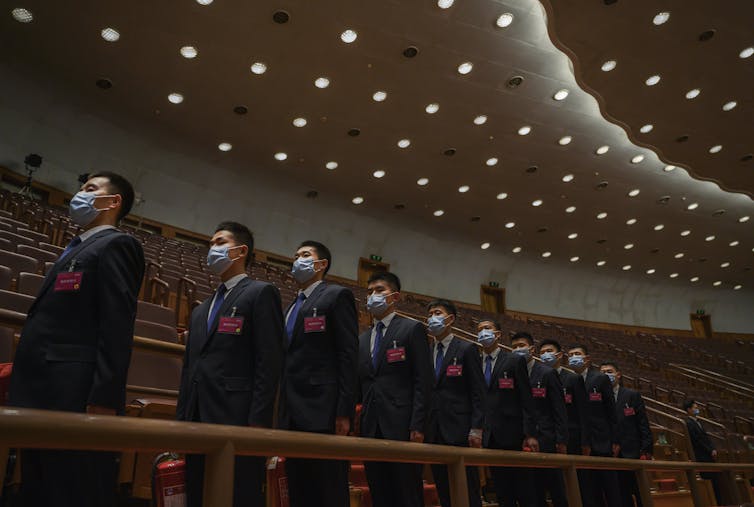
Parallel bureaucratic behaviors also became apparent during the COVID-19 pandemic. In China and the U.S. alike, public officials worked at the forefront of implementing public health guidelines. The Chinese response was said to benefit from an “authoritarian advantage,” allowing its authorities to impose drastic measures rapidly and comprehensively.
However, evidence-based policymaking was constrained by political preferences and bureaucratic careerism – the drive of officials to prioritize actions that help them get promoted.
It produced similar dynamics to those observed in the more decentralized U.S. setting. In both China and the U.S., bureaucrats were risk averse and anxious not to fall out with supervisors and political leaders.
The Chinese approach resulted in a decrease in public trust, a phenomenon that has also been unfolding in the U.S.
And much like their American counterparts, Chinese bureaucrats initially scrambled together information from a cacophony of political and expert voices. This indecision blunted their response to the viral outbreak in the decisive early days of the pandemic, even though it was eventually replaced by an official narrative emphasizing efficiency and success. In both systems, bureaucratic delays had detrimental consequences for public health.
An anchor of stability
Amid the heightened geopolitical tensions between Beijing and Washington, it is important to remember that all powers rely on capable administrations to implement political directives. Politics set the tone, but bureaucrats shape reality.
And the modus operandi of Chinese and American bureaucrats has remained strikingly stable over the years – driven primarily by incentives rather than ideology. This similarity is increasingly being reflected by converging leadership styles at the top of each political system.
U.S. President Donald Trump resembles Chinese President Xi Jinping in his campaign-style politics and the cult of personality that many political observers see developing around him.
There is a definite upside to similar bureaucratic behavior. It renders the two superpowers more predictable in periods of increasingly heated political rhetoric.
For national leaders’ proclamations to have any effect, large bureaucratic organizations need to translate political content into national and international action. Not only does this take time and resources, but erratic announcements are dissipated by bureaucratic routines.
And that provides an anchor of stability in volatile times.
While working for the German Institute of Development and Sustainability, Daniel E. Esser received funding from the Federal Ministry for Economic Cooperation and Development.
Heiner Janus works for the German Institute of Development and Sustainability (IDOS), which receives funding from the German Federal Ministry for Economic Cooperation and Development.
Mark Theisen works for the German Institute of Development and Sustainability (IDOS), which receives funding from the German Federal Ministry for Economic Cooperation and Development.
Tim Röthel works for the German Institute of Development and Sustainability (IDOS), which receives funding from the German Federal Ministry for Economic Cooperation and Development.
Read These Next
Why fuel prices may go higher still
Seven months into the US conflict with Iran, with no clear end in sight, the global oil market has now…
Trump wants an AI Force like Space Force, but that could make AI’s risks harder to manage
An AI Force would likely push China to create its own. That arms race could turn a technology already…
Trump frames unregulated AI as a way to keep ahead of China – but in fact, it harms US national secu
An unregulated sector has risks in itself but will also aid the rapid advancement of AI in China.