
Pandas, pingpong and ancient canals: President Xi’s hosting style says a lot about Chinese diplomacy
During a recent visit to China, French President Emmanuel Macron was given the diplomatic works.

When French President Emmanuel Macron traveled to China in early December for his fourth state visit, the itinerary began with the expected formalities. There was a red carpet reception at the Great Hall of the People in Beijing and high-level talks with President Xi Jinping on trade, technology and Ukraine.
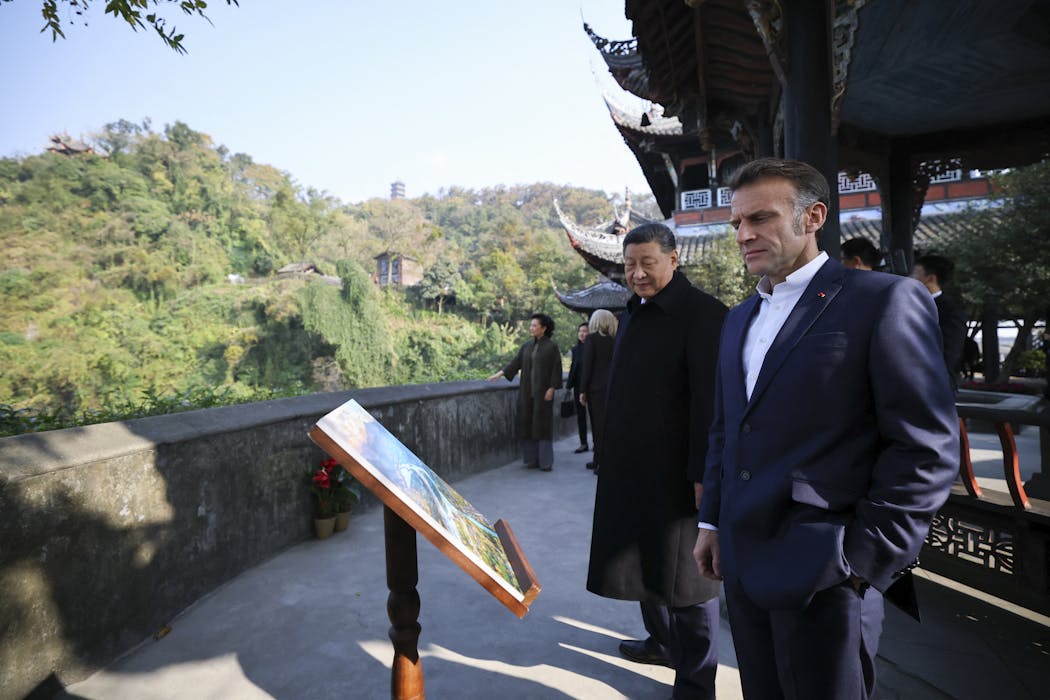
But the defining image of this diplomatic trip did not take place in the capital. Rather, it occurred more than 1,000 miles (1,600 km) away in Chengdu, Sichuan province. There, Xi hosted Macron for a rare instance of “no-tie diplomacy,” a term used by Chinese media to describe a relaxed and informal style of statecraft.
Stepping outside the rigid protocols of Beijing, Xi personally guided Macron through the mist-covered mountains of Sichuan. The walk held high significance: It marked the first time Xi has hosted a foreign leader for such an informal sightseeing meeting outside the capital, with an itinerary that included the Dujiangyan irrigation system, a visit to China’s national table tennis team and the Chengdu Research Base of Giant Panda Breeding.
Global attention remains understandably fixed on “hard” issues — trade tariffs, the war in Ukraine and nuclear energy. But as a cultural historian of modern China, I believe the choreography of this visit offers a vital window into Beijing’s diplomatic strategy. By foregrounding things like ancient waterways and table tennis, China is deploying a sophisticated brand of cultural statecraft designed to soften the edges of a hardening geopolitical landscape.
The reciprocity of ‘home diplomacy’
The choice to host Macron in Chengdu was not random, but a carefully curated act of diplomatic reciprocity. In April 2024, Macron had invited Xi to his personal retreat in the French Pyrenees, a gesture intended to foster personal intimacy.
During the latest tour, Xi reportedly referenced their previous meeting, telling Macron: “Last year you invited me to your hometown in the Hautes-Pyrénées; I believe this visit will further deepen your understanding of China.”
By bringing Macron to Sichuan, Xi was returning the favor, moving the relationship from the professional to the personal. This reflects a shift in Chinese diplomacy from a “Wolf Warrior” mentality, defined by confrontation and rhetorical aggression, toward a more relational approach with key European partners. By investing time in this kind of provincial visit, Beijing is signaling that it views France not just as a trading partner, but as a nation worthy of deep, personal engagement.
This outreach is especially important at a time when China–U.S. trade tensions remain high, as Beijing increasingly looks to the European Union as a critical component of its broader strategy to counter Washington-led containment efforts.
Governing with the flow
The centerpiece of Macron’s cultural tour in China was the Dujiangyan irrigation system. Built in the third century B.C.E., the UNESCO World Heritage site remains the world’s oldest still‑operating dam‑free hydraulic project.
However, Dujiangyan is more than a tourist attraction; it is a physical manifestation of Chinese political philosophy. Unlike modern dams that block water, Dujiangyan manages it by dividing the flow. It embodies the Taoist principle of wu wei (nonaction) and Xi’s metaphor “to govern water is to govern the country.”
By showcasing this specific site, Xi was offering a subtle lesson in statecraft. The metaphor implies a governance style based on balance, adaptability and working with natural forces rather than confronting them head-on.
In the context of strained international relations, the message to France was clear: Cooperation should not be constrained by rigid binaries between East and West, nor shaped by the logic of containment. Instead, it should follow the natural flow of mutual interests — ranging from trade and climate action to cultural and educational exchange.
Pingpong diplomacy 2.0
If Dujiangyan represented ancient wisdom, the visit to the Sichuan Provincial Gymnasium brought diplomacy into the modern, high-energy arena of sport.
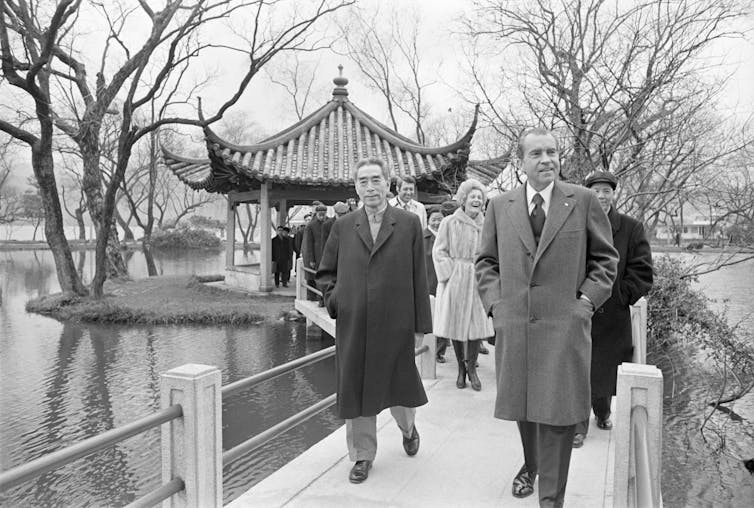
Table tennis holds a mythical place in Chinese diplomatic history. The original “ping-pong diplomacy” of the early 1970s helped thaw the ice between China and the United States, paving the way for President Richard Nixon’s historic 1972 visit. As historian Pete Millwood argues in “Improbable Diplomats,” these athletic exchanges offered a politically safe and publicly palatable setting through which both countries could begin signaling a major shift in diplomatic relations.
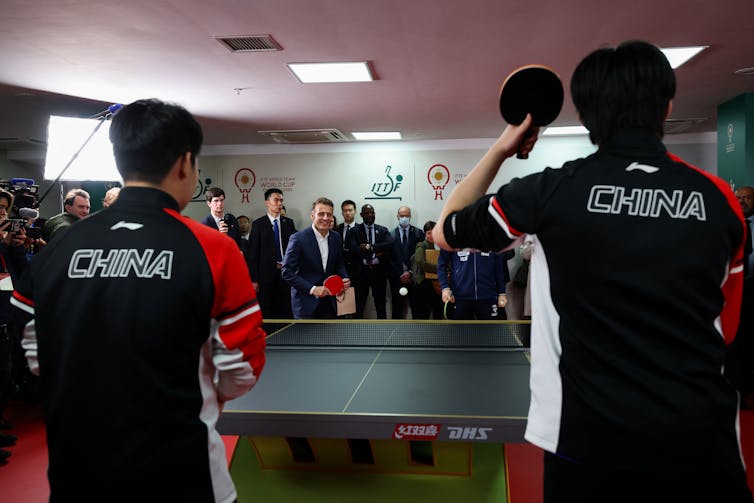
On Dec. 5, Macron tapped into this legacy when he visited the venue of the 2025 ITTF Mixed Team World Cup and participated in an impromptu match. Partnering with French players Félix Lebrun and Prithika Pavade against Chinese stars Wang Chuqin and Sun Yingsha, Macron engaged in a lighthearted rally that went viral on Chinese social media.
In an era where diplomatic interactions are often scripted and stern, these moments humanize the “other side” for the domestic public, creating a reservoir of public goodwill that leaders can draw upon when navigating difficult political compromises.
Soft power with fur
While the two leaders bonded over paddles, Brigitte Macron, France’s first lady, engaged with China’s most enduring soft-power asset: the giant panda.
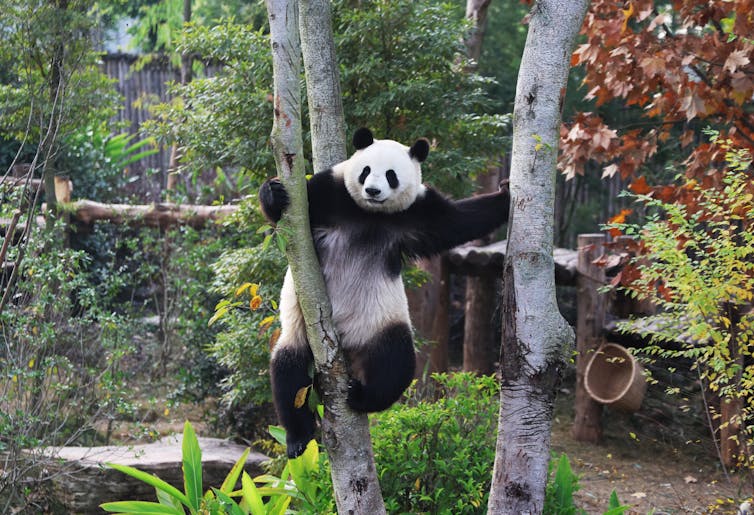
“Panda diplomacy” has been a hallmark of Beijing’s foreign policy since the 1950s. The loaning of these animals is a barometer of political warmth; their recall can signal a chill.
The French First Lady visited the Chengdu Research Base of Giant Panda Breeding to see “Yuan Meng.” As the first panda born in France, to parents on loan from China, Yuan Meng is a living symbol of the bilateral relationship between France and China. Brigitte Macron, who is his godmother, helped facilitate Yuan Meng’s return to China alongside his parents in November 2025.
Following Brigitte Macron’s visit, the announcement of a new agreement to send two more pandas to France by 2027 served as a tangible deliverable of the summit.
The limits of cultural diplomacy
What do waterworks, pingpong and pandas add up to?
Critics might dismiss these events as mere pageantry — a velvet glove concealing the brutal fist of realpolitik. Indeed, a friendly game of table tennis does not resolve the European Union’s concerns over Chinese state subsidies, nor does it bridge the gap regarding China’s stance on the war in Ukraine.
However, dismissing the cultural dimension ignores how China views diplomacy. For Beijing, “friendly atmosphere” is often a prerequisite for progress on substantive political issues.
The Xi-Macron meeting in Chengdu also signaled a refinement of Chinese soft power, moving away from the combative rhetoric of recent years toward a strategy that embraces warmer ties with key European powers like France.
While culture cannot replace hard diplomacy, this Macron visit demonstrates that in 2025, the road to political consensus in Beijing may very well run through the panda enclosure and table tennis arena.
This long-term intent was encapsulated in the leaders’ farewell at Dujiangyan. As they parted ways, Xi joked, “Next time, we’ll see another place.” Macron’s immediate response — “Of course, definitely” — hints that this cultural diplomacy is designed to be an ongoing effort.
Xianda Huang does not work for, consult, own shares in or receive funding from any company or organization that would benefit from this article, and has disclosed no relevant affiliations beyond their academic appointment.
Read These Next
Why fuel prices may go higher still
Seven months into the US conflict with Iran, with no clear end in sight, the global oil market has now…
Generous paternal leave policies improve maternal and newborn health, family finances and workplace
Leave for the non-birthing parent after a new baby arrives gives the family an opportunity to bond.
Menopause is a major health milestone, yet health records barely track it - new research
Capturing data about the timing and symptoms of menopause could help address many unanswered questions…